China Best Wire Basket Tray Suppliers for Global Buyers
Choosing the right wire basket tray supplier can shape an entire project’s safety, installation speed, and long-term maintenance cost. Global buyers need more than attractive catalog images. They need verified steel quality, accurate dimensions, consistent welding, corrosion-resistant finishes, and dependable production capacity. A tray that looks strong may still deform under crowded cables or poor support spacing.
Cable-management engineer David A. Bowers states, “A good wire basket tray should keep cables visible, supported, and easy to change.” This practical view deserves attention. Visibility helps technicians trace power and data lines inside busy server rooms. Easy access reduces unnecessary cutting, drilling, and shutdowns. Yet no supplier fits every project. That is worth remembering.
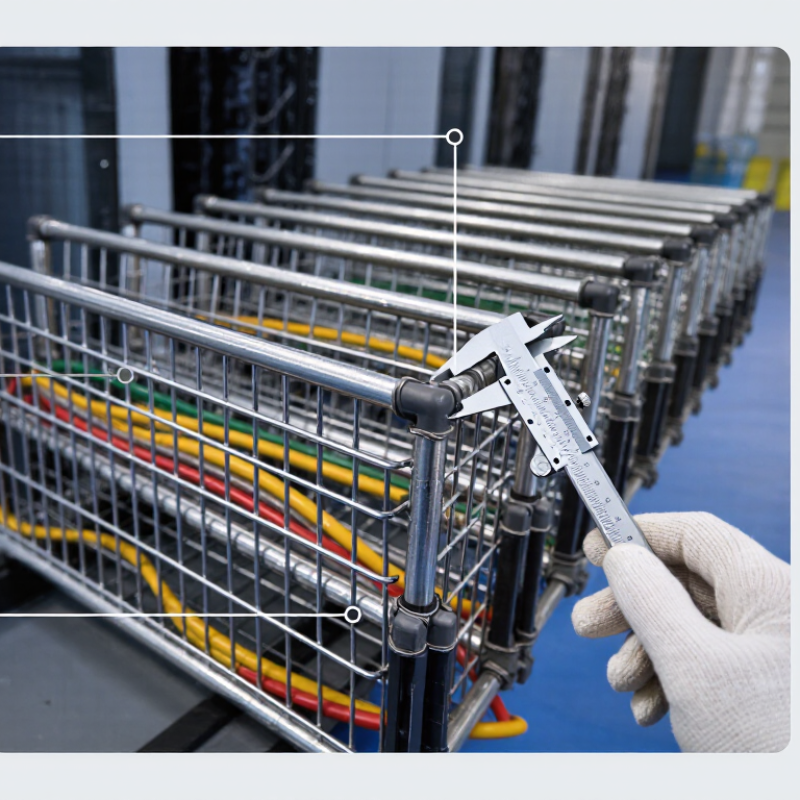
Reliable manufacturers should provide load tables, material specifications, surface-treatment details, sample approvals, and inspection records. Buyers should compare welded joints closely. Small gaps can expose uneven quality. Ask about carbon steel, stainless steel, or hot-dip galvanized options. Coastal facilities may require stronger corrosion protection than dry indoor warehouses. Packaging also matters; bent mesh creates installation delays before the tray reaches the site.
This guide examines China’s best wire basket tray suppliers for global buyers. It considers engineering support, customization, quality control, export experience, and communication. Factory visits are useful, but documents and repeatable samples matter more. One polished sample proves little. A stable supply record proves more. Mistakes still happen, especially with rushed specifications, unclear drawings, or underestimated cable weight. Careful comparison remains the safer path.
What Is a Wire Basket Tray and Why Does It Matter?
A wire basket tray is an open cable management system made from welded steel wires. It supports power, data, and control cables above ceilings, along walls, or beneath raised floors. Its mesh structure allows technicians to see cables clearly and reach them without removing a solid cover. That visibility matters during inspections and future maintenance.
In real installations, airflow is a practical advantage. Warm cables can release heat more easily through the open sides and base. The tray is also simple to cut, bend, and route around columns or equipment. A clean installation needs more than a suitable size. Engineers should check cable weight, span length, wire diameter, surface treatment, and fixing points. Small details matter. A loose support can create sagging and unnecessary cable stress.
Experienced buyers often request samples before placing larger orders. They inspect weld consistency, edge smoothness, coating coverage, and dimensional accuracy. Suppliers in China may offer different materials, finishes, widths, and accessory systems for global projects. However, a lower price does not always mean better value. Some trays look strong but use thin wire or poorly finished joints. That is easy to miss in photographs. Clear drawings, test records, production photos, and responsive communication make supplier evaluation more reliable. Even experienced teams can overlook site conditions, especially restricted access or unexpected cable growth. Planning for those weaknesses can prevent expensive changes later.
China Best Wire Basket Tray Suppliers for Global Buyers
What Is a Wire Basket Tray and Why Does It Matter?
A wire basket tray is an open cable-management system made from welded steel wire. Its mesh structure supports cables while improving ventilation, visibility, installation access, and maintenance efficiency. The chart shows the calculated internal geometric area for common nominal tray widths at a fixed 50 mm tray depth. A wider tray provides more space for organized cable routing, although actual cable capacity also depends on mesh design, cable diameter, fill limits, support spacing, and applicable installation standards.
Reference calculation: nominal tray width × 50 mm nominal depth. Values represent geometric reference areas, not certified load ratings or guaranteed cable capacity.
Key Features of China’s Wire Basket Tray Manufacturing Industry
China Best Wire Basket Tray Suppliers for Global Buyers
Key Features of China’s Wire Basket Tray Manufacturing Industry
China’s wire basket tray industry combines automated forming with skilled manual inspection. Manufacturers commonly use welded steel wire, stainless steel, or corrosion-resistant finishes for different environments. A typical tray has a clean grid pattern, rounded edges, and accessible cable routes. These details support ventilation and make cable maintenance easier.
Production lines often include wire cutting, bending, welding, grinding, and surface treatment. Powder coating can provide color and added protection, while zinc-based treatments suit humid areas. Many factories produce various widths, heights, and connection accessories. They can also adjust mesh spacing, support brackets, and tray lengths for project-specific layouts.
Quality control should happen throughout production. Inspectors may check wire diameter, weld strength, coating thickness, dimensions, and load performance. Export-focused suppliers usually provide samples, drawings, inspection records, and protective packaging. Strong cartons and separators help reduce scratches during long-distance shipping. This matters more than it sounds.
However, manufacturing quality is not identical across every supplier. Some factories communicate well but lack consistent testing. Others offer low prices while sacrificing finish quality or delivery accuracy. Buyers should review production photos, request a sample, and confirm measurable standards before ordering. I have found that small details, such as uneven welds or loose connectors, can create installation problems later. Clear specifications and practical factory communication remain essential.
How to Evaluate China-Based Wire Basket Tray Suppliers
China Best Wire Basket Tray Suppliers for Global Buyers
China’s wire basket tray sector serves data centers, factories, and commercial buildings worldwide. MarketsandMarkets projects the global cable tray market to grow from about USD 3.8 billion in 2023 to USD 5.4 billion by 2028. This growth increases supplier choice, but not supplier quality. Buyers should verify manufacturing evidence, not rely on attractive catalog images.
Request production samples first. Inspect wire diameter, weld spacing, edge finishing, and coating uniformity under bright light. Ask for load-test records based on IEC 61537 or an equivalent recognized standard. The European standard specifies mechanical performance requirements for cable management systems. A capable supplier should provide batch traceability, material certificates, and clear tolerance data. ISO 9001 certification helps, but it does not prove every shipment is consistent.
Audit the factory, remotely or in person. Check welding stations, coating lines, storage conditions, and final inspection records. Compare stated load ratings with test conditions, span length, and safety factors. They are often different. Confirm carton dimensions, pallet strength, minimum order quantities, and production lead times before signing. An independent pre-shipment inspection can catch bent sections, missing accessories, or surface damage. Still, one inspection cannot replace continuous supplier monitoring. A supplier may pass a sample audit and later change raw-material sources. Keep approval samples, revision-controlled drawings, and written acceptance criteria for every order.
Global Purchasing, Shipping, and Compliance Considerations
Global buyers should evaluate wire basket tray suppliers beyond catalog photos and low quotations. Request drawings showing wire diameter, mesh size, tray width, load capacity, surface treatment, and dimensional tolerance. Samples should match production batches. Small details matter.
During supplier checks, review quality records, material certificates, inspection procedures, and corrective-action reports. Factory visits can reveal uneven welding, sharp edges, or poor coating coverage. Ask how workers protect trays during stacking and container loading. A damaged corner may create installation delays and extra costs.
Shipping terms must be written clearly, including responsibility for inland transport, export clearance, insurance, and destination handling. Confirm carton dimensions and container loading plans before production. Moisture barriers, separators, and corner protection are useful during long sea routes. However, packaging choices should reflect the destination climate, not assumptions.
Compliance requires careful verification. Request applicable test reports, product declarations, labeling details, and customs documents before shipment. Requirements can differ by market, building project, and installation environment. Do not accept vague claims such as “globally certified.” Check the issuing laboratory, report date, tested configuration, and material description. A supplier may be experienced, yet an outdated report can still cause trouble. We have seen purchasing teams focus heavily on price and overlook replacement lead times. That mistake is expensive. Keep written approval records, inspect pre-shipment samples, and leave room for corrective action before the container is sealed.