Why Is Wire Management Important for Businesses?
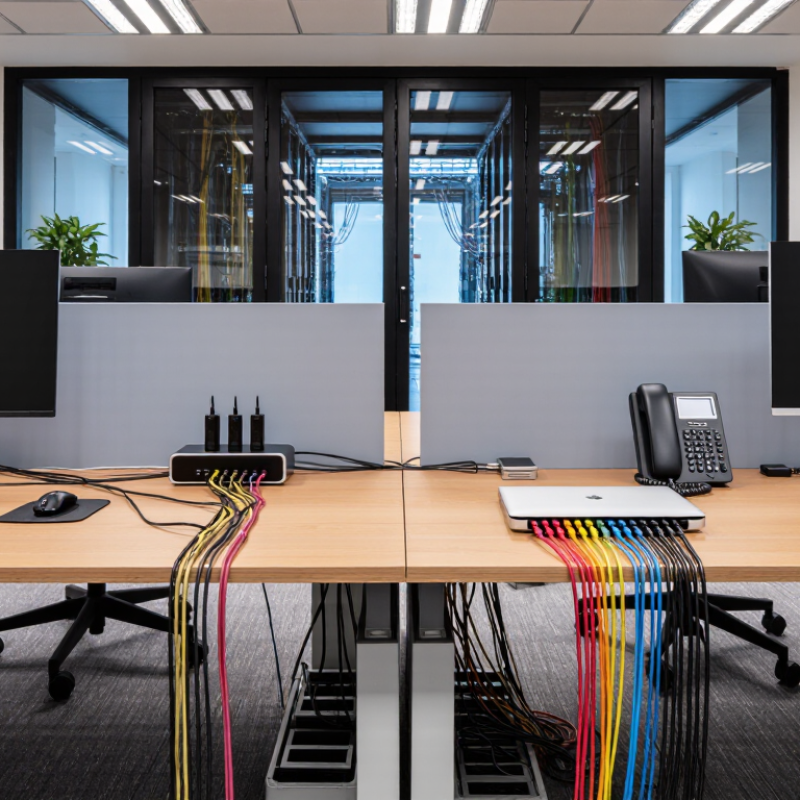
In a busy office, a desk may hold a laptop, monitor, dock, phone, and several chargers. Behind it, cables can cross, sag, and collect dust. In a server room, the same disorder can make it harder to trace a connection or reach equipment safely. These details may seem minor. They shape how smoothly people work.
Wire management means organizing, routing, labeling, and securing cables so they remain accessible and protected. It is not just a cosmetic fix. Clear cable paths can reduce trip hazards, ease routine cleaning, and help staff identify the right connection during maintenance. Good practice also considers airflow, bend radius, heat, and the need to unplug or replace devices. A tidy bundle is not automatically a safe one.
For businesses, the value often appears in ordinary moments: a technician can follow a labeled cable, a cleaner can reach the floor, or a worker can move a chair without catching a cord. That saves frustration. Yet no single layout suits every workplace. Tight bundles may complicate repairs, and labels can become outdated when equipment changes. Wire management works best as an ongoing task, not a one-time cleanup. Start with the cables people use most, document important connections, and review the setup after changes. Small checks matter. A practical approach helps organizations balance safety, access, reliability, and a workspace that feels easier to manage.
What Wire Management Means in a Business Environment
In a business environment, wire management means planning how cables are routed, secured, identified, and maintained across work areas. It applies to server rooms, office desks, production equipment, and meeting spaces. The aim is not merely to make cables look neat. Staff need reliable access to power and data connections, while technicians need room to inspect and service them.
A practical setup separates power cords from data cables where possible, avoids tight bends, and keeps walkways clear. Labels at both ends can help identify a cable without tracing it through a crowded rack. Under a desk, reusable ties and a cable tray can prevent cords from dragging near chair wheels. Small details matter. Labels should match the equipment records; otherwise, they can create confusion during repairs.
Good wire management also depends on regular checks. A cable layout that works today may become crowded after a workstation move or equipment upgrade. One common oversight is adding a new cable without updating labels or diagrams. That shortcut seems harmless until a technician must disconnect the right device during a busy workday. Clear routing and accurate records make routine changes easier to assess, though no labeling system replaces careful verification before a cable is moved.
| Business Dimension | What Wire Management Means | Business Value | Practical Indicators | Example Practices |
|---|---|---|---|---|
| Organization and identification | Arranging cables by purpose, route, and destination, and labeling them so staff can identify connections. | Makes it easier to trace a connection, add equipment, and carry out routine maintenance. | Labels are legible; cable routes are documented; staff can identify endpoints without repeated trial and error. | Use consistent labels at both ends, maintain a current connection map, and group cables by function. |
| Workplace safety | Keeping cables secured and out of walkways, doorways, and other areas where they may create hazards. | Helps reduce trip risks, accidental unplugging, and damage caused by foot traffic or moving equipment. | Walkways remain clear; cables are secured; damaged or exposed wiring is reported and addressed. | Route cables along appropriate paths, use suitable covers where needed, and keep cables away from high-traffic areas. |
| Equipment protection | Managing cable bends, tension, strain, and exposure to heat, liquids, or sharp edges. | Helps prevent avoidable wear, loose connections, and interruptions caused by physical cable damage. | Cables are not pinched, stretched, or sharply bent; connectors are not carrying the cable’s weight. | Provide strain relief, maintain suitable bend radii, and separate cables from sources of physical damage. |
| Operational continuity | Planning cable routes and connections so equipment can be inspected, serviced, or replaced with minimal disruption. | Supports troubleshooting and makes changes to workstations, network equipment, and facilities more manageable. | Connections can be traced; access to equipment is not blocked; changes are recorded. | Keep service access clear, document connection changes, and leave practical space for future additions. |
| Network and signal reliability | Routing data and communications cables appropriately and avoiding poor connections or unsuitable interference-prone paths. | Helps maintain dependable connectivity and makes faults easier to isolate. | Connections are secure; cable types match their intended use; recurring connection faults are investigated. | Follow equipment and cabling specifications, avoid unnecessary cable strain, and separate cables where applicable guidance requires it. |
| Scalability and change management | Designing cable layouts so new devices and work areas can be added without creating a tangled or undocumented system. | Reduces clutter as a business changes and helps keep future installation and maintenance work orderly. | Routes have usable capacity; spare connections are identified; new installations follow established labeling practices. | Plan routes before installation, use modular organization methods where suitable, and update records after changes. |
| Professional appearance | Presenting cables neatly in offices, customer-facing areas, meeting rooms, and equipment spaces. | Creates a more orderly work environment and helps keep shared spaces usable. | Visible cables are routed consistently; desks and shared areas remain uncluttered. | Bundle compatible low-voltage cables neatly, secure excess cable safely, and keep cable paths aligned with the workspace layout. |
| Maintenance and accountability | Establishing clear procedures for inspecting, changing, and reporting on cable installations. | Helps teams identify ownership, address faults consistently, and avoid undocumented changes. | Inspection responsibilities are clear; cable issues are logged; records are updated after work is completed. | Use a simple inspection checklist, record significant changes, and refer electrical work to appropriately qualified personnel. |
Note: Wire management covers the organization, routing, identification, and protection of cables. It does not replace applicable electrical, building, fire-safety, or workplace requirements.
Related Posts
-

10 Best Cable Ladders for Efficient Cable Management in 2023
-

Why Proper Wire Management is Essential for a Tidy and Safe Workspace
-
How to Choose the Right Cable Hangers for Your Project?
-
Quality Driven Chinese Manufacturing in Global Leader Best Cable Management Tray
-

Ultimate Guide to Efficiently Organizing Cables with Cable Management Trays
-
What is a Cable Rack? Understanding Its Importance in Efficient Cable Management