Why Do Global Buyers Choose Track Socket?

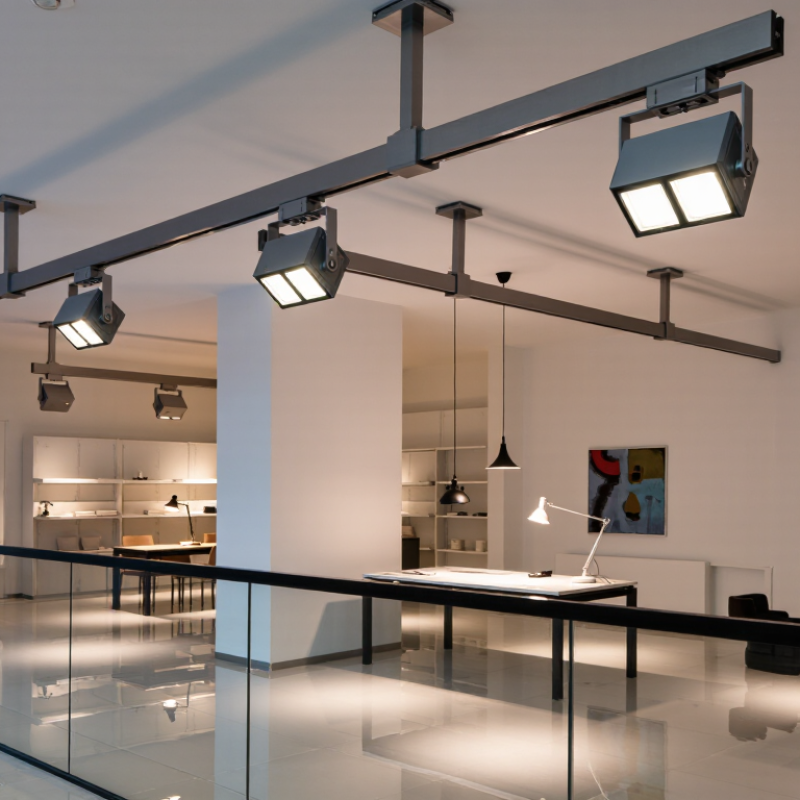
Why do global buyers choose Track Socket when conventional outlets remain widely available? The answer often begins with flexibility. A Track Socket combines a powered ceiling track with movable electrical connection points. Buyers can reposition lamps, displays, sensors, or small appliances without opening walls. This matters in retail stores, galleries, hotels, offices, and adaptable residential spaces.

Lighting designer James Turrell observed, “Light is not so much something that reveals, as it is itself the revelation.” His insight helps explain the product’s appeal. A well-designed Track Socket system can place light exactly where activity changes. A shop can highlight a new display. A hotel can adjust lighting around furniture. An office can reduce dark corners after a layout change. The result is practical, not merely decorative.

Global buyers also examine construction quality, connector security, load capacity, grounding, heat management, and compatibility with local electrical requirements. Experienced installers check these details before discussing appearance. They also inspect rail length, socket movement, switch control, and replacement access. Small differences become visible during daily use. A loose connection is unacceptable. Difficult maintenance is expensive.

Still, Track Socket is not automatically the best solution. Poor planning can create visual clutter, uneven illumination, or unnecessary installation costs. Voltage differences and regional certification requirements also require careful review. Buyers therefore compare tested components, documented specifications, supplier experience, and after-sales support. The strongest choice is rarely the cheapest one. It is the system that remains safe, adaptable, and dependable after the room changes. That is the real reason Track Socket continues attracting professional buyers worldwide.
Why Do Global Buyers Choose Track Socket?

What Is a Track Socket? Understanding 1-, 2-, and 3-Circuit Systems

Why Do Global Buyers Choose Track Socket?

A track socket is a movable electrical outlet or lighting connection mounted on a powered track. It can slide to a useful position without cutting new openings in the wall. This flexibility attracts buyers fitting retail stores, offices, galleries, and flexible work areas. Yet the track and socket must match in size, voltage, grounding method, and load rating. Appearance alone is not enough.

A 1-circuit system sends power through one shared circuit. It suits simple layouts, such as a small shop with lights controlled together. A 2-circuit system separates two groups, allowing one row of lights to stay bright while another is dimmed or switched off. This can reduce unnecessary energy use during changing business hours. A 3-circuit system offers three independent control groups. It works well where display lighting, general lighting, and accent lighting need different schedules. More circuits mean more control, but they also require careful wiring and compatible accessories.

In practice, buyers should check installation instructions before ordering. Circuit labels can be confusing. Local electrical standards may also differ. A qualified electrician should verify conductor layout, grounding, insulation, and maximum load. I have seen projects focus heavily on the rail’s finish while overlooking connector compatibility. That mistake can delay installation and increase costs. The best choice is not always the system with the most circuits. It is the one that fits the space, controls, and maintenance plan.
How IEC 60598-1 and UL 2108 Define Track Socket Safety Requirements

Why Do Global Buyers Choose Track Socket?

How IEC 60598-1 and UL 2108 Define Track Socket Safety Requirements

Global buyers often inspect safety details before comparing appearance or price. IEC 60598-1 provides general requirements for luminaires used with track sockets. It addresses electrical construction, insulation, creepage distances, temperature rise, mechanical strength, markings, and abnormal operation. These checks matter when a socket carries current above a ceiling or beside movable fixtures.

UL 2108 focuses on low-voltage lighting systems and their components. When a track socket belongs to such a system, evaluation may include the power supply, connectors, conductors, polarity, grounding, and protection against overheating. The socket must work as part of the complete circuit, not only as an isolated piece. Small contact points can become hot when connections loosen.

Installation evidence matters too. Inspectors may review rated voltage, current, lamp compatibility, wire size, mounting strength, and accessible metal parts. Testing should match the intended market and installation method. A component approved for one system may not automatically satisfy another standard.

Real installations are rarely perfect.

Dust, repeated adjustments, and uneven loading can expose weak contact pressure. A common mistake is treating a test report as permanent proof of safety. Materials, tooling, and suppliers can change. Careful buyers request current documentation, traceability, and samples from normal production. They also check whether markings remain readable after handling, because small omissions can create large questions during inspection.

Why Global Buyers Compare 110–120 V and 220–240 V Compatibility

Why Do Global Buyers Choose Track Socket?

Why Global Buyers Compare 110–120 V and 220–240 V Compatibility

Global buyers often compare track socket compatibility before reviewing appearance or price. The voltage difference is not cosmetic. In 110–120 V markets, lighting systems require different electrical specifications from those used in 220–240 V regions. A fitting designed for the wrong range may create overheating, unstable operation, or early component failure. That small mismatch can disrupt an entire installation.

Frequency also deserves attention. Some systems operate at 50 Hz, while others use 60 Hz. Buyers should verify the socket’s rated voltage, frequency, current, and connector design. Do not assume compatibility. An adapter may change the plug shape, but it usually does not convert voltage. During project reviews, experienced installers also check dimming controls, grounding methods, and the total load on each track. These details are easy to overlook.

A dependable comparison starts with technical documents, not photographs. Ask for clear input ratings and installation instructions. Check whether the product suits the local wiring system and lighting load. Installation teams should follow regional electrical requirements and use qualified professionals when needed. I still see projects where voltage is checked too late. That is a costly lesson. Clear specifications help buyers reduce uncertainty, but they should remain open to rechecking every assumption before installation.

How 10–16 A Ratings and IP20–IP44 Protection Affect Product Selection

Why Do Global Buyers Choose Track Socket?

For many global buyers, track sockets offer adjustable power points without adding multiple wall outlets. Yet the current rating often decides whether a product fits real working conditions. A 10 A model may support about 2,300 W at 230 V, while a 16 A model may reach about 3,680 W. Actual limits depend on voltage, wiring, temperature, and local standards. Always check the complete system rating.

The difference matters in kitchens, offices, workshops, and retail spaces. A desk lamp and charger create a light load. A heater or coffee machine demands far more. One detail is often missed. The track, connector, socket, and circuit must work together. In my product evaluations, buyers sometimes focus only on the socket label. That can lead to an unsuitable purchase.

IP protection also shapes selection. IP20 suits dry indoor areas, such as bedrooms or ordinary offices. It offers limited protection against solid objects and no protection against water. IP44 adds protection against small solid objects and splashing water from different directions. It may suit covered balconies, utility rooms, or busy commercial areas, but it is not waterproof. Installation conditions still matter. Dust, condensation, cleaning methods, and damaged seals can change performance. A higher IP rating is not automatically better; it may affect ventilation, cost, and appearance. The better choice is the rating that matches the environment, verified by qualified installers and current local requirements.

Why Do Global Buyers Choose Track Socket?

How 10–16 A ratings and IP20–IP44 protection affect product selection

Current rating

At a nominal 230 V supply, a 10 A rating corresponds to approximately 2,300 W, 13 A to 2,990 W, and 16 A to 3,680 W. Buyers typically match the rating to the connected load and local electrical requirements.

IP20 protection

The first digit 2 indicates protection against solid objects larger than 12.5 mm. The second digit 0 means there is no stated protection against water, making IP20 more suitable for dry indoor locations.

IP44 protection

The first digit 4 indicates protection against solid objects larger than 1 mm. The second digit 4 indicates protection against splashing water from any direction, subject to the product’s installation instructions.

Calculated power values use P = V × I at 230 V. Actual product selection must follow the applicable local voltage, wiring, installation, temperature, and safety requirements.

Why 80+ CRI, 360° Rotation, and Tool-Free Installation Matter to Buyers

Global buyers often choose track sockets for practical reasons, not appearance alone. In retail displays, galleries, and hospitality spaces, 80+ CRI helps colors look closer to reality. Fabrics appear more natural. Food looks less washed out. Product details remain easier to judge. This matters when lighting affects customer confidence or visual inspection. However, CRI is not the whole story. Light distribution, color temperature, and glare still deserve careful review.

A 360° rotation range gives installers more control after mounting. One fixture can highlight a shelf, artwork, or work surface without moving the track. That flexibility reduces adjustment time during layout changes. Tool-free installation can also simplify replacement and routine maintenance. In busy commercial spaces, every saved minute matters. I once assumed rotation alone solved aiming problems. It did not. Loose positioning and poor beam selection still created uneven brightness. Good planning remains necessary.

Tips: Check the actual CRI test data, not only the product label. Test the socket with the intended lamp and track system. Confirm that rotation feels stable, not merely smooth. Keep a small sample area before ordering large quantities. A few minutes of testing can reveal glare, weak color quality, or awkward installation.

Why Do Global Buyers Choose Track Socket? - Why 80+ CRI, 360° Rotation, and Tool-Free Installation Matter to Buyers
Buyer Evaluation Dimension Typical Market Requirement Practical Data or Benchmark Why It Matters to Buyers Recommended Verification
Color Rendering Suitable color quality for retail, hospitality, residential, and commercial interiors CRI ≥ 80 is a common baseline for general indoor lighting; CRI ≥ 90 is preferred where accurate color appearance is important Improves the appearance of merchandise, food, materials, artwork, and interior finishes Check the LM-79 test report or independent photometric report for CRI and R9 values
Beam Direction Flexible aiming for displays, wall washing, task areas, and changing layouts Up to 360° horizontal rotation may be available when the track socket and adapter are designed for full rotational movement Allows buyers to redirect light without relocating the track or replacing the complete fixture Confirm the actual rotation range, locking method, and compatibility with the selected track system
Installation Method Fast installation with minimal tools and reduced labor time Tool-free installation commonly uses a twist-lock, lever-lock, or spring-loaded track adapter Helps installers work faster and makes later repositioning or replacement easier Review the installation instructions and verify that no screwdriver is required for normal mounting
Track Compatibility Reliable fit with the intended single-circuit or multi-circuit track system Compatibility depends on the track profile, electrical contact arrangement, adapter dimensions, and circuit configuration Prevents installation delays, electrical mismatch, loose connections, and unnecessary product returns Match the socket adapter specification with the track manufacturer’s mechanical and electrical requirements
Color Temperature Options suitable for different environments and regional preferences Common indoor choices include 2700 K, 3000 K, 3500 K, and 4000 K Warm light supports hospitality and residential settings, while neutral white is often selected for retail and commercial spaces Check the nominal CCT, tolerance, and consistency between production batches
Beam Angle Different distributions for accent lighting and general illumination Typical LED track-light beam categories include narrow, medium, and wide distributions, approximately 15°–60° Enables buyers to select focused accent lighting or broader coverage according to ceiling height and display size Verify beam angle and intensity distribution using an IES or equivalent photometric file
Power and Light Output Efficient output appropriate for the target application Many indoor LED track-light applications use approximately 10–30 W per adjustable light source, depending on lumen output and beam angle Balances illumination performance, energy consumption, heat management, and electrical load Compare rated wattage, delivered lumens, efficacy, and application illuminance rather than wattage alone
Energy Efficiency Lower operating cost without sacrificing useful illumination Modern LED luminaires are commonly evaluated by lumens per watt (lm/W); the actual value varies with optics, driver, color quality, and thermal design Higher efficacy can reduce long-term electricity use and support energy-efficiency targets Use test-report data for system efficacy, including the LED source, optics, and driver
Service Life Stable performance with limited maintenance LED products are often specified using an L70 lifetime, which indicates the time until average light output reaches 70% of the initial level Helps buyers estimate replacement cycles and maintenance requirements Check the rated lifetime, ambient-temperature conditions, driver lifetime, and applicable LM-80/TM-21 documentation
Glare Control Comfortable viewing conditions in retail, office, hospitality, and residential environments Performance depends on beam angle, shielding, reflector design, mounting height, and viewing position; no single glare value applies to every application Reduces visual discomfort and improves the perceived quality of the lighting installation Review optical design, shielding angle, UGR data where applicable, and an on-site mock-up
Mechanical Adjustability Secure positioning after aiming Buyers commonly assess both rotation and tilt adjustment, together with the ability to maintain position during normal use Prevents unwanted movement and preserves the intended lighting effect after installation Inspect the locking mechanism, adjustment resistance, joint durability, and repeated-adjustment performance
Safety and Compliance Conformity with the destination market’s electrical and product-safety requirements Requirements vary by region and may include electrical safety, electromagnetic compatibility, photobiological safety, and material restrictions Supports legal market entry, project approval, insurance requirements, and buyer confidence Request applicable conformity documents and test reports for the destination country or region
Warranty and Support Clear protection for defects and performance issues Warranty duration and terms vary by supplier, product category, operating hours, and installation conditions Reduces perceived purchasing risk for distributors, contractors, and large projects Review warranty coverage, exclusions, spare-part policy, technical documentation, and after-sales response process
Note: The figures above are general industry benchmarks and technical evaluation criteria. Actual performance depends on the complete track socket, LED module, driver, optics, track system, installation conditions, and applicable regional standards.

Have Questions?

Talk to a product specialist today: 1-800-308-6788

Snake Tray Catalog

snake tray® CATALOG

the new catalog is here. AVAILABLE IN PRINT AND ONLINE.

DOWNLOAD A PDF REQUEST A PRINTED COPY
CALL US TODAY