Why Choose an Open Display Fridge for Your Business?
An Open Display Fridge can make chilled products visible and easy to reach, helping customers notice drinks, salads, dairy items, or ready-to-eat meals. In a busy shop, that visibility can shape the buying experience. A shopper can compare labels through clear glass—or, with an open case, pick up a product without opening a door. Small details matter: bright, even lighting, tidy shelves, and products faced toward the aisle.
A practical line for this article, offered under the fictional expert name Daniel Mercer, is: “A display fridge earns its place when visibility improves without compromising product care.” This is an illustrative quotation, not a verified statement from a real expert. The principle is useful, but it deserves scrutiny. Open cases may use more energy than well-designed door models, and performance can vary with room temperature, airflow, stocking habits, and maintenance. Convenience is not automatic.
Before choosing a unit, consider its footprint, capacity, temperature consistency, cleaning access, and fit with your store’s daily routine. Picture staff replenishing the top shelf during a lunch rush, while customers reach for cold drinks below. Then ask whether the layout keeps products appealing and properly chilled. That balance—not appearance alone—makes an Open Display Fridge a practical business decision.
What Is an Open Display Fridge?
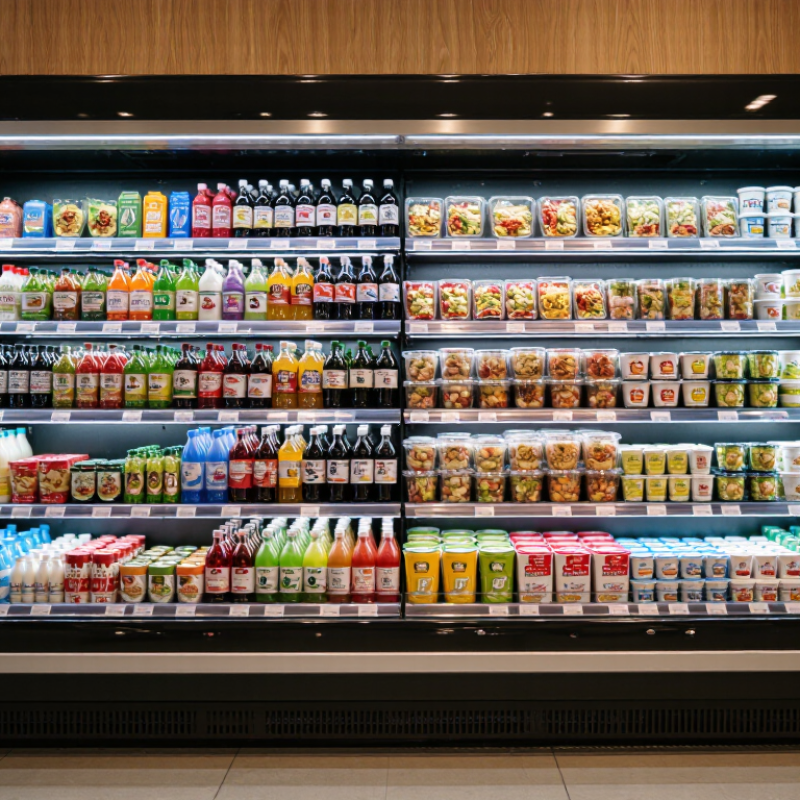
An open display fridge is a commercial refrigerated cabinet with an uncovered front, designed to keep chilled products visible and easy to reach. Unlike a standard refrigerator, it does not rely on a hinged door to seal in cold air. Instead, many models use a controlled stream of chilled air, often called an air curtain, across the opening. The cabinet may include adjustable shelves, interior lighting, and a lower storage deck. Simple in appearance.
You will often see these units holding drinks, packaged meals, dairy products, or fresh produce in shops and cafés. A shopper can spot a bottle, read its label, and take it without opening a door. That convenience can encourage browsing, but the display still depends on careful setup. Warm room conditions, blocked air outlets, or overfilled shelves may affect cooling performance. The difference can be subtle.
In daily use, staff should follow the unit’s operating guidance, keep vents clear, and monitor product temperatures with suitable equipment. Regular cleaning matters too, especially around air grilles and the drain area, where dust or spills can collect. An open display fridge is not just a refrigerator without a door; it is a merchandising cabinet built to balance product visibility, access, and consistent refrigeration. That balance takes attention.
Why Choose an Open Display Fridge for Your Business? – What Is an Open Display Fridge? | Dimension | Open Display Fridge | Business Consideration |
| What it is | A refrigerated cabinet with an open front, designed to display chilled products without a customer-facing door. | It gives customers direct access, while the refrigeration system is designed to keep products within the cabinet’s specified operating conditions. |
| Cooling method | Many models circulate chilled air and use an air curtain across the opening to help limit the exchange of warm and cold air. | Performance can be affected by room temperature, ventilation, nearby heat sources, and drafts. Follow the manufacturer’s installation guidance. |
| Product visibility | Products are visible from the aisle, often across multiple shelves, without reflections or a door between the shopper and the display. | Useful for merchandise that benefits from clear, easy-to-scan presentation, such as packaged drinks, dairy products, and ready-to-eat foods. |
| Customer access | Shoppers can reach products directly, with no door to open and close for each selection. | Convenient in busy, self-service areas, but the open front may allow more heat and moisture exchange than a closed cabinet. |
| Suitable products | Typically used for chilled products. It is not a substitute for a freezer or for equipment specified for frozen storage. | Check the cabinet’s rated temperature range and confirm it is suitable for the products and applicable food-safety requirements. |
| Temperature management | The required product temperature depends on the food, local rules, and the equipment design; there is no single setting that suits every cabinet or product. | Use the manufacturer’s instructions and a suitable monitoring procedure. Avoid overloading shelves or blocking air outlets and returns. |
| Energy use | Energy consumption varies with cabinet design, size, operating conditions, lighting, maintenance, and how often the display is replenished. | Compare published energy data for the specific models being considered. An open-front design should not automatically be assumed to use less energy than a closed cabinet. |
| Typical locations | Commonly positioned along retail aisles, near food-service counters, or in other accessible customer areas. | Allow adequate clearance and avoid locations exposed to direct sunlight, strong air currents, or heat from ovens and other equipment. |
| Restocking and cleaning | Open access can make product replenishment and routine shelf cleaning straightforward, depending on the cabinet layout. | Follow the equipment cleaning schedule and keep air passages, filters, and drainage components clear as directed by the manufacturer. |
| Best fit | Businesses prioritizing visible merchandising and quick customer access to chilled items. | Choose one when its accessibility and display benefits suit the site, product range, operating conditions, and energy budget. |
How Does an Open Display Fridge Keep Products Chilled?
An open display fridge keeps products chilled by moving refrigerated air through the cabinet and across its shelves. Fans push a steady curtain of cool air down the front opening, while return vents draw warmer air back into the cooling system. The evaporator removes heat, and the cycle repeats. Airflow matters. A carton placed over a return grille can interrupt that cycle and leave nearby items warmer than expected.
The air curtain is not a solid door. Warm room air can slip in, especially near entrances, sunny windows, or heating vents. Keep the fridge away from strong drafts, and leave space between products so cool air can circulate. Do not stack items above the marked load line. Check cabinet temperatures with a suitable thermometer, and follow the equipment maker’s operating guidance and local food-safety requirements. It is easy to assume every shelf stays equally cold; in practice, readings can vary with loading and room conditions. Regular checks help reveal those small differences before they affect product quality.
What Types of Open Display Fridges Suit Different Businesses?
An open display fridge can make chilled products easier to spot and reach, but the right format depends on the shop’s layout and daily stock. Small cafés often suit a compact countertop unit for bottled drinks, yogurt, or grab-and-go snacks. It keeps popular items near the till. Check that staff can restock it without blocking the queue.
Supermarkets and larger convenience stores may need multideck fridges with several shelves and a wide front opening. These work well for milk, sandwiches, and packaged produce, especially along a clear aisle. For bakeries or delis, a serve-over display can present chilled cakes, salads, or prepared foods while staff control portioning. The extra counter space is useful, though it can slow service if the team is short-handed.
Some shops choose slim vertical units where floor space is tight. Others need island displays for central promotions. Small details matter: measure doorways, shelf depth, and the distance from nearby heat sources before ordering. Ask suppliers for operating-temperature and energy-use data, then compare it with the products you plan to stock. Not every open cabinet suits every item. Test the layout during a busy period, since a display that looks tidy when empty may feel cramped once customers reach across it.
What Business Benefits Can an Open Display Fridge Offer?
An open display fridge puts chilled products in customers’ line of sight, making choices quicker in busy shops, cafés, and food counters. Customers can compare drinks, snacks, or prepared meals without opening a door. That can reduce small points of friction during a rush. Clear shelf labels and grouped products help people find what they came for. Small detail: keep popular items near eye level.
For staff, open access can make restocking and facing products easier. A worker can spot empty spaces while passing the unit, rather than checking behind a closed door. Less reaching. Regular rotation also becomes more visible, helping staff move older stock forward. The benefit depends on a simple routine; an untidy display can quickly look neglected and make products harder to choose.
An open-front unit is not automatically the best choice for every space. Room temperature, customer traffic, and installation all affect performance. Follow the manufacturer’s guidance for loading and temperature checks, and avoid blocking internal airflow with tightly packed products. Some businesses may also find that an open unit uses more energy than a well-sealed alternative. Track operating costs and product temperatures after installation; the first few weeks can reveal issues that a sales estimate misses.
What Should You Consider Before Choosing One?
Before choosing an open display fridge, check the space around it, not just its dimensions. Warm air from ovens, sunny windows, or busy entrances can make temperature control harder. Measure the aisle width, too: shoppers need room to pause without blocking staff or carts. An attractive display is less useful if customers cannot reach it comfortably.
Energy use deserves close attention. ENERGY STAR’s Guide for Energy-Efficient Supermarkets estimates that refrigeration accounts for about 40% of a supermarket’s energy use. Ask suppliers for tested energy figures and operating conditions, then compare models on equal terms. Also check the fridge’s temperature range, lighting, loading limits, and cleaning access. A unit that is difficult to clean may quietly become a daily headache. I would not judge performance from a showroom visit alone.
Tips: Visit the site during a busy period and note nearby heat sources. Ask how often filters and coils need cleaning, and who will check product temperatures. Confirm that the chosen layout suits the foods you sell and applicable food-safety guidance. A small trial can reveal awkward reach or glare before installation. That step may feel fussy, but it can prevent an expensive mismatch.
Why Choose an Open Display Fridge? What to Consider Before Choosing One
Refrigerant choice is one factor to review when comparing display fridges. This chart compares commonly cited 100-year global warming potential (GWP100) values; lower values indicate less climate impact per kilogram released.
Values shown use commonly cited IPCC Fourth Assessment Report (AR4) GWP100 figures. Before choosing a unit, confirm refrigerant availability, local regulations, equipment compatibility, and safety requirements. R-290 is flammable and requires appropriately designed equipment.