What Is the Best Type of Outdoor Flashlight?
Choosing the best Outdoor Flashlight is not simply a contest for the highest lumen rating. It is about matching light output, beam shape, runtime, durability, and weight to the conditions you actually face. A narrow beam can pick out a trail marker across a dark field. A wider beam makes nearby roots and gear easier to see.
The Outdoor Industry Association’s 2024 Outdoor Participation Trends Report estimated that 175.8 million Americans took part in outdoor recreation in 2023. That figure shows how many people may rely on dependable lighting after sunset, but it does not identify one flashlight type as best. The ANSI/PLATO FL 1 standard offers a more practical way to compare products: it defines test methods for measures such as light output, beam distance, runtime, impact resistance, and water resistance. Read those figures as test results, not guarantees of performance in every setting.
A useful choice depends on the outing. For a campsite, a lantern-style light can illuminate a table; for a trail, a handheld flashlight may offer a focused beam and quick aiming. Weight matters, too. A powerful light left at home is no help. One source limitation deserves honesty: I can’t verify a named Outdoor Flashlight industry expert’s exact quotation, so I won’t invent one. This guide compares flashlight types against measurable features and real-use needs, while recognizing that no single option suits everyone.
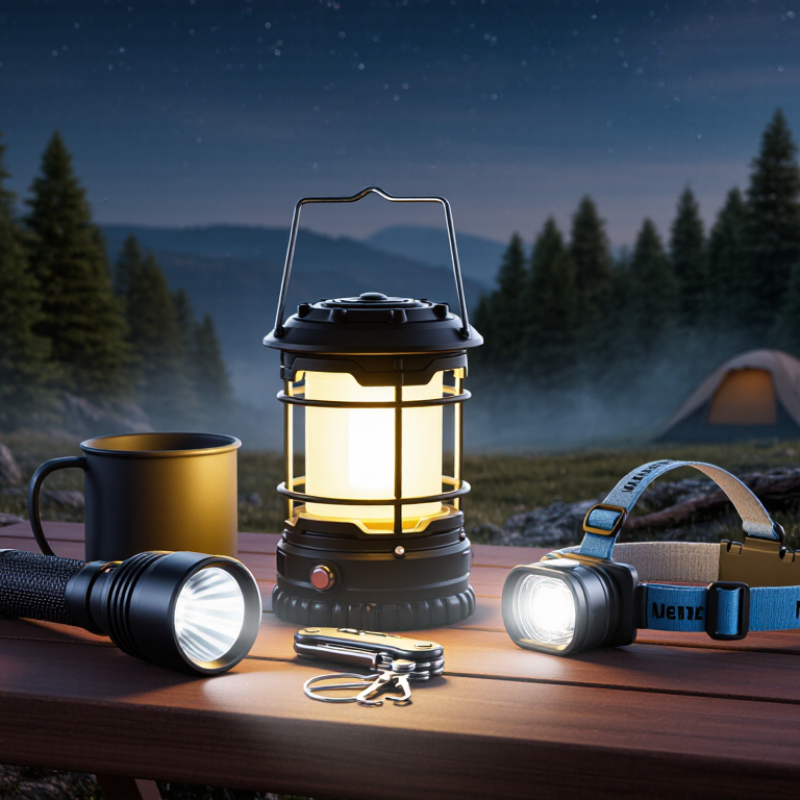
Outdoor Flashlight Types: Handhelds, Headlamps, Lanterns, and Hybrids
A handheld flashlight suits tasks that need a directed beam, such as checking a trail marker or looking beneath a car seat. Its main advantage is control: you can aim the light where you need it. The drawback becomes obvious when both hands are busy. A headlamp keeps the beam near your line of sight, which helps when setting up a tent or cooking after dark. That matters. But a bright beam can bother nearby people, so lower settings are useful around camp.
Lanterns spread light across a wider area. They work well on a picnic table or inside a tent, where a narrow beam would leave awkward shadows. Their light is less suited to spotting distant obstacles. Some lanterns can hang from a loop, but check that the hook feels secure before placing one overhead. Small details matter. A hybrid combines a focused beam with area lighting, reducing the need to carry separate devices. Still, extra functions can mean more controls to learn and more charging to remember.
The best type depends on the job, not a feature list. For a short walk, a headlamp may be more convenient than a lantern. For shared meals, broad light can feel less tiring than a beam pointed across the table. I would also check runtime at the setting I expect to use, not just the brightest mode. It is easy to overlook that. Cold weather, wet hands, and gloves can make tiny switches frustrating, too.
Compare Beam Distance and Hands-Free Use for Common Outdoor Tasks
For trail navigation, beam distance matters when you need to spot a marker beyond the next bend. ANSI/PLATO FL 1 defines beam distance as the point where illumination falls to 0.25 lux, roughly the level of a full moon on a clear night. Treat that figure as a comparison tool, not a promise: fog, rain, and tree cover can shorten useful visibility. A focused handheld flashlight can help scan distant ridgelines or search for a trail junction. But a long beam may create harsh glare on nearby rocks. More reach is not always better.
For cooking, setting up a tent, or checking a map, hands-free use usually matters more. A headlamp keeps both hands available, though its beam follows your gaze and can bother a nearby companion. Choose a model with a broad, lower-output setting for close work. The ANSI/PLATO FL 1 runtime test also gives useful context: runtime ends when output falls to 10 percent of its initial level. That does not mean the light suddenly goes dark. Still, the test may not match a cold, damp night in the field. I would compare beam distance, runtime, and beam shape together, then ask which task is most likely to leave you fumbling in the dark.
Read ANSI/PLATO FL 1 Ratings: Lumens, Candela, and Beam Distance
A useful outdoor flashlight is not simply the one with the highest lumen number. ANSI/PLATO FL 1 ratings give shoppers a more consistent way to compare output and beam performance. Lumens measure the total light leaving the flashlight. They do not show exactly where that light lands. A broad beam can brighten a campsite, while a narrower beam may help reveal a trail marker farther away. Not the whole story.
Candela measures peak beam intensity, or how strongly light is concentrated in one direction. Higher candela often means a more focused beam, which can make distant objects easier to see. Beam distance is calculated from that intensity, using a defined minimum light level. It is a comparison figure, not a promise of clear visibility in every setting. Fog, rain, dust, and nearby trees can change what you actually see. These details matter.
For walking a wooded path, compare candela and beam distance alongside lumens. For cooking at a campsite, a wider beam and useful nearby spill may feel more practical. Check runtime, too: the brightest setting may last far less than a lower mode. FL 1 tests follow set procedures, but real temperatures and battery condition vary. Ratings are helpful, though easy to overread. A high number cannot tell you whether the beam suits your hands, route, or night vision.
Check ANSI/PLATO FL 1 Runtime: Hours Until Output Falls to 10%
When comparing outdoor flashlights, look closely at runtime under the ANSI/PLATO FL 1 standard. It measures how many hours pass before output falls to 10% of its initial level. If a light starts at 800 lumens, the test ends near 80 lumens. The flashlight may still be on, but it is no longer producing its starting brightness. That distinction matters.
A listed runtime is not a promise of equally bright light for the entire period. Some flashlights maintain a steady beam, then dim sharply; others gradually lose brightness. Check the product’s output chart when available. A four-hour runtime could include hours at a much lower level, which may be fine for walking a familiar trail but frustrating when reading a map in the dark.
Think about the task, not just the biggest number. For a long evening outdoors, choose a runtime that leaves a buffer beyond your planned use. Cold weather, battery age, and frequent high-output use can shorten real-world performance. These variables are easy to overlook. I’d also treat the FL 1 figure as a useful comparison, not a perfect forecast: test conditions cannot reproduce every trip, and the final stretch may feel dimmer than expected.
What Is the Best Type of Outdoor Flashlight? — Check ANSI/PLATO FL 1 Runtime: Hours Until Output Falls to 10%
How to read the runtime: ANSI/PLATO FL 1 runtime is the time from 30 seconds after activation until light output falls to 10% of its initial measured level. The ranges above are general examples for comparable products, not guarantees for every flashlight; actual runtime varies by model, battery, operating mode, and conditions. For most hikers, a headlamp is the best hands-free choice; for a versatile handheld option, choose a rechargeable flashlight with a clearly stated FL 1 runtime.
Match Water Resistance to Conditions: IPX4 Splashing vs. IPX7 at 1 m for 30 min
What Is the Best Type of Outdoor Flashlight?
A flashlight’s water rating should match the weather and the way you use it. IPX4 means it is tested against splashing water from any direction. That suits light rain, damp hands, and a quick rinse after a muddy walk. It does not mean the light can be submerged. I once assumed “water-resistant” covered a dropped flashlight, but the rating matters.
IPX7 is tested for temporary immersion in water up to 1 meter deep for 30 minutes. That offers more protection if a light slips into a shallow stream or flooded tent floor. Still, the test uses controlled conditions. Water depth, temperature, and wear can affect real-world results. Not a swimming guarantee.
Check the casing, lens, and battery cover, especially after a hard drop. A pinched seal or loose cap can weaken protection, even on a higher-rated model. Also, “X” means no dust rating is specified; it does not confirm dust resistance. For routine rain, IPX4 may be enough. For wet routes or accidental dips, IPX7 adds useful insurance, though I would not rely on any rating without checking the manufacturer’s care instructions.
What Is the Best Type of Outdoor Flashlight?
Match water resistance to the conditions: IPX4 for splashes, or IPX7 for temporary immersion.
IPX4 indicates protection against splashing water from any direction; it does not specify an immersion depth. IPX7 indicates protection during temporary immersion in water up to 1 meter deep for up to 30 minutes. The zero shown for IPX4 means “no immersion rating,” not a measured immersion limit. Always check the flashlight’s instructions and condition before exposing it to water.