Metal Railings do more than mark the edge of a balcony or stair. They shape how a space feels, how people move through it, and how much maintenance an owner can expect. A brushed stainless-steel handrail feels cool beneath the palm; a painted wrought-iron panel adds weight and pattern. The right choice depends on setting, exposure, budget, and the visual character of the building.
Market figures offer useful context, but they need careful reading. Grand View Research estimated the global handrail market at about US$1.15 billion in 2022 and forecast continued growth through 2030. That figure covers handrails, not every railing system or material. Still, it reflects sustained demand across residential and commercial projects. Small details matter. As designer Charles Eames put it, “The details are not the details. They make the design.” His observation applies neatly to railings, where joints, finishes, and post spacing can change the whole impression.
This guide compares ten common types of Metal Railings, from classic wrought iron and durable steel to aluminum, stainless steel, glass-and-metal, and cable designs. Each option brings trade-offs. A slim cable system may preserve a view, yet require careful upkeep and tension checks. A heavy steel railing can feel reassuring, but may look out of place on a delicate porch. There is no perfect material for every project—and material choice alone cannot guarantee good results. The following overview considers appearance, durability, maintenance, and practical use, so readers can make a more informed shortlist.
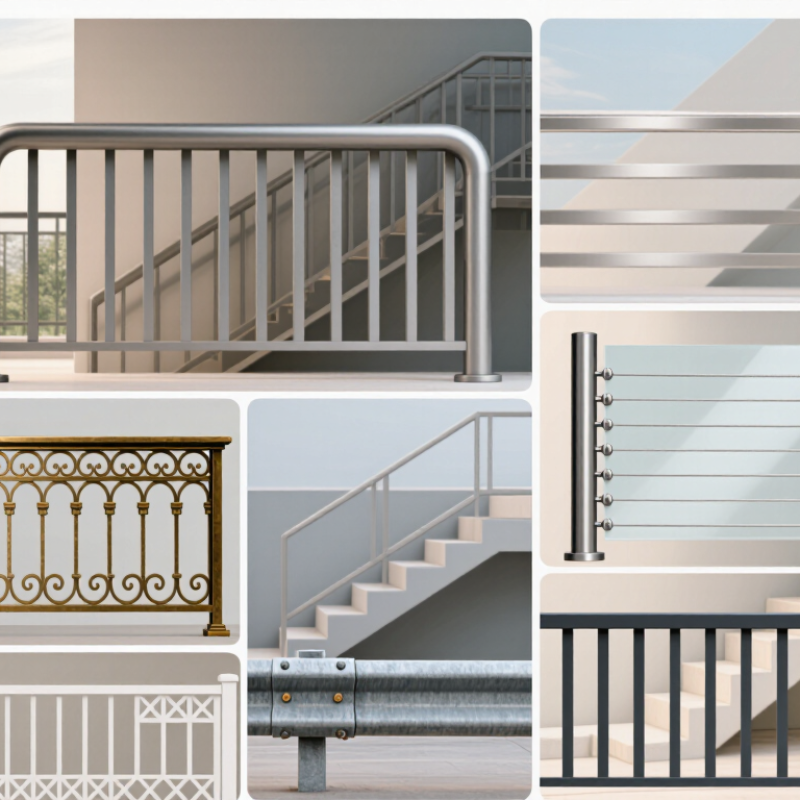
Metal railings are defined by both their material and their layout. Common choices include mild steel, stainless steel, aluminum, wrought iron, and galvanized steel. Each behaves differently outdoors. Aluminum is light and resists rust, while steel feels substantial but needs a suitable protective finish. Stainless steel suits many contemporary spaces, though salt air can still leave marks. No finish is maintenance-free.
Design options include vertical balusters, horizontal bars, cable infill, perforated panels, mesh, and decorative forged patterns. Simple pickets keep a clear view and are easy to inspect. Cable systems look open, but their fittings need periodic checks for looseness. Mesh can be useful near work areas where small objects might fall. Details matter. A railing should feel steady under a firm hand, with joints and posts suited to the expected use.
These designs appear on stairways, balconies, decks, porches, ramps, and industrial platforms. For a coastal deck, corrosion resistance may matter more than ornate detailing. In a busy stairwell, a comfortable, continuous handhold can be more useful than a striking pattern. The right choice depends on exposure, traffic, cleaning access, and the building itself. There is no universal winner; even a well-chosen railing can disappoint if installation or upkeep is overlooked. Local requirements also vary, so verify dimensions and safety details before specifying a system.

Wrought-iron railings suit curved staircases and intricate porch details, but the name can mislead. Many modern “wrought-iron” designs are actually fabricated from mild steel. Traditional wrought iron is worked into shape; cast iron is poured into molds, allowing heavier, repeated ornaments. Cast iron can look substantial, yet its rigidity makes careful installation and impact exposure worth considering. Details matter.
Steel railings offer strength and straightforward fabrication for balconies, decks, and stairs. The World Steel Association’s World Steel in Figures 2024 reports global crude steel production of 1,892.2 million tonnes in 2023. That scale reflects steel’s broad industrial use, not a guarantee that every railing will last. Coatings, weld quality, drainage, and upkeep still shape service life. A chipped coating near a damp stair base deserves attention.
Stainless steel is a strong choice where moisture or frequent cleaning is expected. The International Stainless Steel Forum’s Stainless Steel in Figures 2024 reports 58.4 million tonnes of stainless production in 2023. Its chromium-rich surface helps resist corrosion, though fingerprints and salt deposits can still appear. Brushed stainless gives a softer sheen; polished tubing reflects more light. It is not maintenance-free. Compare the site conditions, finish, joints, and repair options before choosing a railing.
Representative density of common railing metals
Density is shown in kilograms per cubic metre (kg/m³). Values are approximate, representative figures for the base metals; actual alloys and finished railing components may differ. Density alone does not indicate strength, durability, or suitability for a particular project.
Aluminum, brass, and expanded metal offer distinct looks and practical trade-offs. Aluminum railing is lightweight and resists rust, making it useful for balconies and exposed walkways. Check coating quality and connection details; thin sections can flex. The International Aluminium Institute reports that recycling aluminum uses about 5% of the energy required for primary production. That is useful lifecycle context, not a guarantee that a particular railing contains recycled material. Ask for documented material content.
Brass brings a warm, polished finish to staircases and interior balconies, but it can tarnish and needs regular care. Expanded metal is slit and stretched into a continuous mesh, often with diamond-shaped openings. It provides airflow and visibility, though sharp edges need careful finishing. World Steel Association’s World Steel in Figures 2025 reports 1,882.6 million tonnes of crude steel production in 2024; this is industry context, not a measure of railing quality. Still, details matter. Compare opening size, sheet thickness, support spacing, and hand-contact edges. A dense mesh may feel secure but block more light. The best choice depends on the site, finish expectations, and verified load requirements.
What Are the Top 10 Types of Metal Railings?
Cable, Mesh, and Perforated Metal Railing Systems
Cable railings use taut horizontal or vertical wires between sturdy posts. Their slim profile preserves views across decks and stair landings. Yet cable spacing, tension, and post strength need careful planning; loose lines can feel less secure. A handrail should still feel comfortable to grip, even when cables define the barrier.
Mesh railings use welded or woven metal panels, creating a more enclosed barrier. Small openings can help discourage climbing while allowing airflow and light. They suit balconies, walkways, and busy public spaces. The panel edges matter. Poorly finished edges may snag clothing or collect grime, so inspect joints and coatings during selection. After rain, trapped debris near lower rails can reveal drainage problems.
Perforated metal panels balance privacy, airflow, and visibility. Hole size and pattern change the effect: tighter perforations screen more, while larger openings feel lighter. A sample panel viewed outdoors can look different from a catalog image. That surprised me. Consider corrosion resistance, drainage, cleaning access, and how each panel meets its posts. None is maintenance-free. Match the system to its setting and expected use, and have connections and dimensions checked against applicable building requirements by a qualified professional.
| Railing Type | Typical Materials | Infill or Construction | Visibility and Appearance | Common Applications | Key Considerations |
|---|---|---|---|---|---|
| Cable Railing | Stainless steel cable with metal posts and a top rail | Tensioned horizontal cables pass through or attach to posts. | Open sightlines and a lightweight, contemporary appearance. | Decks, balconies, stairs, and outdoor terraces | Cables require proper tensioning and periodic inspection. Check local rules for openings, climbability, and permitted infill. |
| Welded Wire Mesh Railing | Welded steel or stainless steel wire panels with metal framing | Crossing wires are welded at their intersections to form a grid. | Good airflow and visibility, with a regular grid pattern. | Stairways, balconies, walkways, and commercial or industrial settings | Grid size, wire thickness, panel support, and corrosion protection should suit the location and applicable safety requirements. |
| Perforated Metal Railing | Perforated steel or aluminum sheet in a metal frame | Sheet metal contains repeated round, slotted, or decorative openings. | Provides partial screening while allowing some light and air through. | Balconies, public buildings, privacy screens, and rooftop areas | Open-area percentage affects privacy, airflow, weight, and visibility. Panel edges and fixings need suitable finishing. |
| Expanded Metal Railing | Expanded steel or aluminum sheet, often framed | A slitted sheet is stretched to create an integral diamond-shaped mesh. | Textured, industrial appearance with open areas for light and airflow. | Industrial platforms, service areas, stairs, and public walkways | Mesh orientation and opening size affect appearance and performance. Select a finish suitable for indoor or outdoor exposure. |
| Vertical Picket Railing | Steel or aluminum posts, rails, and vertical bars | Evenly spaced vertical pickets connect a top and bottom rail. | Traditional, clearly defined appearance with open views between bars. | Porches, balconies, stairs, gardens, and perimeter barriers | Spacing and height must comply with local building rules. Vertical members can be easier to keep clean than dense mesh. |
| Horizontal Bar Railing | Steel, stainless steel, or aluminum bars and posts | Multiple horizontal rails or bars span between vertical supports. | Clean linear appearance with open sightlines. | Modern residential and commercial decks, balconies, and stairs | Horizontal members may be treated as footholds under some safety codes. Confirm local requirements before selecting this configuration. |
| Ornamental Wrought-Iron-Style Railing | Wrought iron or fabricated steel | Bars, curves, scrolls, and other decorative metal elements are joined into panels. | Decorative, substantial appearance; infill can range from open to intricate. | Entry steps, balconies, gardens, and heritage-style buildings | Iron and steel can corrode if coatings are damaged. Inspect joints and finishes, especially in damp or coastal environments. |
| Stainless Steel Rod Railing | Stainless steel rods, posts, and handrails | Solid horizontal or vertical rods are fixed to a supporting frame. | Slim, polished appearance with less visual movement than flexible cable. | Interior stairs, balconies, offices, and contemporary public spaces | Rod diameter, spacing, connections, and stainless-steel grade should be selected for the structural loads and exposure conditions. |
| Aluminum Panel Railing | Aluminum panels, posts, and rails | Solid or patterned panels fit between structural posts. | Can provide a clean, uniform look and more screening than open-bar systems. | Residential balconies, patios, stairs, and exterior platforms | Aluminum is relatively lightweight and naturally forms a protective oxide layer, but alloy, coating, fasteners, and drainage still matter. |
| Tubular or Pipe Railing | Steel, stainless steel, or aluminum tubing | Round or shaped tubes form handrails, posts, and horizontal or vertical infill. | Simple, functional appearance; the profile can be rounded for gripping. | Industrial facilities, ramps, stairs, walkways, and service platforms | Tube dimensions, wall thickness, connections, and surface finish should match the intended loads, environment, and accessibility requirements. |
Note: Railing height, opening limits, load requirements, and handrail provisions vary by location and building use. Verify the applicable building code and project requirements before choosing or installing a system.
Metal railings vary more in upkeep than their similar silhouettes suggest. Wrought iron and cast iron feel substantial and suit stairs, porches, and heritage-style homes, but exposed paint can chip and rust. Mild steel is strong and adaptable; it needs a protective coating, especially near rain or salt. Galvanized steel resists corrosion better, though damaged zinc coating still needs attention. Stainless steel handles wet settings well, but fingerprints and surface deposits can show. Aluminum is light and naturally corrosion-resistant, making it practical for balconies and coastal properties, though it dents more readily than steel.
Design changes performance, too. Cable railings use stainless cables for open views, but tension and fittings need periodic checks. Perforated-metal panels block more wind and provide privacy; their edges and finish deserve inspection. Expanded-metal railings are sturdy and ventilated, though dust can collect in the mesh. Brass offers a warm decorative finish, usually indoors, but it can tarnish. Trade-offs matter. A railing’s lifespan depends on drainage, coating quality, and local exposure—not material alone.
For busy exterior stairs, coated or galvanized steel can be a sensible balance of strength and care. Aluminum suits lighter-duty balconies where easy handling matters. Stainless steel is often chosen for damp areas, but grade and installation details count. I would not call any option maintenance-free. Check joints, fasteners, and paint once or twice a year, and clean off grit before it traps moisture. Even a durable railing can disappoint if water sits at its base.
Fill out the form below and our team will get back to you ASAP.
Snake Tray® is Green and Proudly Powered by the Sun! Snake Tray is committed to designing and manufacturing products that have many green benefits. Our products are made of recycled goods, minimize material waste, are energy efficient, use less non-renewable resources and nest together read more…
Snake Tray® 291 Skip Lane, Bay Shore NY 11706 | PHONE: 631-674-0004 | FAX: 631-674-0010 | www.bakoselectric.com | LEGAL | MADE IN USA
© 2025 SnakeTray. All rights reserved
Fill out the form below to download your document.