What Are the Best Evaporation Evaporators from China?
Choosing the best Evaporation Evaporators from China requires more than comparing catalog prices. A reliable decision depends on process data, equipment design, factory experience, and long-term service.
Chinese manufacturers offer falling-film, rising-film, forced-circulation, vacuum, and MVR systems. Each design fits different liquids and production targets. For example, a falling-film unit may suit heat-sensitive juice. A forced-circulation model can handle thicker, crystallizing solutions. MVR systems may reduce steam consumption, but they usually require higher investment and stronger technical support.
Details matter.
Look for evaporator capacity, heating area, evaporation rate, material grade, vacuum stability, and automatic controls. Stainless steel 316L may be necessary for corrosive or hygienic applications. Ask for heat-transfer calculations, energy data, weld standards, and factory acceptance testing. A serious supplier should explain these figures clearly, not hide behind impressive photographs.
Supplier verification also deserves careful attention. Review completed projects, operating references, quality certificates, and spare-parts availability. Request a video inspection or an in-person factory audit when practical. Clear documentation can reveal more than a polished sales presentation.
However, no manufacturer is perfect. Published energy savings may depend on feed concentration, steam pressure, and local operating conditions. Laboratory results may not match continuous production. Buyers should test representative materials whenever possible and define acceptance criteria before signing a contract.
This guide compares Chinese Evaporation Evaporators through practical, technical, and commercial perspectives. It focuses on performance, safety, maintainability, customization, and lifecycle value. The final choice should match the actual process, not merely the lowest quotation.
What Is an Evaporation Evaporator and How Does It Work?
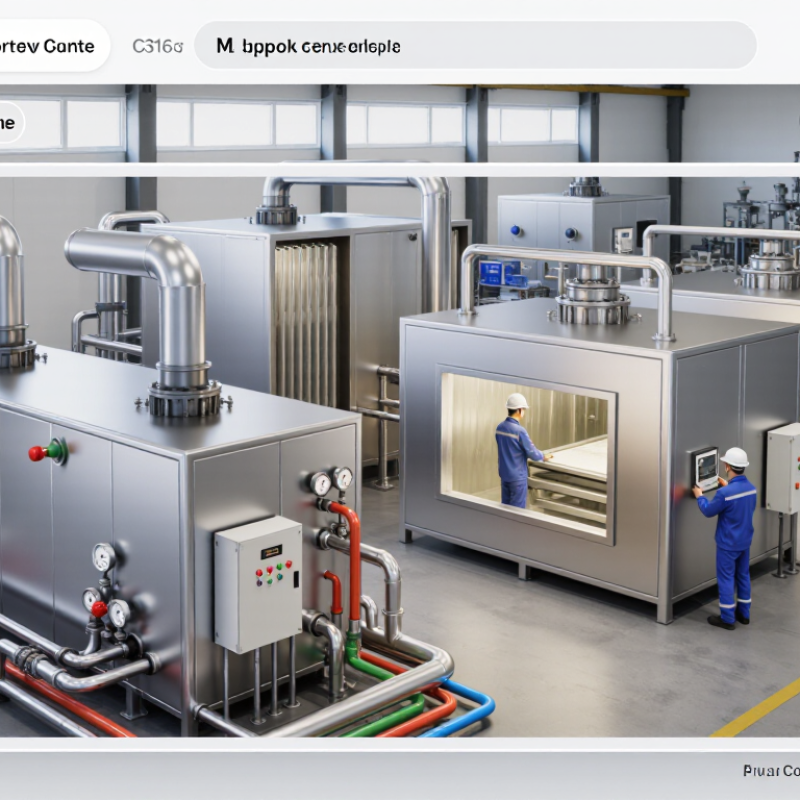
An evaporation evaporator is process equipment that removes water or another volatile liquid from a solution. It concentrates useful solids without directly drying the entire mixture. A feed enters the heating chamber, where steam or another heat source raises its temperature. The liquid begins to boil, producing vapor that separates in a vapor-liquid chamber. This is not ordinary drying. It is controlled boiling.
Common designs include falling-film, rising-film, forced-circulation, and multi-effect evaporators. A falling-film model distributes liquid across heated tubes. The thin film flows downward while steam condenses outside the tubes. Heat crosses the tube wall, and vapor leaves through a separator. Vacuum operation lowers the boiling temperature, which helps protect heat-sensitive materials. Multi-effect systems reuse vapor from one chamber to heat another. This can reduce steam consumption, but it adds controls and maintenance points. Small details matter.
When evaluating equipment made in China, request performance data based on your actual feed, solids content, viscosity, and target capacity. A credible manufacturer should explain heat-transfer area, separator efficiency, materials, weld inspection, and cleaning access. Check whether the pump can handle crystallizing or thick liquid. Fouling is often underestimated. I would also ask for a factory acceptance test, although test conditions may not fully represent daily production. That limitation deserves honest discussion. Reliable controls should monitor temperature, vacuum, pressure, feed flow, and final concentration. A clear maintenance plan is essential.
What Are the Best Evaporation Evaporators from China?
An evaporation evaporator removes water from a liquid by heating it until the solvent vaporizes. The vapor is separated from the concentrated product, and the process can be arranged in single-effect, multiple-effect, or mechanical vapor recompression systems.
The chart shows representative steam-economy ranges for commonly used evaporator configurations. Multiple-effect systems reuse vapor energy, while MVR systems recycle vapor mechanically and can achieve much higher steam economy. Actual performance depends on feed properties, concentration targets, temperature, fouling, and system design.
Which Types of Evaporators Are Manufactured in China?
China manufactures a broad range of industrial evaporators, not one universal “best” model. Falling-film evaporators suit heat-sensitive liquids, such as milk, fruit juice, and botanical extracts. They spread liquid into a thin film across heated tubes. This reduces residence time and limits scorching.
Rising-film units handle dilute liquids with strong natural circulation. Forced-circulation evaporators are better for viscous fluids, crystallizing solutions, and high-solids wastewater. Scraped-surface evaporators manage sticky products by continuously removing deposits from the heating wall. Chinese factories also produce multi-effect systems and mechanical vapor recompression (MVR) evaporators. MVR units reuse vapor energy, cutting steam demand. The International Energy Agency reported that industry consumed about 37% of global final energy in 2022. That figure makes energy recovery more than a selling point. It is a design priority. Market research from Grand View Research also identifies food processing, chemicals, and pharmaceuticals as major evaporator application sectors.
Tips: Match the evaporator to viscosity, solids content, fouling risk, and hourly throughput. Ask for heat-transfer area calculations, vapor-load data, and a factory acceptance test. A polished stainless-steel frame proves little. Product trials matter more. In my experience, early samples often expose foaming or scaling problems that drawings miss. One imperfect assumption can increase cleaning time and operating cost. Also check the heating medium, vacuum stability, gasket material, and control accuracy before comparing prices.
How to Compare China’s Best Evaporators by Performance and Design?
What Are the Best Evaporation Evaporators from China?
How to Compare China’s Best Evaporators by Performance and Design?
Comparing Chinese evaporators requires more than checking rated capacity. Record evaporation output, steam consumption, vacuum level, and final product concentration. The European Commission’s 2019 Food, Drink and Milk BREF identifies multiple-effect evaporation and vapor recompression as important energy-saving options. These designs can reduce fresh steam demand, but actual savings depend on feed properties and operating control.
Look for measurable performance. A useful factory trial should report kilograms of water removed per hour and kilograms of steam consumed per kilogram of water evaporated. Check heat-transfer area, heating-surface material, residence time, and cleaning intervals. Short residence time can protect heat-sensitive liquids. Wider tubes may reduce blockage when the feed contains solids. Small details matter.
The IEA’s Energy Efficiency 2023 report states that industry uses about 37% of global final energy. Evaporator efficiency therefore affects both operating cost and emissions. Yet catalog figures often use clean water at stable conditions. Real wastewater, syrup, or extract may foul faster. That is the uncomfortable part. Request test data using your actual feed, not a perfect laboratory substitute. Compare condensate quality, control response, maintenance access, and spare-part availability. An independent performance test remains more reliable than a polished brochure.
Which Industries Benefit Most from Chinese Evaporation Equipment?
Chinese evaporation equipment benefits industries that must remove water, recover solids, or concentrate valuable liquids. The strongest applications appear in food processing, dairy production, wastewater treatment, chemicals, and mineral processing.
Food manufacturers use falling-film evaporators for fruit juice, starch solutions, and plant extracts. Dairy facilities often concentrate milk or whey before drying. These systems can reduce transport volume and improve energy use when vapor recompression is properly designed. Small details matter. Product viscosity, foaming, and heat sensitivity can change the entire equipment choice.
Industrial wastewater plants also gain practical value from forced-circulation evaporators. They can handle concentrated streams that standard treatment methods struggle to process. Chemical producers may recover salts, solvents, or reusable process water. Mineral processors use evaporation when brine concentration supports later separation steps. Engineers should verify corrosion resistance, cleaning access, and automation before comparing prices. A cheaper unit may require more downtime, which weakens its real return.
In plant evaluations, performance depends on feed testing rather than catalog capacity alone. Suppliers should provide heat-transfer calculations, material certificates, trial data, and clear maintenance requirements. Chinese manufacturers can offer flexible layouts and competitive engineering, but quality varies between projects. Some proposals look impressive yet underestimate scaling. That is a risk worth questioning. Reliable buyers usually request pilot testing, reference installations, and after-sales response terms before placing an order.
What Should Buyers Check Before Choosing a Chinese Evaporator?
What Are the Best Evaporation Evaporators from China?
A suitable Chinese evaporator should match your product, capacity, and operating conditions. Buyers should not select equipment from appearance or price alone. Check the evaporation rate, feed concentration, final moisture target, heating medium, and expected operating hours. A supplier with process experience should explain these choices clearly. Ask for heat-transfer calculations and a written performance guarantee. Vague answers deserve caution.
Inspect the evaporator’s material and construction details. Stainless steel grade, weld quality, tube thickness, seals, insulation, and surface finish affect hygiene and service life. Request drawings, test records, and videos of a completed unit. If possible, arrange a factory audit or hire an independent inspector. Review references from facilities processing similar liquids. A clean workshop helps, but it does not prove process performance. This is an easy mistake.
Tips: Compare total ownership cost, not only the quotation. Include steam, electricity, cooling water, cleaning chemicals, spare parts, installation, and technician support. Confirm delivery scope in writing. Check whether critical components are standard and replaceable. Ask for a factory acceptance test using a representative sample. Small details matter. Also, leave room for uncertainty; real feed materials may vary more than laboratory data suggests. A pilot test can prevent an expensive mismatch.