Top Bulk Sorter Manufacturers and Suppliers Worldwide
A Bulk Sorter is more than a machine that spots color differences. In a processing plant, it must identify defects at production speed, separate acceptable product cleanly, and keep working through dust, vibration, and uneven feed. Buyers comparing the top bulk sorter manufacturers and suppliers worldwide should therefore look beyond headline throughput. Detection accuracy, product loss, changeover time, service access, and local technical support all matter. Small details count.
The need is practical, not abstract. FAO’s 2023 report, Tracking progress on food and agriculture-related SDG indicators, estimates that 13.2% of food was lost globally after harvest and before retail in 2021. That figure covers many causes; sorting equipment alone cannot prevent food loss. Still, a well-matched sorter can help processors remove defects earlier and protect usable product. As FAO Director-General Qu Dongyu said, “There is no room for food loss and waste in a world where 733 million people still go hungry every day.”
This guide compares manufacturers and suppliers through the questions plant teams actually face: Which products can a system handle? How does it perform under real operating conditions? What support is available after installation? Specifications deserve scrutiny, and supplier claims should be tested against product trials and measurable results. Not a silver bullet. Even so, the right Bulk Sorter can improve consistency, reduce avoidable rejects, and give operators clearer control over quality. The best choice depends on the material, the line, and the people who run it.
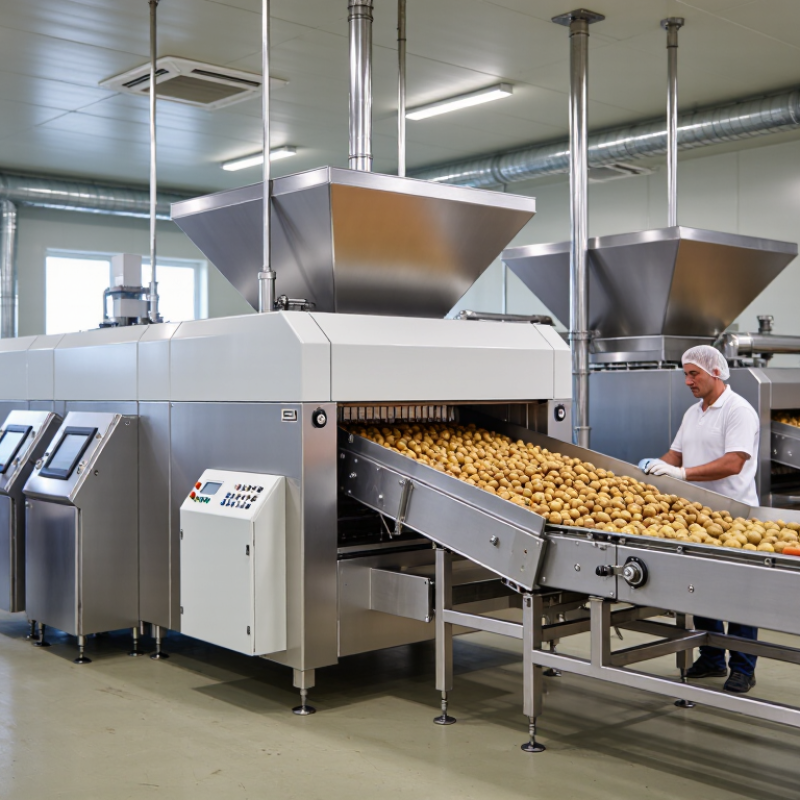
Bulk Sorters: Definition, Purpose, and Role in Material Handling
A bulk sorter is a machine that separates loose materials into defined groups as they move through a processing line. Depending on the material, it may use screens, belts, cameras, air jets, or magnetic fields. The aim is simple: direct each item or particle toward the correct outlet. In a recycling facility, for example, sensors can identify pieces by color or composition, while diverters move them into separate chutes.
Bulk sorters help control flow between receiving, processing, and storage. They can reduce repetitive manual handling and make output more consistent, especially when a line runs at high volume. They also support quality checks by removing unwanted material before it reaches a later process. Small details matter. Dust, moisture, uneven feed rates, and mixed particle sizes can affect sorting accuracy, so equipment choice should reflect actual operating conditions.
A sorter is not a cure-all. Operators still need to monitor rejects, adjust settings, and keep sensors or screens clean. Even well-designed systems can miss items when materials overlap or arrive in clumps. That can be frustrating. For buyers comparing equipment, useful measures include throughput, separation accuracy, maintenance needs, and how easily the system fits the existing line. A careful trial with representative material can reveal problems that a specification sheet may not show.
Top Bulk Sorter Manufacturers and Suppliers Worldwide - Bulk Sorters: Definition, Purpose, and Role in Material Handling
Bulk sorters separate loose materials into product streams according to measurable properties such as color, shape, composition, or density. Equipment configurations and throughput depend on the material, feed consistency, particle size, and required sorting accuracy.
| Sorter Type | How It Sorts | Typical Materials | Primary Purpose | Role in Material Handling | Common Supplier Capabilities |
|---|---|---|---|---|---|
| Color and optical sorter | Cameras and optical sensors identify visible differences; controlled air jets or mechanical devices remove selected pieces. | Grains, seeds, nuts, pulses, plastics, and processed food ingredients. | Remove discolored, damaged, or visually different particles. | Provides quality control after screening or cleaning and before storage or packaging. | Application testing, optical configuration, ejection systems, installation, and operator training. |
| Near-infrared sorter | Near-infrared sensors distinguish materials by their spectral response, including some differences not evident to the human eye. | Mixed plastics, paper, wood, minerals, and agricultural products, subject to material and surface conditions. | Separate material classes or identify selected contaminants. | Supports recovery of saleable fractions in recycling and processing lines. | Sensor selection, material trials, line integration, and sorting-program setup. |
| X-ray sorter | X-ray transmission measurements reveal differences in density or atomic composition; detected items are rejected or diverted. | Food products, minerals, and selected recycled materials where internal or density differences are relevant. | Detect dense foreign bodies or separate materials with differing X-ray responses. | Adds an inspection or separation stage where surface-only inspection is insufficient. | System design, radiation-safety features, validation support, maintenance, and operator instruction. |
| Electromagnetic and metal sorter | Inductive sensors or magnetic fields detect ferrous and, in suitable systems, non-ferrous metal within a material stream. | Recyclable waste, shredded material, aggregates, and bulk products requiring metal removal. | Recover metal fractions or protect downstream equipment from metal contamination. | Usually installed after size reduction or screening, with layout matched to the feed and conveyor. | Conveyor or chute integration, sensor tuning, separation testing, and service support. |
| Laser and shape sorter | Laser-based or 3D optical measurements assess surface, contour, or shape characteristics and trigger selective ejection. | Selected minerals, plastics, wood, and agricultural products with distinguishable surface or shape properties. | Separate particles by shape, surface features, or other measurable optical characteristics. | Enables targeted separation where color alone does not provide enough information. | Feasibility testing, sensor configuration, process commissioning, and sorting-parameter adjustment. |
| Density-based sorter | Air, fluid, or vibration-based separation exploits differences in particle density, settling behavior, or aerodynamic response. | Grains, seeds, minerals, and other materials with suitable differences in physical behavior. | Separate lighter or heavier fractions and remove low-density impurities. | Complements screening and optical sorting when physical separation properties are useful. | Process trials, airflow or vibration adjustment, dust-control options, and line balancing. |
| Supplier and system-integration services | Suppliers assess feed characteristics and combine suitable sensors, feeders, conveyors, ejection devices, and controls. | Agricultural products, food, minerals, aggregates, and recyclable materials. | Match sorting technology and equipment configuration to the process objective. | Connects sorting equipment with upstream preparation and downstream conveying, storage, or packaging. | Material testing, equipment supply, engineering, commissioning, spare parts, and after-sales service. |
Selection note: Confirm particle-size range, feed rate, moisture, dust level, acceptable product loss, required separation accuracy, and applicable safety requirements with the equipment supplier. Performance depends on the specific material and process conditions.