Choosing reliable Smartwatch Sport Watch suppliers requires more than comparing prices on a product page. Global buyers need evidence of manufacturing experience, stable quality control, and responsive communication. A supplier may display impressive specifications, yet performance can change between samples and bulk orders. That gap deserves attention.
This guide examines leading suppliers for international sourcing teams, distributors, and private-label brands. It considers production capacity, sensor accuracy, battery performance, waterproof testing, app compatibility, and customization options. Practical details matter. A sample should survive repeated charging, outdoor workouts, sweat exposure, and daily screen use. Buyers should also review factory audits, warranty terms, packaging quality, and available compliance documentation. Claims should be verified, not simply accepted.
Supplier experience is valuable. So is transparent evidence. Strong manufacturers can explain their testing process, component sources, minimum order quantities, and expected lead times. They should provide clear answers about Bluetooth versions, health-data limitations, software updates, and after-sales support. These points affect returns and customer trust.
No supplier is perfect. That is worth remembering. A large factory may offer scale but slower communication. A smaller specialist may provide better customization but limited capacity. Pricing can also hide costs for molds, software changes, shipping, or replacement units. This overview offers a practical starting point, not a final purchasing decision. Buyers should request current samples, conduct independent checks, and confirm all commercial terms in writing before placing an order. Good sourcing is careful, sometimes slow, and rarely based on one impressive product image.
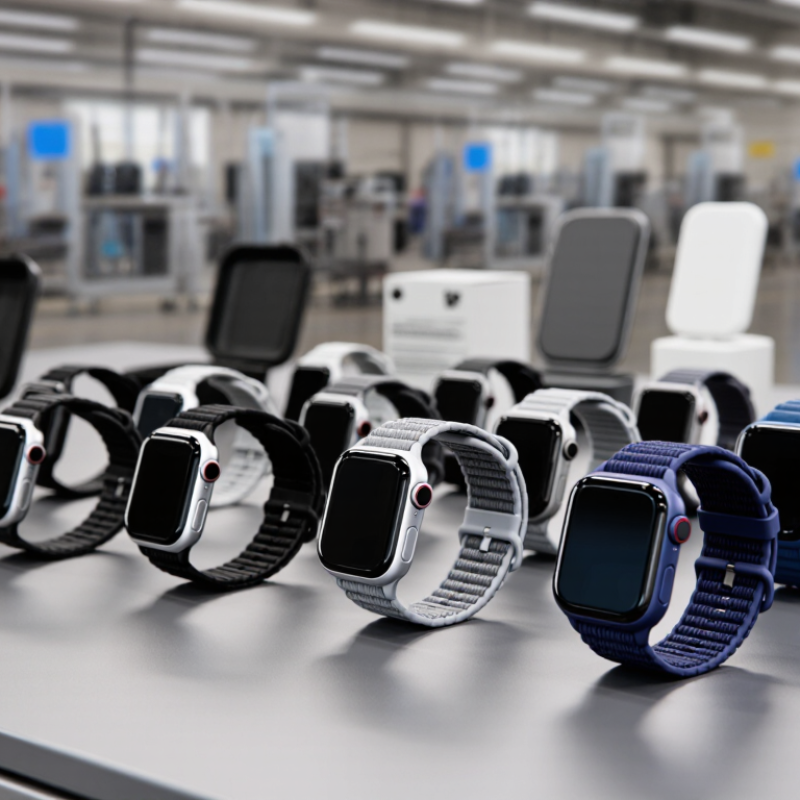
Global Smartwatch Sport Watch Supplier Market Overview
The global smartwatch sport watch market is expanding through fitness tracking, outdoor navigation, and health monitoring. IDC’s Worldwide Quarterly Wearable Device Tracker reported 520.5 million wearable device shipments in 2023, rising 1.7% year over year. However, Counterpoint Research recorded a 1% decline in global smartwatch shipments during the same period. These figures seem inconsistent. They use different product definitions, showing why buyers should examine reports carefully.
Supplier selection now depends on more than unit pricing. Experienced buyers compare GNSS accuracy, heart-rate sensor performance, battery endurance, water resistance, and application stability. A sports watch may claim ten days of battery life, but continuous GPS can reduce it sharply. Test the device outdoors, not only in a showroom. Certification planning also matters. Suppliers should provide documented compliance for radio, battery, charger, and regional safety requirements. The paperwork can reveal more than the product photos.
Market research from Grand View Research identifies rising demand for connected fitness devices, especially among recreational athletes and outdoor users. Yet forecasts vary by research method and region. That is a useful warning. Buyers should request production samples, quality-control records, failure-rate data, and realistic minimum order quantities. A low quotation may hide limited firmware support or unstable component sourcing. Strong suppliers explain their limitations clearly, maintain traceable testing, and support software updates after delivery. Not every promising specification survives daily training.

Global Smartwatch Sport Watch Supplier Market Overview: regional digital-connectivity readiness as a demand indicator for connected sport watches.
Higher internet-use rates generally indicate stronger readiness for app-connected wearables, online purchasing, cloud synchronization, and subscription-based sport features. Data shows the percentage of population using the internet by region in 2023, rounded from the World Bank indicator IT.NET.USER.ZS.
Choosing sport smartwatch suppliers requires more than comparing unit prices. Experienced buyers inspect production history, testing procedures, and communication quality. A supplier should explain sensor accuracy, battery performance, water resistance, and GPS reliability in clear terms. Vague promises are warning signs.
Request recent samples before signing a large order. Test them during running, cycling, and outdoor training. Check heart-rate readings, screen visibility under direct sunlight, charging stability, and strap durability. Review factory quality records, product certifications, inspection reports, and traceable component information. Reliable suppliers should also provide realistic lead times, transparent minimum order quantities, and responsive after-sales support.
Tips: Ask for sample test data. Confirm firmware update procedures. Clarify warranty handling. Inspect packaging carefully. Do not trust polished presentations alone.
International supply work also depends on documentation and risk control. Confirm product specifications, labeling requirements, shipping terms, and data protection practices for each target market. A secure mobile application matters as much as the watch itself. I have found that small communication delays can reveal larger management problems. Still, no supplier is flawless. Leave room for testing mistakes, revised forecasts, and unexpected component shortages. A practical evaluation balances performance, evidence, service, and long-term cooperation.
| Evaluation Dimension | Recommended Benchmark | What Global Buyers Should Verify | Suggested Weight |
|---|---|---|---|
| Product Functionality | GPS, heart-rate monitoring, activity tracking, sleep tracking, notifications, and sports modes should match the target market and product positioning. | Review a complete specification sheet, operating demonstration, sample test results, app screenshots, and the list of supported sports and mobile operating systems. | 15% |
| Water and Dust Resistance | The stated IP rating should be supported by an applicable test report. IP67 and IP68 indicate dust protection and different levels of water protection under defined laboratory conditions. | Request the rating certificate or laboratory report, test conditions, model number, and limitations for swimming, diving, salt water, or hot water exposure. | 8% |
| Battery Performance | Battery life should be stated under clearly defined usage conditions rather than as a single unrestricted figure. | Compare test results for standby, normal use, continuous heart-rate monitoring, GPS tracking, display-on time, charging duration, and battery capacity. | 10% |
| Wireless and Mobile Compatibility | Bluetooth functions, application compatibility, and regional wireless requirements should be documented before purchase. | Verify Bluetooth qualification information where applicable, supported Android and iOS versions, pairing stability, firmware-update procedures, and language support. | 8% |
| Health-Related Feature Claims | Wellness features must be distinguished from regulated medical functions. Claims should be appropriate for the destination market. | Request validation reports, claim substantiation, user instructions, limitations, privacy disclosures, and any required medical-device or market-specific documentation. | 8% |
| Compliance Documentation | Products should have documentation relevant to the destination market, such as radio, electrical safety, chemical-substance, and battery transport requirements. | Check applicable conformity declarations, test reports, RoHS or REACH-related evidence, battery documentation, and destination-country labeling requirements. | 12% |
| Battery Safety and Transport | Lithium-ion batteries require controlled handling, packaging, and transport documentation for international shipment. | Request UN 38.3 test summary information, battery specifications, safety data where applicable, packaging details, and transport classification documents. | 8% |
| Manufacturing Quality System | A documented quality-management process should cover incoming materials, production inspection, final testing, traceability, and corrective action. | Review quality certificates when available, inspection procedures, defect records, calibration controls, production photos, and an independent factory-audit report. | 10% |
| Quality-Control Acceptance | The purchase agreement should define measurable acceptance criteria, sampling standards, packaging requirements, and handling of defective units. | Confirm the agreed inspection level, allowable defect limits, functional test checklist, pre-shipment inspection process, and replacement or credit procedure. | 7% |
| Customization Capability | Customization may include casing, display, firmware, packaging, user interface, application localization, and documentation. | Compare engineering charges, tooling ownership, minimum order quantities, sample approval stages, change-control procedures, and intellectual-property terms. | 5% |
| Supply Capacity and Lead Time | Lead times should be provided separately for samples, first production, repeat orders, and customized products. | Request a capacity statement, production schedule, component-risk assessment, stated lead-time assumptions, and a written plan for urgent or repeat orders. | 7% |
| Commercial Terms and Landed Cost | The comparison should include unit price, tooling, packaging, testing, freight, duties, payment terms, and the selected Incoterms® rule. | Obtain a formal quotation with currency, validity period, price-break structure, payment milestones, shipping terms, insurance responsibility, and all recurring fees. | 8% |
| Warranty and After-Sales Support | Warranty coverage, response times, spare-part availability, software support, and repair or replacement procedures should be written into the contract. | Verify warranty duration, exclusions, return process, technical-support channels, firmware-support period, replacement policy, and service-level commitments. | 7% |
| Data Security and Privacy | Connected watches may collect personal, location, and health-related data, so data handling must be transparent and market-appropriate. | Review the privacy policy, data-storage locations, account controls, encryption statements, deletion procedures, permissions, and third-party data-sharing disclosures. | 5% |
| Total Suggested Evaluation Weight | 118% | ||
Global buyers should distinguish supplier types before comparing product catalogs. Original design manufacturers usually provide reference hardware, firmware support, and faster customization. Contract manufacturers focus on scalable assembly, packaging, and quality control. Specialized sports-watch suppliers often add stronger GPS modules, optical heart-rate sensors, barometers, and water-resistance testing.
Market data supports this segmentation. Grand View Research valued the global smartwatch market at about USD 33.6 billion in 2023 and projected an 18% compound annual growth rate through 2030.
Counterpoint Research reported a 7% year-on-year decline in global smartwatch shipments during 2024, showing that demand alone does not guarantee stable orders. Buyers need suppliers with flexible production, not only attractive samples.
Capability checks should include sensor accuracy, battery performance, app localization, data security, and after-sales responsiveness. In supplier audits, test watches during running, cycling, and outdoor navigation, rather than trusting specification sheets. Ask for battery results under continuous GPS use. Request documented quality records and pre-shipment inspection procedures. Small details matter.
Some suppliers promise too much. That deserves scrutiny. A capable partner should explain limitations clearly, including GPS drift, skin-contact errors, and regional software restrictions.
Suppliers with in-house engineering can revise firmware faster, while trading companies may offer broader sourcing but less technical control. IDC’s wearable-device research also shows the scale of the category, with worldwide shipments exceeding 500 million units in recent years. Volume is impressive, but dependable execution matters more.
Choosing a smartwatch sport watch supplier requires more than comparing catalogue prices. In factory evaluations, I check sample consistency, screen response, sensor readings, strap durability, and charging performance. One weak sample can reveal larger production risks. Request at least three pre-production units before approving an order.
Compliance documents should match the destination market and product configuration. Ask for applicable radio, battery, electrical safety, and material test reports. Also review data protection practices if the watch connects with a mobile application. Reports should be traceable to the exact model, firmware version, and factory. A certificate alone is not enough. Verify its scope and validity.
Pricing needs a wider view. Include tooling, packaging, testing, shipping, warranty handling, and possible firmware changes. A low quotation may hide expensive revisions later. Customization can involve logos, casing colors, straps, menus, sensors, packaging, and app functions. Confirm minimum order quantities, sample fees, lead times, and ownership of developed files. A supplier promising everything immediately deserves careful questioning. No supplier is perfect. However, clear records, realistic schedules, responsive engineers, and honest limitations usually indicate a more dependable partnership.
Global buyers selecting sport smartwatch suppliers need more than low quotations.
They need evidence that survives daily production pressure. Request factory profiles, quality records, sample units, and recent shipment references. Test samples during running, swimming, charging, and outdoor GPS use. Check screen visibility, strap comfort, battery consistency, and app stability. Record every result in a shared evaluation sheet. A polished sample can hide weak process control. One supplier may pass visual checks but miss battery tests.
Choose suppliers with clear engineering contacts and realistic capacity.
Ask how they handle firmware changes, component shortages, and delayed inspections. Their answers reveal more than a sales presentation. Set written standards for sensor accuracy, water resistance, packaging, defect rates, and delivery dates. Use pre-production samples and independent inspections before larger orders.
Keep payment stages tied to measurable milestones. Meet through video calls, factory audits, and monthly scorecards. Review defects, response time, corrective actions, and forecast accuracy. Keep communication factual and documented.
Global sourcing also requires compliance checks.
Confirm product documentation, battery transport records, privacy practices, and market-specific testing. Requirements vary by destination. Do not accept vague certificates. Verify issuing bodies and validity dates. Leave room for honest review.
A supplier may be reliable yet unsuitable for your sales season or target price. Small pilot orders expose this gap with less risk. Yet pilot orders can create false confidence if volumes are too small. That warning matters.
Manage the relationship through shared forecasts, realistic changes, and prompt feedback. Document agreed changes within 24 hours.
Fill out the form below and our team will get back to you ASAP.
Snake Tray® is Green and Proudly Powered by the Sun! Snake Tray is committed to designing and manufacturing products that have many green benefits. Our products are made of recycled goods, minimize material waste, are energy efficient, use less non-renewable resources and nest together read more…
Snake Tray® 291 Skip Lane, Bay Shore NY 11706 | PHONE: 631-674-0004 | FAX: 631-674-0010 | www.bakoselectric.com | LEGAL | MADE IN USA
© 2025 SnakeTray. All rights reserved
Fill out the form below to download your document.