Who Are the Top Grinding Steel Ball Manufacturers in China?
Choosing a Grinding Steel Ball manufacturer is not just a price comparison. In a mill, ball size, hardness, chemistry, and impact resistance affect wear, throughput, and product consistency. A batch may look uniform on a warehouse floor, yet perform differently after weeks of heavy impacts and abrasion. Small differences matter.
Comminution specialist Dr. Stephen Morrell’s work focuses on grinding-circuit performance. A useful paraphrase of that perspective is: “Grinding results depend on the circuit as a whole, not on one component alone.” This is a paraphrase, not a verbatim quotation. It offers a practical lens for comparing Chinese manufacturers: product specifications, heat-treatment controls, testing methods, traceability, and technical support deserve close attention. A polished brochure is not enough.
This guide examines leading suppliers through those operational details rather than unsupported rankings. It considers whether manufacturers provide consistent hardness, reliable size distribution, and clear quality documentation. Buyers should also ask how samples are tested and how production batches are monitored. There is no single best supplier for every mill. Ore properties, operating conditions, and maintenance priorities change the answer. Even careful comparisons leave some uncertainty; real-world performance must still be verified.
What Are Grinding Steel Balls and Where Are They Used?
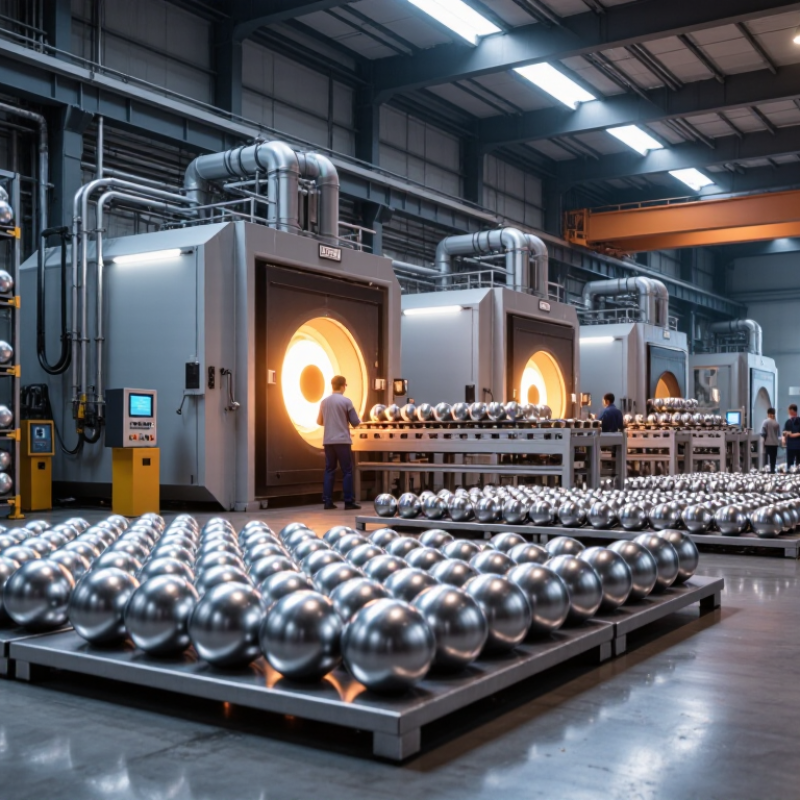
Grinding steel balls are spherical media used to crush and grind ore, cement ingredients, and other materials inside rotating mills. As the mill turns, the balls lift and fall, breaking material through impact and friction. Their repeated movement can sound like a steady metallic rumble. Small details matter: ball diameter, hardness, and surface condition affect how efficiently a mill works.
These balls are commonly used in mineral processing, cement production, and some power-generation operations. In a mining circuit, for example, they help reduce rock fragments so valuable minerals can be separated more easily. Cement plants use them to grind clinker into fine powder. Not glamorous work. Yet the process depends on consistent performance. Operators typically monitor wear, breakage, and changes in product size, then adjust the grinding charge or operating conditions as needed. Hardness alone is not a complete measure of quality; a very hard ball may still be unsuitable if it chips or wears unevenly. Actual results depend on the mill, feed material, and maintenance practices, so claims should be checked against operating data. There is no single best choice for every site.
| Grinding Media Type | Typical Manufacturing Route | Commonly Supplied Size Range | Typical Applications | Key Manufacturer Quality Checks | Selection Considerations |
|---|---|---|---|---|---|
| Forged steel grinding balls | Steel billet or bar is heated, forged into balls, and heat-treated. | Often supplied in diameters of approximately 20–150 mm; available sizes vary by mill and supplier. | Mineral processing, ore grinding, and some cement and industrial milling circuits. | Diameter and roundness; surface and internal defects; hardness distribution; impact resistance; batch traceability. | Commonly considered for applications where impact loading is significant. The required diameter depends on ore, mill design, and operating conditions. |
| High-chromium cast grinding balls | Alloyed molten metal is cast into ball molds, then heat-treated. | Often available in diameters from about 15 mm to 120 mm; actual product ranges vary. | Cement raw-material and finish grinding, coal grinding, and selected mineral-processing applications. | Chemical composition; casting soundness; hardness; microstructure; dimensional consistency; wear performance testing. | Often selected for abrasion-focused conditions. Suitability depends on impact level, mill type, feed material, and corrosion conditions. |
| Low-chromium cast grinding balls | Cast steel or alloy iron is formed in molds and heat-treated to meet the specified properties. | Commonly offered in a range of ball diameters selected for the mill; sizes are supplier- and application-specific. | Some cement, mining, and industrial grinding operations where cast media meets the required wear and cost targets. | Composition; hardness and hardness variation; casting defects; impact performance; dimensional tolerances. | Compare performance under the actual operating conditions rather than relying on alloy description alone. |
| Grinding cylpebs | Cast or otherwise formed as short cylinders, followed by any specified heat treatment. | Typically specified by diameter and length; dimensions depend on the mill and supplier. | Ball mills and other grinding circuits designed or configured to use cylpebs as grinding media. | Dimensional consistency; hardness; surface quality; casting soundness; wear-rate testing. | Confirm that the mill is designed for cylpebs and check media shape and size against the required grinding performance. |
| Mixed-size steel ball charge | A controlled combination of ball diameters supplied for a particular mill-charge plan. | Uses two or more sizes selected for the mill; no single standard mix applies to every circuit. | Mineral and cement mills where operators use a size distribution to balance breakage, throughput, and media wear. | Size grading; batch consistency; material and heat-treatment records; inspection of representative samples. | Charge design depends on feed size, target product fineness, mill dimensions, and operating data. |
Size ranges are indicative examples, not universal specifications. Grinding-media requirements and performance depend on the mill, feed material, operating conditions, and the purchaser’s agreed product specification.