Top 10 Forklift Collision Detection Systems for Global Buyers?
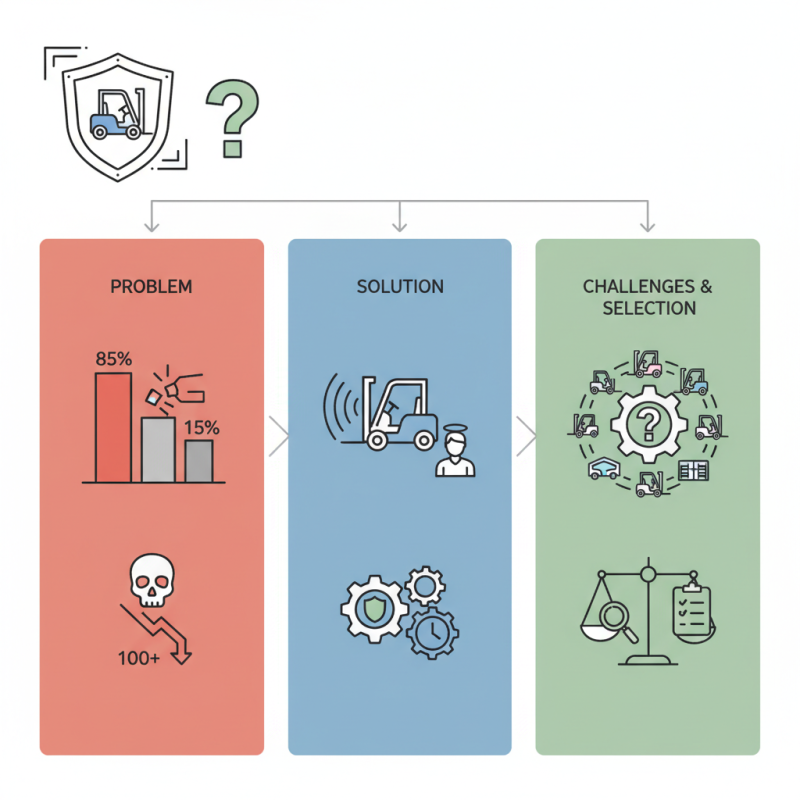
The importance of safety in warehouse operations cannot be overstated. An alarming statistic reveals that almost 85% of all forklift accidents involve collisions. This underscores the need for reliable safety solutions. The Forklift Collision Detection System emerges as a vital tool for preventing such incidents. These systems not only enhance operator awareness but also protect the surrounding workforce.
A report from the Occupational Safety and Health Administration highlights that over 100 fatalities occur annually due to forklift-related accidents. Implementing advanced technologies can significantly reduce these numbers. Many businesses are now recognizing the critical role of a Forklift Collision Detection System in their safety protocols. This trend is growing, driven by the increasing demand for operational efficiency and worker protection.
However, choosing the right system can be overwhelming. There is a wide array of options, each with unique features and capabilities. Companies must carefully assess their specific needs when considering a Forklift Collision Detection System. Some systems may excel in specific environments but may not offer the flexibility required in dynamic settings. It's essential to weigh these factors, ensuring that investment leads to effective safety improvements.
Overview of Forklift Collision Detection Systems
Forklift collision detection systems play a critical role in enhancing safety within industrial environments. According to a 2023 industry report by the Occupational Safety and Health Administration (OSHA), workplace accidents involving forklifts result in over 100 fatalities annually in the United States alone. The introduction of advanced collision detection systems is vital in mitigating these risks. Such systems typically rely on sensors and cameras to monitor the environment, thereby reducing blind spots and improving the situational awareness of operators.
Data from a 2022 market analysis indicates that effective collision detection systems can reduce accidents by up to 30%. These systems use real-time data to alert operators of nearby obstacles. In some advanced configurations, they can even take control of the forklift, preventing a collision altogether. However, it is essential to understand that these technologies are not a panacea. Implementation costs and the need for regular training can pose challenges. Additionally, some systems may face limitations in complex environments where dynamic obstacles are prevalent.
Despite these challenges, the growing adoption of collision detection systems reflects a significant commitment to workplace safety. The global forklift market is projected to reach $50 billion by 2027, further underscoring the importance of introducing reliable safety features. Ensuring safe operation not only prevents injuries but also boosts overall productivity in material handling operations.
Importance of Collision Detection in Warehouse Safety
In the fast-paced environment of warehouses, safety is paramount. Forklift collisions can lead to serious injuries and costly damages. The importance of collision detection systems cannot be overstated. These systems act as a safeguard, reducing the likelihood of accidents. By detecting potential collisions, they notify operators and allow for timely interventions. Such measures enhance not just safety, but also operational efficiency.
Implementing collision detection technology requires thoughtful consideration. Not all systems are created equal. Some may have limitations, such as limited range or sensitivity issues. Warehouse managers must assess their specific needs and the environment before choosing a system. Training staff to understand the technology is equally critical, as human error often contributes to collisions. Regular reviews and adjustments can further refine the system's effectiveness, promoting a culture of safety and vigilance.
Ultimately, collision detection systems are a valuable investment, but continuous evaluation is necessary. Investing in technology is not enough on its own. It needs to be complemented by robust training and procedural updates. Engaging employees in ongoing safety discussions will further enhance awareness and compliance, creating a genuinely safe working environment.
Top 10 Forklift Collision Detection Systems for Global Buyers
Key Features to Consider When Choosing a Collision Detection System
When selecting a collision detection system for forklifts, key features are essential. Look for systems with real-time monitoring capabilities. This allows for immediate detection of potential hazards. Effective communication within the system can alert operators and pedestrians of imminent dangers quickly.
Another important factor is the technology employed. Systems that use a combination of radar, LIDAR, and cameras offer greater accuracy. They can help identify obstacles in various environments. Ease of integration with existing equipment is also crucial. A seamless fit can enhance safety without extensive downtime or costs.
Tips: Evaluate the system's responsiveness. A delay in alerting can lead to accidents. Training for staff is also vital; they must understand how to use the system effectively. Regular reviews of safety protocols can identify areas needing improvement. Reflecting on past incidents can provide valuable insights for future prevention measures.
Top Technologies Used in Forklift Collision Detection Solutions
Forklift collision detection systems play a crucial role in warehouse safety. They leverage advanced technologies to minimize accidents. One popular method is using laser sensors. These sensors create a virtual perimeter around the forklift. Whenever someone or something crosses this line, the system alerts the operator immediately.
Another common technology involves camera systems paired with artificial intelligence. Cameras can provide real-time visuals of the environment. AI processes this information and detects potential hazards. This combination enhances situational awareness and reduces human error. Some systems also use ultrasonic sensors, which detect obstacles in blind spots. These additional layers of safety are essential, yet they require routine maintenance.
While technology continues to improve, challenges remain. Systems may occasionally misinterpret signals or fail in obscure lighting. Users must remain vigilant and not solely rely on these technologies. Regular training and human awareness still play vital roles in ensuring safety in busy environments. Balancing technology with human oversight is an ongoing process.
Top 10 Forklift Collision Detection Systems for Global Buyers
| System Type | Technology Used | Detection Range (m) | Response Time (ms) | Features |
| Laser-Based Systems | Laser Range Finders | 10 | 50 | High Accuracy, Long Range |
| Radar Systems | Microwave Radar | 20 | 30 | All-Weather Performance |
| Camera Systems | Visual Cameras with AI | 15 | 100 | Object Recognition |
| Ultrasonic Systems | Ultrasonic Sensors | 8 | 70 | Cost-Effective |
| Infrared Systems | Infrared Sensors | 5 | 40 | Low Light Functionality |
| RFID Systems | Radio Frequency Identification | Varies | < 50 | Tag-Based Detection |
| Smartphone Integration | Mobile Applications | Varies | < 10 | User-Friendly Interface |
| Beacon Systems | Bluetooth Beacons | 15 | 20 | Real-Time Location |
| Proximity Warning Systems | Sensor Arrays | 5 | 60 | Auditory Alerts |
| Data Analytics Systems | Integration with IoT | N/A | N/A | Predictive Maintenance |
Comparative Analysis of Leading Collision Detection Systems
Collision detection systems for forklifts are essential for workplace safety. They reduce accidents significantly. According to a report by the Occupational Safety and Health Administration (OSHA), nearly 85 fatal accidents occur each year due to forklifts. The right system can prevent these tragedies.
When considering collision detection systems, functionality matters. Some systems utilize proximity sensors, while others rely on cameras or radar technology. A comparative analysis can help highlight strengths and weaknesses. For example, systems with real-time alerts can improve response time. Data from the National Safety Council indicates that effective collision systems could reduce workplace injuries by up to 30%.
Always keep safety training in mind. Even the best system needs effective implementation. Promote awareness among employees about the importance of these systems. Regularly review procedures to ensure everyone understands how to use them. A lack of training can lead to system failures, making it crucial to prioritize this aspect.
Evaluate the systems continuously. What works well today might not be suitable tomorrow. Technology evolves, and so do safety needs in the workplace. Implementing feedback from users can help improve system performance. Connecting with professionals in the field can provide insights into emerging technologies.