Top 10 Document Camera Manufacturers in China
A Document Camera can make a lesson clearer in seconds: a worksheet fills the screen, pencil marks become visible, and a small object can be examined by an entire class. Yet image quality alone does not make a dependable product. Focus speed, lighting, connection options, software, and service support all shape the experience. A device that looks impressive in a catalog may feel awkward after a full teaching day.
Education researcher John Hattie’s reminder, “Know thy impact,” offers a useful test: does the camera make explanation clearer for learners? That is a practical lens for comparing manufacturers, not a claim that one specification proves better teaching. This guide introduces ten Document Camera manufacturers in China and considers the details buyers can check: product ranges, image capabilities, classroom and meeting-room features, compatibility, and available support. Small differences matter. A stable arm, for example, can keep a close-up steady while someone writes.
Manufacturer comparisons also have limits. Published specifications do not reveal every detail of quality control, long-term reliability, or after-sales service. Product lines change, and performance can vary between models. So this overview is a starting point, not a substitute for checking current technical documents, testing samples, and asking direct questions. Some rankings may look cleaner than the evidence allows. That deserves a second look. By focusing on verifiable features and practical use, readers can build a more informed shortlist of Chinese suppliers.
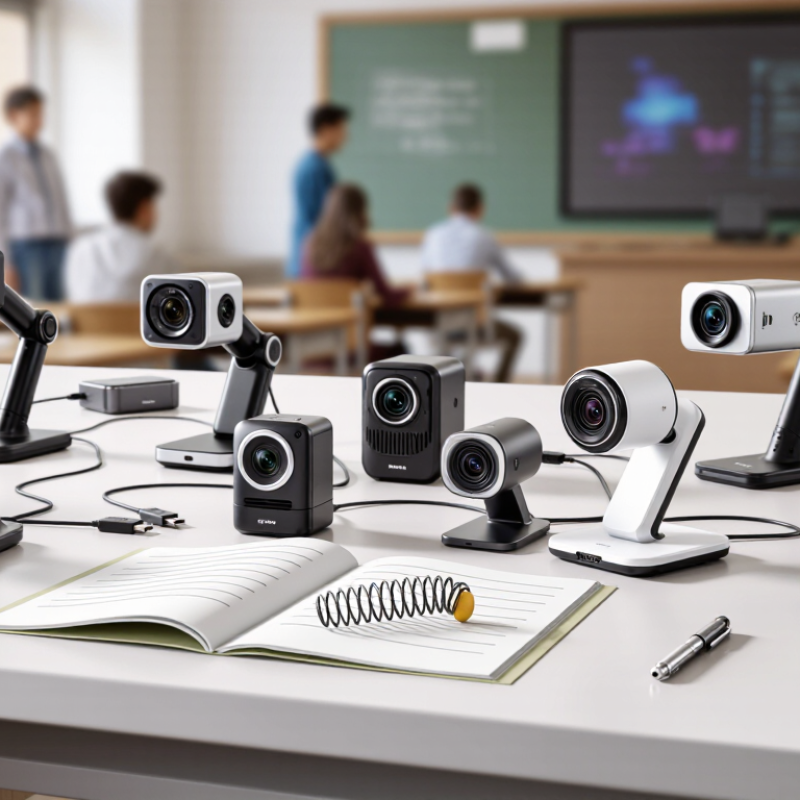
Document Cameras and Their Role in China’s Imaging Industry
Document cameras connect China’s imaging industry with everyday teaching. They turn a worksheet, circuit board, or delicate leaf into a live image for a classroom screen. This is more than magnification. A teacher can point, annotate, and compare details while students follow from their seats. Small details matter. In hybrid lessons, the same image can also support remote learners and recorded demonstrations.
China’s Ministry of Education reported 498,300 schools and 291 million students across its education system in 2023. That scale creates practical demand for reliable classroom imaging, though it does not directly measure document-camera sales. The device’s value depends on clear autofocus, even lighting, low image delay, and simple connection to existing displays. A camera that struggles with glossy pages or fine print quickly becomes shelf equipment.
For manufacturers, the challenge is balancing image quality with durability, easy setup, and service support across varied classrooms. UNESCO’s 2023 Global Education Monitoring Report cautions that evidence for the benefits of education technology remains uneven. That gap matters. A sharper image can make a demonstration easier to see, but it cannot replace sound teaching or thoughtful lesson design. glare, awkward camera angles, and inconsistent room lighting still frustrate users. These everyday details deserve more attention in product testing.
How Chinese Document Camera Manufacturers Are Evaluated
Chinese document camera manufacturers should be assessed through repeatable tests, not headline megapixel claims. ISO 12233:2023 specifies methods for measuring digital camera resolution and spatial-frequency response. Buyers can use a printed resolution chart to compare center and corner detail, then inspect fine text under classroom lighting. Check focus consistency, glare control, color accuracy, and page-edge distortion. Small differences matter. A crisp center image can still hide blurred corners.
Connectivity and durability need equally practical checks. USB-IF’s USB 3.2 specification sets Gen 1 signaling at 5 Gbit/s, but that figure is not guaranteed application throughput. Test live video with the intended computer, software, and cable; record dropped frames and connection recovery. For safety evaluation, IEC 62368-1 covers audio, video, and information technology equipment. Review test documentation, component traceability, and quality-control records, then request sample units from more than one production batch. A single demonstration is weak evidence. I would also note a limitation: lab charts cannot fully reproduce reflective book pages, worn worksheets, or hurried classroom use. The evaluation should include those awkward cases, even when results look less tidy.
Profiles of Ten Document Camera Manufacturers in China
Profiles of ten Chinese document camera manufacturers are most useful when they compare engineering choices, not just headline resolution. UNIDO’s International Yearbook of Industrial Statistics reports that China contributed about 31% of global manufacturing value added in 2022. That scale provides supply-chain context, but it does not prove that any individual factory makes better cameras. Specs can mislead. Compare lens sharpness at the page edges, autofocus speed, and how evenly a camera lights a textbook under ordinary classroom lamps.
A practical profile should also examine sensor size, frame rate, USB or network connections, mounting stability, and software support. Ask whether the maker tests fine print, glossy pages, and handwritten diagrams—not only clean test charts. UNESCO’s 2023 Global Education Monitoring Report notes that just 16% of countries explicitly guarantee data privacy in education by law. For connected models, profiles should therefore state what data the device handles and whether processing depends on cloud services. This detail is often missing. A published specification cannot replace hands-on checks: autofocus may hunt on thin paper, and a flexible arm may drift during a lesson. These ten profiles are best read as comparison points, not verified rankings by sales or market share.
Product Features and Applications Across the Ten Manufacturers
Across China’s document camera sector, manufacturers serve classrooms, training rooms, offices, and inspection benches. Their models differ in imaging, movement, and connection options. Some prioritize compact folding arms and light bodies for mobile teaching. Others use larger bases and adjustable heads for books, worksheets, or small objects. Useful detail matters.
Image performance is not only about resolution. Fast autofocus, even lighting, and stable color can make fine print easier to view on a projector. Built-in LEDs help in dim rooms, while HDMI or USB connections can simplify setup. Some models add annotation, freeze-frame, or wireless sharing, though availability varies. Check software support before ordering.
Applications shape the better choice. Teachers may need a wide capture area for experiments, while office teams often value quick scanning and searchable files. Technical users may inspect labels, connectors, or small component surfaces under magnification. Compare lens range, arm reach, image output, compatibility, warranty terms, and service options across manufacturers. A long feature list can still disappoint when setup is awkward. Sample testing is worthwhile, since lighting and room layout can change results.
Manufacturing Standards and Market Trends in China
China’s document-camera manufacturers work within a broad electronics supply chain, from image sensors and lenses to LED lighting and circuit boards. Reliable production depends on controlling each step, not just assembling components. A camera may look sharp under bright showroom lights yet struggle with a glossy page or a dim classroom. Practical checks should include focus speed, color accuracy, image noise, and performance across different lighting conditions. Small details matter.
Manufacturing teams commonly use repeatable inspection procedures, sample testing, and calibration records to reduce variation between units. They may check USB connections, hinge movement, heat buildup, and packaging protection before shipment. Export requirements can differ by destination, so buyers should verify which safety, electromagnetic compatibility, and environmental standards apply to their market. A certificate alone does not show how consistently a product performs. Ask for test methods and recent quality data.
Market demand is moving toward higher-resolution imaging, compact designs, and software features that support remote lessons and document sharing. Yet more features can mean more setup friction. I have seen specifications look impressive while everyday controls remain awkward; that gap deserves attention. Buyers can request a live demonstration with textbooks, handwritten notes, and reflective pages. Real use reveals more than a polished product sheet.
China Manufacturing Conditions Relevant to Document Camera Supply, 2024
Monthly manufacturing Purchasing Managers’ Index (PMI)
The PMI is a broad indicator of manufacturing activity, not a measure of document-camera production. Readings above 50 indicate expansion; readings below 50 indicate contraction.
Source: National Bureau of Statistics of China, monthly manufacturing PMI releases for 2024.