What Are the 2026 Top Metallic Liquid Tight Conduit Suppliers?

The 2026 market for Metallic Liquid Tight Conduit is becoming more demanding, not merely larger. Buyers now expect dependable protection, traceable certification, and stable supply. A polished catalog is not enough.

Mike Holt, a respected electrical-code educator, repeats a central industry principle: “The purpose of the NEC is the practical safeguarding of persons and property from hazards arising from the use of electricity.” That principle matters when comparing suppliers. A strong supplier should explain jacket materials, flexibility, temperature limits, grounding performance, and fitting compatibility. Product claims should connect with test reports, recognized certifications, and installation guidance.

This overview examines leading Metallic Liquid Tight Conduit suppliers for 2026. It considers manufacturing experience, product consistency, regional availability, and technical support. It also looks at practical details, such as coil packaging, thread quality, sealing rings, and delivery reliability. Small details can decide whether a conduit survives vibration, moisture, oil exposure, or repeated movement.

Not every supplier deserves the same confidence. Some publish impressive specifications but provide limited documentation. Others offer excellent products with weak overseas support. That difference is easy to miss.

The ranking may also require reflection. Pricing changes, factory capacity shifts, and certification status can change during the year. Therefore, this guide should support careful sourcing rather than replace project-specific verification. Readers should confirm current certificates, applicable standards, warranty terms, and local installation requirements before ordering. The best supplier is not always the largest. It is the one that consistently matches real site conditions.
What Are the 2026 Top Metallic Liquid Tight Conduit Suppliers?

What Is Metallic Liquid Tight Conduit and Why Is It Used?

What Are the 2026 Top Metallic Liquid Tight Conduit Suppliers?

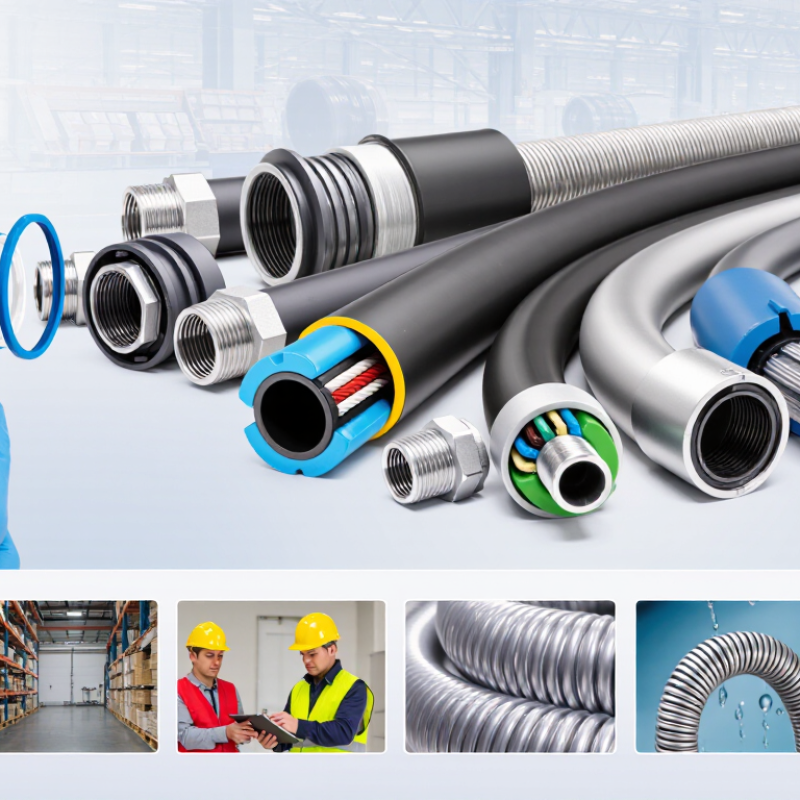
Metallic liquid tight conduit is a flexible metal pathway covered with a sealed, water-resistant jacket. Its metal core provides mechanical protection, while the outer jacket helps block moisture, oil, dust, and abrasion. It is commonly used near pumps, motors, machine tools, outdoor panels, and vibrating equipment. Unlike rigid conduit, it bends around obstacles and absorbs movement. The correct fittings are essential. A poorly tightened connector can defeat the entire liquid-tight system.

This conduit also supports equipment grounding when installed according to the applicable electrical code. However, it is not automatically suitable for every wet or hazardous location. Installers must check temperature limits, chemical exposure, bend radius, conductor fill, and environmental ratings. In field inspections, incorrect bending is a recurring weakness. The jacket may look intact, yet the inner metal strip can be stressed. That detail deserves more attention.

Tips: Match the conduit and fittings as one tested system. Check markings, certification documents, wall thickness, and temperature ratings before purchase. Keep bends smooth and avoid pulling the conduit across sharp edges. Leave enough length for equipment movement, but not excessive slack. Suppliers should provide traceable specifications and consistent quality records. Price matters, but unreliable dimensions create slower installation and higher replacement costs. I would also question any product claim that sounds perfect; real installations still require careful measurement and review.

How Are the Top 2026 Suppliers Evaluated?

What Are the 2026 Top Metallic Liquid Tight Conduit Suppliers?

Top suppliers in 2026 should be evaluated through evidence, not catalogue claims. MarketsandMarkets reported continued growth in the electrical conduit market, driven by industrial upgrades, infrastructure investment, and data-center construction. This demand increases the need for stable dimensions, repeatable sealing, and documented production controls.

Compliance is the first practical filter. Buyers should request current test reports for applicable standards, including UL 360, UL 514B, and IEC 61386 requirements. Reports should match the exact conduit construction, coating, fittings, and trade size. A certificate alone is insufficient. Inspect the test scope, laboratory identity, issue date, and product reference. Small mismatches can create installation risks.

Material performance deserves equal attention. Engineers should compare corrosion resistance, flexibility, tensile strength, crush resistance, operating temperature, and ingress protection. The 2024 International Energy Agency report noted strong electricity-demand growth from industry and data centers, where continuous operation raises reliability expectations. Supplier evaluation should also include batch traceability, sampling plans, delivery records, and technical response times. Ask for samples.

Price can mislead. A cheaper conduit may require more fittings, longer installation time, or earlier replacement. Field experience matters, but it is rarely measured carefully. Buyers should examine documented projects, failure records, and corrective-action reports. No supplier is perfect. Even strong factories may show occasional dimensional variation. That weakness should be visible, investigated, and controlled rather than hidden behind polished marketing.

What Are the 2026 Top Metallic Liquid Tight Conduit Suppliers? - How Are the Top 2026 Suppliers Evaluated?

Evaluation framework for comparing leading metallic liquid-tight flexible conduit suppliers without displaying company or brand names.
Evaluation Dimension What Is Evaluated Verified Industry Benchmark Weight Required Evidence
Product Compliance Conduit construction, dimensional consistency, and intended-use compliance Conduit designed and tested to the applicable liquid-tight flexible metal conduit requirements, including UL 360 where applicable 20% Current test reports, product specifications, and traceable compliance documentation
Electrical Installation Scope Suitability for wet locations, exposed wiring, machinery, and flexible connections Product application aligns with NEC Article 350 requirements for liquidtight flexible metal conduit and the project authority having jurisdiction 12% Installation instructions, permitted-use statements, and application limitations
Material and Corrosion Resistance Metal core, protective jacket, fittings, and resistance to moisture and corrosive environments Galvanized or corrosion-resistant metal core with a continuous liquid-resistant outer jacket; enhanced protection required for highly corrosive locations 14% Material declarations, jacket specifications, salt-spray or corrosion-test data where applicable
Size and Fitting Availability Trade sizes, connector compatibility, straight lengths, coils, and accessories Common commercial ranges generally include 3/8 in through 4 in trade sizes, subject to the supplier’s certified product range 10% Current size chart, fitting catalog, thread details, and compatibility statement
Mechanical Performance Flexibility, crush resistance, tensile strength, bend performance, and impact protection Performance must meet the applicable product standard and remain within the manufacturer’s stated minimum bend radius 14% Mechanical test results, bend-radius table, and installation handling guidance
Environmental Protection Water ingress protection and suitability for indoor, outdoor, washdown, and demanding environments A liquid-tight system requires compatible conduit, fittings, seals, and correctly installed terminations; enclosure ratings must be verified for the complete assembly 10% Ingress-protection information, fitting instructions, and complete-system test documentation
Quality Management Manufacturing controls, inspection frequency, batch traceability, and corrective-action process Documented quality system with lot identification and measurable incoming, in-process, and final inspection controls 8% Quality certificates, inspection plans, lot records, and nonconformance procedures
Supply Reliability Stock availability, standard lead time, order fulfillment, and export capability Supplier should publish realistic lead times, maintain repeatable production capacity, and provide shipment traceability 7% Inventory statement, production lead-time schedule, order history, and logistics process
Technical Support Engineering assistance, installation guidance, documentation quality, and response capability Clear technical datasheets, compatible fitting guidance, and accessible pre-sales and after-sales support 5% Technical response records, installation manuals, drawings, and warranty terms
Total Evaluation Weight 100% Recommended minimum: 75/100 overall with no critical compliance failure
Scoring method: Score each dimension from 0 to 100, multiply by the listed weight, and add the weighted results. Any missing mandatory certification, failed liquid-tightness requirement, or incompatibility with the applicable electrical code should disqualify the supplier regardless of the total score.

Which Companies Lead the 2026 Supplier Market?

In 2026, the leading metallic liquid tight conduit suppliers are manufacturers with proven industrial experience. They support demanding applications in factories, data centers, renewable energy sites, and transport equipment. Their products typically combine a flexible metal core, corrosion-resistant coating, and weatherproof outer jacket. Some offer stainless steel options for washdown areas. Others focus on lighter steel designs for indoor installations.

The strongest suppliers provide more than catalog products. They help engineers select conduit by temperature range, bending radius, liquid exposure, and cable fill. Reliable companies also maintain documented testing, traceable batches, and recognized safety certifications. A supplier that answers technical questions quickly often reduces installation errors. That matters when conduit must pass around tight machinery frames. Small details matter.

Market leaders also compete through customization and delivery control. They may cut fixed lengths, produce special fittings, or support high-volume project schedules. Procurement teams should inspect sample threads, jacket recovery, and fitting engagement before approval. Field experience suggests that cheap conduit can develop cracks near repeated bends. Yet premium pricing does not guarantee perfect performance. I would still request test reports, recent customer references, and clear warranty terms. Delivery claims deserve verification, especially for imported components. The most dependable suppliers combine engineering support, consistent quality, realistic lead times, and responsive after-sales service. Regional stock may matter more than a polished brochure.

What Products and Services Do Leading Suppliers Offer?

Leading metallic liquid tight conduit suppliers now provide more than coils and fittings. Their catalogs typically include flexible metallic conduit, liquid tight jackets, straight and angled connectors, sealing washers, grounding accessories, and reducers. Common options cover galvanized steel, corrosion-resistant coatings, and stainless steel for washdown areas. According to Grand View Research’s electrical conduits market analysis, the sector is expected to grow at more than 6% annually through 2030. That expansion increases pressure on suppliers to offer reliable, application-specific systems.

Strong suppliers support engineers before purchase. They review temperature, vibration, bend radius, moisture exposure, and installation space. They also provide cut-to-length assemblies, pre-fitted connectors, CAD files, compliance documents, and batch traceability. Products should align with applicable requirements such as NFPA 70 and IEC 61386-24. Mordor Intelligence’s 2024 industry analysis identifies infrastructure and industrial construction as important demand drivers. Those projects often need stable inventory, rapid quotations, and technical help during field changes.

Service quality remains uneven. Fit matters. Some suppliers promise customization but provide vague tolerances or incomplete test records. Buyers should request pressure ratings, ingress protection data, material certificates, and clear warranty terms. A practical supplier can recommend a tighter bend radius, but that advice must reflect real installation conditions. I have seen small connector mismatches delay otherwise simple work. That gap matters. Reliable suppliers combine tested products, responsive engineering support, and disciplined documentation, although even experienced teams should recheck specifications before ordering.

What Are the 2026 Top Metallic Liquid Tight Conduit Suppliers?

Common Product Sizes and Services Offered by Leading Suppliers

Metallic liquid tight conduit suppliers commonly support trade sizes from 3/8 inch through 4 inches for industrial, commercial, and infrastructure installations. Typical supplier services include cut-to-length orders, compatible fittings and connectors, UL-listed product options, technical selection support, project quotations, and bulk delivery coordination.

How Should Buyers Choose a 2026 Supplier?

What Are the 2026 Top Metallic Liquid Tight Conduit Suppliers?

How Should Buyers Choose a 2026 Supplier?

Buyers should evaluate suppliers through evidence, not attractive catalogs. Request recent test reports for liquid resistance, flexibility, crush strength, and temperature performance. Check whether the reports identify the tested product, batch, laboratory, and test date. Vague documents create avoidable risk.

Ask for production details that match your installation conditions. A conduit used near pumps may face vibration, oil mist, and repeated bending. Request samples with the actual fittings and connectors. Measure bend recovery, thread engagement, sealing quality, and pulling resistance. Small fit problems become expensive inside crowded panels. Site trials matter.

Review delivery reliability as carefully as technical data. Examine normal lead times, emergency capacity, minimum order quantities, packaging, and lot traceability. A capable supplier should explain how it handles material changes and quality complaints. Visit the facility when the project is critical. An online meeting is useful, but it cannot reveal every process weakness.

Do not choose only by the lowest quotation. Total cost includes installation time, rejected lengths, damaged threads, and replacement delays. Some suppliers provide impressive certificates but weak answers about corrective action. That deserves reflection. Buyers should also compare warranty terms, communication speed, and technical support after delivery. The best choice may not be the largest supplier, and it may not be the cheapest.

Have Questions?

Talk to a product specialist today: 1-800-308-6788

Snake Tray Catalog

snake tray® CATALOG

the new catalog is here. AVAILABLE IN PRINT AND ONLINE.

DOWNLOAD A PDF REQUEST A PRINTED COPY
CALL US TODAY