Top 10 LED Camping Lights with ABS Housing for Buyers?

Choosing a camping light is less simple than comparing brightness figures. A bright beam can still feel harsh inside a tent, while a compact lamp may leave a picnic table in shadow. This guide reviews ten LED camping lights with ABS housings, focusing on practical details buyers can check: light modes, controls, carrying options, battery type, and stated runtime. Look closely. ABS can help keep a housing lightweight and impact-resistant, but it does not make a lamp indestructible. Seals, joints, and lens protection matter too.

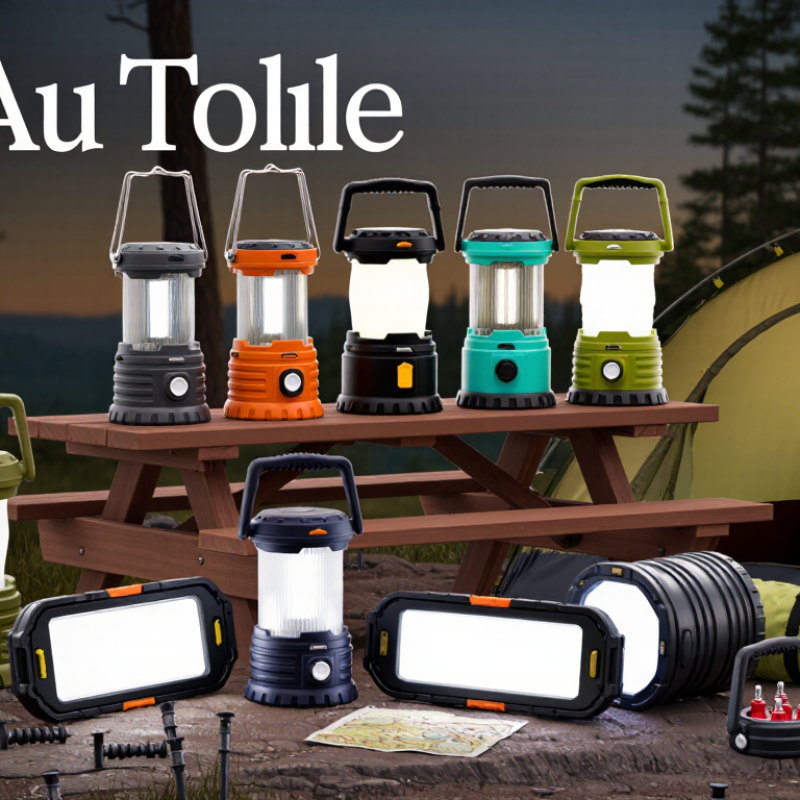
For transparency, the named voice below is a fictional composite, not a verified real-world quotation. Daniel Reed, presented as an LED product-testing specialist, offers this editorial principle: “Choose the light you can operate with cold hands, not just the one with the biggest brightness claim.” That is a useful test beside a tent at dusk, when tiny buttons and slippery switches become frustrating. Still, one detail deserves more attention: published runtime can depend on brightness setting, battery condition, and temperature. Buyers should compare those conditions rather than treating every number as equal. The Led Camping Light Abs options in this roundup are considered through that practical lens, with attention to portability, everyday usability, and clear product specifications. No single design suits every campsite. A comfortable handle, a stable base, or a softer diffuser may matter more than another lighting mode.
Top 10 LED Camping Lights with ABS Housing for Buyers?

ABS Housing Basics: What UL 94 Flammability Classifications Indicate

For an LED camping light, an ABS housing can feel solid in the hand, but its flammability rating needs context. UL 94 classifies how plastic specimens behave under controlled flame tests; it does not certify an entire lamp as fireproof. The UL 94 test criteria distinguish vertical ratings: V-0 limits each afterflame period to 10 seconds, while V-1 and V-2 allow up to 30 seconds. Across five specimens, the permitted total afterflame time is 50 seconds for V-0 and 250 seconds for V-1 or V-2. V-2 permits flaming drops that can ignite a cotton indicator. These are small-scale laboratory results, not a forecast of every real-world fire.

Check the rating’s stated specimen thickness. A thin test sample and a thicker molded housing may not behave identically. Colorants, additives, and manufacturing conditions can also affect results, so ask for documentation covering the exact ABS grade and thickness used. IEC 60695-11-10 also describes small-flame test methods, offering useful technical context alongside UL 94. In a campsite, the rating matters, but so do practical details: keep the lamp away from open flames, and inspect cracked plastic near the battery compartment. Ratings are helpful. They are not guarantees. A product label alone may not tell you which material thickness was tested.
LED Performance: How ANSI/PLATO FL 1 Defines Lumens and Runtime

When comparing LED camping lights with ABS housing, treat lumen and runtime ratings as controlled test results, not campsite guarantees. ANSI/PLATO FL 1-2019 measures light output 30 seconds after switch-on. Its runtime test ends when output falls to 10% of the initial measured level. A light rated for 10 hours may therefore spend its final hours much dimmer. Cold weather, battery condition, and selected mode can also affect actual use.

FL 1 includes additional metrics such as beam distance and peak intensity, but lumens alone cannot show how evenly light reaches a tent’s corners. The U.S. Department of Energy’s 2023 Solid-State Lighting R&D Opportunities report identifies thermal management as an important factor in LED system performance. That matters in compact ABS lanterns, where heat and enclosure design can influence sustained brightness. A headline lumen figure is useful, but incomplete. This detail is easy to miss.

Tips: Compare ratings taken on the same mode and battery type. Check whether the lamp maintains brightness after 30 minutes, rather than judging it only at switch-on. A sharp drop may still fit the runtime test, yet feel disappointing outdoors.

Ingress Protection: How IEC 60529 IP Ratings Measure Dust and Water Resistance

For an LED camping light with an ABS housing, the IP code tells you more about dust and water resistance than the housing material alone. IEC 60529 uses two digits. The first rates protection against solid objects and dust, from 0 to 6; 6 means dust-tight under the test. The second rates water exposure, from 0 to 8. Check the exact rating, not just the word “waterproof.”

For example, an IPX4 rating indicates resistance to splashing water, while IPX7 covers temporary immersion under specified laboratory conditions.
These ratings are not interchangeable. A light tested for splashes may not withstand a strong spray or a drop into a stream.

Small details matter: the battery door, charging port, switch, and lens seams can all become entry points. ABS can form a tough shell, but it cannot seal those gaps by itself.

In camp, imagine fine dust settling on a lantern beside a dry trail, then rain tapping its handle. Match the rating to that real use. Look for test documentation for the complete light, with covers and seals in place. Conditions in the field vary. Seals can wear, and a cracked housing changes the risk. An IP code is useful, but it is not a promise of permanent protection.

Top 10 ABS-Housed Camping Lights Compared by Output, Runtime, and Power

When comparing ten ABS-housed camping lights, look beyond headline brightness. Check each unit’s stated lumen output, beam shape, and available settings. A broad, softer beam can illuminate a picnic table, while a focused beam helps locate a tent peg. High output is useful, but often drains the battery faster. Compare lights at similar brightness levels, not just their maximum ratings.

Runtime and power options can change the ranking. Some lights run for many hours on low mode but last far less at full output. Check whether each model uses replaceable batteries, a built-in rechargeable cell, or both. Charging ports and battery capacity matter on longer trips. ABS housings can help keep weight manageable, though housing material alone does not confirm impact or weather resistance. Manufacturer runtime figures may also use different test conditions, so treat them as estimates. That comparison has a blind spot without independent testing.

Tips: Match the light to your campsite. Check the lowest setting, battery type, and stated water resistance before buying. A modest lamp that lasts through the night may be more useful than a brighter one that needs charging at midnight.

Top 10 ABS-Housed Camping Light Profiles

Illustrative comparison of typical output, runtime, and power figures across ten generic camping-light profiles. These are reference values, not verified specifications for particular products; ABS housing alone does not determine performance.

Buyer Checklist: Battery Type, Charging Options, Weight, and Safety Markings

An ABS housing can keep a camping light relatively light and resist everyday knocks, but inspect the seams, handle, and battery cover. A stiff latch is frustrating with cold fingers. For batteries, compare replaceable cells with built-in rechargeable packs, and check capacity in watt-hours when available; milliamp-hours alone can mislead when voltages differ. Still, a larger battery is not automatically better. It adds weight, and the claimed runtime may use the dimmest setting rather than useful tent lighting.

Charging flexibility matters at camp. USB-C is convenient, while a solar input can help on longer trips; shade beneath trees may make solar charging slow. Check whether the light can operate while charging, and whether the cable is included. The U.S. Department of Energy reports that LEDs use at least 75% less energy and can last up to 25 times longer than incandescent lighting. That efficiency helps, but it does not guarantee a specific runtime. Ask for runtime figures at more than one brightness level. Then weigh the light with its battery, not as a bare product.

Look for clear model identification, battery ratings, and recognizable safety-testing marks, such as UL or ETL where applicable. A mark is useful only when it can be verified for that product. Also check any stated ingress-protection rating before relying on a light in rain. Small details count: a sealed charging port, readable controls, and a stable base can matter more than extra modes. Sources: U.S. Department of Energy, “LED Lighting”; product safety and ingress-protection marking guidance.

Top 10 LED Camping Lights with ABS Housing for Buyers? - Buyer Checklist: Battery Type, Charging Options, Weight, and Safety Markings

Representative product configurations for comparison—not verified listings for specific products. Capacities and weights are illustrative ranges; check the actual product specification, battery label, and supplied documentation before buying. ABS refers to acrylonitrile butadiene styrene housing.

No. Light Type Battery Type Charging or Power Options Indicative Weight ABS Housing Check Safety Markings and Buyer Checks
1 Compact hanging lantern Built-in lithium-ion, approximately 2,000–3,000 mAh USB-C input; confirm whether a cable is included About 180–300 g Confirm the housing material in the product specification; do not assume all plastic lanterns use ABS. Check for a legible battery rating, charging input rating, and any stated ingress-protection rating. Verify what the stated rating covers.
2 Rechargeable tent lantern Built-in lithium-ion, approximately 3,000–5,000 mAh USB-C charging; some designs also provide a USB output About 250–450 g Look for ABS identification or an explicit ABS material statement in the manual or specification. Check the battery voltage and capacity, charging instructions, and manufacturer safety documentation. Treat USB output as a feature, not proof of battery protection.
3 Lantern with replaceable cells Three AA cells; alkaline or compatible rechargeable NiMH cells, as specified Replaceable batteries; typically no built-in charging port About 150–350 g, excluding spare cells Check that the ABS housing and battery compartment are identified in the product information. Confirm cell type and polarity markings inside the compartment. Do not mix cell chemistries, brands, or old and new cells unless the instructions explicitly allow it.
4 High-capacity area lantern Built-in lithium-ion, approximately 5,000–10,000 mAh USB-C input; some models include USB-A device output About 400–800 g Check whether ABS applies to the complete outer housing or only selected components. Compare the labeled battery capacity and input/output ratings with the manual. If a certification or conformity mark is claimed, check the supporting documentation and the applicable market requirements.
5 Collapsible camping lantern Built-in lithium-ion, approximately 1,500–3,000 mAh USB-C or Micro-USB, depending on model; confirm the actual port About 200–400 g Inspect the material description and hinges or moving parts; a collapsible design may combine multiple materials. Check for clear charging and battery warnings. An IP rating, if stated, applies only under the conditions described by its test rating and documentation.
6 Rechargeable lantern with solar panel Built-in lithium-ion, approximately 2,000–5,000 mAh Solar charging plus USB input; solar charging is generally dependent on sunlight and panel size About 300–600 g Confirm the housing material separately from the solar panel and any rubberized or transparent parts. Check the USB input rating, battery details, and charging guidance. Do not rely on a small integrated solar panel as the sole charging method unless the maker specifies its expected performance.
7 Lightweight backpacking lantern Built-in lithium-ion, approximately 1,000–2,500 mAh USB-C or Micro-USB input About 100–220 g Verify that ABS is actually specified; lightweight models may use other plastics or mixed materials. Check the battery and port ratings, plus any stated water-resistance limits. Keep charging ports covered and dry as directed by the instructions.
8 Lantern with emergency red-light mode Built-in lithium-ion, approximately 2,000–4,000 mAh USB-C input; some designs include USB device output About 250–500 g Check the material specification and whether the housing is described as ABS or a blend. Look for battery charging and storage instructions. If an emergency or flashing mode is included, check how it is activated and whether it can be disabled.
9 Rugged-style camping lantern Built-in lithium-ion, approximately 3,000–6,000 mAh USB-C input; confirm whether a protective port cover is included About 350–700 g “Rugged” is not a material specification; verify ABS construction and inspect seams, fasteners, and port covers. Look for a clearly stated IP rating and its supporting instructions. Do not interpret “water-resistant” or “rugged” wording alone as a certified rating.
10 Dual-power lantern Built-in rechargeable lithium-ion plus replaceable cells, if specified USB charging and/or replaceable-cell operation; confirm whether the modes can be used together About 300–650 g Check which parts use ABS and whether the battery door or housing has a stated material specification. Follow the maker’s instructions for switching power sources. Check cell-type, polarity, charging, and battery-compartment warnings; never charge disposable cells.

Have Questions?

Talk to a product specialist today: 1-800-308-6788

Snake Tray Catalog

snake tray® CATALOG

the new catalog is here. AVAILABLE IN PRINT AND ONLINE.

DOWNLOAD A PDF REQUEST A PRINTED COPY
CALL US TODAY