7 Tips for Choosing an Automatic Feeding Gluing Machine

Choosing an Automatic Feeding Gluing Machine is not simply a matter of comparing prices and production speeds. The right machine must match your materials, folding design, adhesive, and daily workload. A model that performs beautifully with lightweight cartons may struggle with thick corrugated sheets. Small differences matter.

Packaging automation consultant Michael R. Bennett explains, “The best gluing machine is the one that fits the entire process, not just the production target.” That principle deserves attention. Check the feeder’s stability first. Watch how it handles curled blanks, dusty surfaces, and uneven stacks. Then examine folding accuracy, glue placement, changeover time, and conveyor control. A fast machine is not useful if operators constantly stop it for adjustments.

Maintenance also deserves a close look. Ask whether belts, nozzles, sensors, and rollers are easy to access. Request real production samples, not only showroom demonstrations. Compare the machine’s output with your actual carton sizes and adhesive types. Safety guarding, emergency stops, operator training, and documented service support should be part of the decision. They are not optional details.

Some buyers focus too heavily on hourly speed. That can be a costly mistake. A slower machine with fewer jams may deliver better monthly results. Energy use, labor requirements, waste, and spare-part availability also affect ownership costs. Seven practical tips can guide the evaluation, but no checklist replaces testing your own materials. A perfect specification sheet may still disappoint on the factory floor. That is worth remembering.
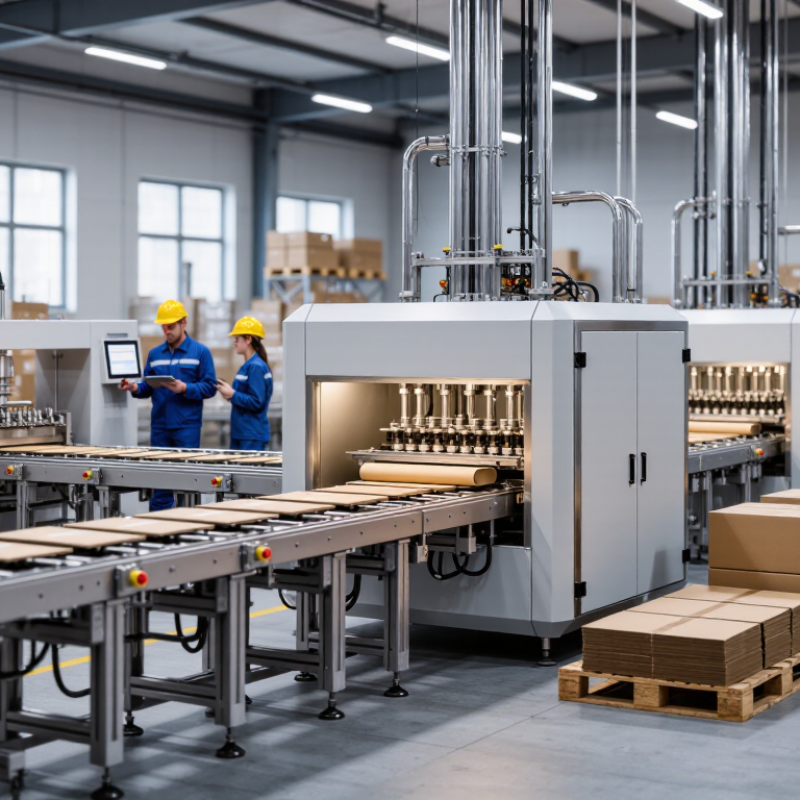
7 Tips for Choosing an Automatic Feeding Gluing Machine

Define Production Needs: 200–600 gsm Board and 100–300 m/min Speed

Define the board range before comparing automatic feeding gluing machines. A line handling 200–600 gsm board needs stable feeding pressure and accurate sheet separation. Lighter board may curl or slip. Heavier board demands stronger rollers and a rigid transport path. Real board varies. Moisture, coating, and grain direction can change feeding behavior.

The target speed of 100–300 m/min also requires careful testing. At 100 m/min, a machine may appear reliable during a short trial. At 300 m/min, small alignment errors can create glue gaps, skewed sheets, or pile interruptions. Ask for production tests using your actual board sizes and glue. Check speed stability, glue-line consistency, feeder recovery, and reject handling. Do not judge performance from an empty conveyor.

Glue viscosity deserves equal attention. Thick adhesive may need larger metering settings, while thin adhesive can spread beyond the folding area. Confirm whether the machine supports the intended coating method and adjustment range. Inspect access to rollers, sensors, and cleaning points. Maintenance is often underestimated. It should not be.

A useful trial records output at several speeds, not only the maximum. Measure waste, stoppages, setup time, and finished bonding strength. I would also test a mixed batch of 200 gsm and 600 gsm board. That exposes weaknesses quickly. A high-speed specification sounds impressive, but dependable production usually matters more than a perfect number.

Compare Feeding Accuracy: ±1 mm Registration and Continuous Infeed

Choosing an automatic feeding gluing machine requires more than checking maximum speed. Compare feeding accuracy carefully. A ±1 mm registration means each blank should reach the gluing section with minimal positional drift. That matters when glue lines are narrow, panels overlap, or cartons require clean folding.

Continuous infeed is equally important. A stable stream prevents gaps, sudden acceleration, and uneven pressure between blanks. Test the machine with at least 1,000 sheets, not only a new sample stack. Record misfeeds, skew, glue-line deviation, and stoppage frequency. Check performance at different speeds, stack heights, board weights, and humidity levels. Small changes reveal weaknesses.

Real production is less forgiving. Dust accumulates. Boards warp. Operators reload stacks differently. A machine showing ±1 mm in a brochure may perform differently after several hours. I would request a witnessed trial using your own materials. That assumption can fail.

Deloitte’s 2024 Smart Manufacturing Survey reported that 92% of manufacturers viewed smart manufacturing as a major competitiveness driver within three years. Automation is becoming practical, not decorative. Smithers’ The Future of Packaging to 2028 projects the global packaging market to reach about $1.38 trillion by 2028. At that scale, a one-millimeter error repeated thousands of times can create substantial waste. Review measured data, not impressive claims.

Evaluate Adhesive Options: Cold Glue Solids and 120–180°C Hot Melt

When choosing an automatic feeding gluing machine, start with adhesive behavior, not machine speed. Cold glue usually contains about 45–55% solids, so water must evaporate before the bond fully develops. This demands absorbent paperboard, accurate dosing, and enough compression time. The adhesive may look wet at the exit. That is normal, but excessive moisture can warp thin cartons.

A 2023 Grand View Research report valued the global adhesives and sealants market at about USD 76 billion, with packaging listed among major applications. That growth does not make every adhesive suitable. Hot melt is nearly 100% solids and supports rapid bonding, but the machine must maintain 120–180°C consistently. At the lower range, flow may become uneven. At the higher range, charring, stringing, or substrate damage can occur. Test both extremes. I would not treat 160°C as automatically better.

The European Commission’s energy-efficiency guidance notes that heating systems and standby periods influence industrial energy use. Therefore, check tank insulation, nozzle response, and automatic temperature control. For cold glue, inspect pump compatibility and cleaning access. For hot melt, examine hose heating and filter replacement time. A 2024 Smithers packaging report also highlights lightweight materials and higher production efficiency as continuing industry priorities. Your machine should handle lighter board without excessive pressure. Small trials matter. Record open time, bond strength, glue consumption, and carton deformation. One overlooked variable can cancel an otherwise excellent purchase.

Check Output Capacity: 5,000–20,000 Boxes per Hour

An output rating of 5,000–20,000 boxes per hour sounds impressive, but it needs context. That figure usually reflects ideal board stock, stable glue viscosity, and continuous feeding. Your line may produce less. Check the box style, dimensions, fold pattern, and material thickness before comparing machines. Small cartons may run quickly, while wide or irregular blanks can slow the feeder. Ask for a timed trial using your own samples.

In production reviews, I focus on usable throughput rather than the largest number on a specification sheet. Measure accepted boxes, not boxes passing under the sensor. Record ten-minute output, stoppages, glue faults, and rejected cartons. Then calculate the hourly rate from those results. A machine advertised at 20,000 boxes per hour may deliver 14,000 acceptable boxes in actual conditions. That difference affects labor planning and delivery schedules. Leave enough accumulation space between feeding, gluing, and folding sections.

Check whether the gluing system maintains accuracy at higher speeds. Uneven glue lines can cause open seams, crushed edges, or extra inspection work. Ask about nozzle cleaning, changeover time, sensor calibration, and routine maintenance records. Operators should understand how speed changes affect pressure and alignment. During one trial, I once focused too heavily on peak speed and missed frequent feeder adjustments. The final rate looked strong, but the process was tiring and inconsistent. A slower setting produced cleaner cartons and fewer interruptions. That result deserves careful consideration.

Assess Safety, Controls, Service Life, and Return on Investment

When choosing an automatic feeding gluing machine, safety should be tested, not assumed. Check guarding around rollers, belts, and glue areas. Emergency stops must be easy to reach and clearly marked. Door interlocks should stop motion immediately when opened. Operators also need practical training, not only a manual.

Controls should be simple enough for a tired operator on a busy shift. A clear screen, adjustable feeding speed, glue volume settings, and fault messages reduce mistakes. Test several material sizes before purchase. A machine may perform well with clean, flat sheets but struggle with curled stock. That detail is easy to miss.

Service life depends on frame strength, motor quality, wear parts, and maintenance access. Ask how often belts, nozzles, and sensors require inspection. Request maintenance records or a realistic service schedule. Local technical support can reduce expensive downtime. It matters.

Return on investment should include more than the purchase price. Compare labor savings, production speed, glue waste, energy use, and expected downtime. Calculate payback using your actual daily output, not an optimistic estimate. A cheaper machine may cost more if adjustments take thirty minutes per batch. I would also leave room for training time and unexpected repairs. The first calculation is rarely perfect.

7 Tips for Choosing an Automatic Feeding Gluing Machine - Assess Safety, Controls, Service Life, and Return on Investment

Tip Evaluation Dimension Practical Data or Benchmark What to Verify Before Purchase ROI Impact
1. Match the Machine to the Product Board size, box style, material, and fold configuration Confirm the equipment covers the required blank range, board thickness, folding pattern, and adhesive type. Typical folding-carton applications use paperboard around 0.3–0.8 mm, but the actual range depends on the machine design. Run representative samples, including the smallest and largest planned formats. Check squareness, compression quality, glue-line placement, and changeover settings. Reduces rejects, rework, material waste, and the risk of purchasing equipment that cannot support future product formats.
2. Assess Throughput Honestly Rated speed versus usable production speed Compare the advertised maximum with the expected sustained operating rate after allowance for loading, setup, inspection, jams, and product variation. A realistic utilization target is often about 70–85% of the stated maximum in routine production. Request a timed production test using your materials. Record good pieces per minute, waste percentage, changeover time, and unplanned stops. A realistic capacity estimate improves labor planning and prevents overstating annual output or payback.
3. Prioritize Operator Safety Guards, emergency controls, access protection, and safe maintenance Look for fixed guards around nip points and moving drive parts, accessible emergency-stop devices, interlocked access doors where applicable, clear warning labels, and a documented risk assessment. Inspect the machine during running, setup, cleaning, and jam-clearing procedures. Verify that safety circuits stop hazardous motion and that restart requires a deliberate reset. Lowers accident exposure, downtime, training risk, and potential costs associated with unsafe operation. Local regulations and site risk assessments should always govern final acceptance.
4. Examine Controls and Changeover Control interface, recipe management, diagnostics, and adjustment time Useful features include a clear operator interface, adjustable speed and glue settings, stored product recipes, fault messages, counters, and tool-free or quick-release adjustments where practical. Time a changeover between two products. Confirm that settings can be locked, backed up, recalled, and understood without relying on one experienced operator. Shorter changeovers increase available production time and reduce setup waste, especially in high-mix or short-run operations.
5. Check Glue Application Quality Adhesive compatibility, metering accuracy, inspection, and cleaning requirements The system should maintain consistent glue placement at the planned line speed and support the selected adhesive, such as cold-set water-based or hot-melt formulations, subject to technical compatibility. Measure glue-line position and bond strength across a production run. Ask about nozzle or wheel cleaning, filter replacement, curing time, and protection against blocked applicators. Consistent bonding reduces carton failures, customer complaints, adhesive consumption, and quality inspection labor.
6. Estimate Service Life and Support Mechanical durability, spare parts, maintenance, and technical response Evaluate frame rigidity, bearing and drive access, wear-part availability, lubrication points, electrical documentation, preventive-maintenance intervals, and the supplier’s stated warranty terms. Request a parts list with expected lead times, service procedures, training details, remote-support options, and a written plan for troubleshooting and commissioning. Lower downtime and predictable maintenance protect annual output and extend the useful life of the investment.
7. Calculate Total Cost and Payback Purchase cost, operating cost, labor savings, waste, and utilization Include machine price, installation, tooling, training, electricity, adhesive, spare parts, maintenance, floor space, labor, financing, and downtime. Simple payback can be estimated as: Total Initial Investment ÷ Annual Net Benefit. Use conservative assumptions for good units per hour, working hours, labor cost, scrap rate, maintenance, and actual utilization. Compare at least three production scenarios. A complete total-cost model reveals whether the machine improves contribution margin rather than merely increasing nominal speed.
Evaluation note: Benchmarks are general planning references. Confirm final performance, safety compliance, electrical requirements, and operating limits using product-specific testing and applicable local regulations.

Have Questions?

Talk to a product specialist today: 1-800-308-6788

Snake Tray Catalog

snake tray® CATALOG

the new catalog is here. AVAILABLE IN PRINT AND ONLINE.

DOWNLOAD A PDF REQUEST A PRINTED COPY
CALL US TODAY