What Is a Pneumatic Conveyor and How Does It Work?

A Pneumatic Conveyor moves dry bulk materials through enclosed pipes using flowing air. Instead of relying on a belt or bucket, it carries powder or granules from a feed point to a destination. Flour, plastic pellets, and some grains are common examples. The pipe may run above a production line, around a machine, or between floors. That sounds simple. In practice, the material and route matter greatly.

A typical system includes an air source, a feeding device, conveying pipe, and a receiver or separator. Air pressure pushes material through the line in a pressure system; a vacuum system draws it toward the receiver. Some designs keep particles suspended in fast-moving air, while others move them more slowly in denser plugs. Each approach has trade-offs. Particle size, moisture, distance, bends, and required throughput influence the choice. A powder that flows easily may behave very differently from a damp, abrasive granule. Small details count.

This guide explains how pneumatic conveying works, what its main components do, and where different system types may fit. It also considers practical issues such as wear, energy use, dust control, and maintenance access. The best design is not simply the one with the strongest blower. It must match the material and operating conditions, with suitable equipment confirmed by qualified engineering review. Real installations can be less tidy than diagrams suggest. That is worth remembering.
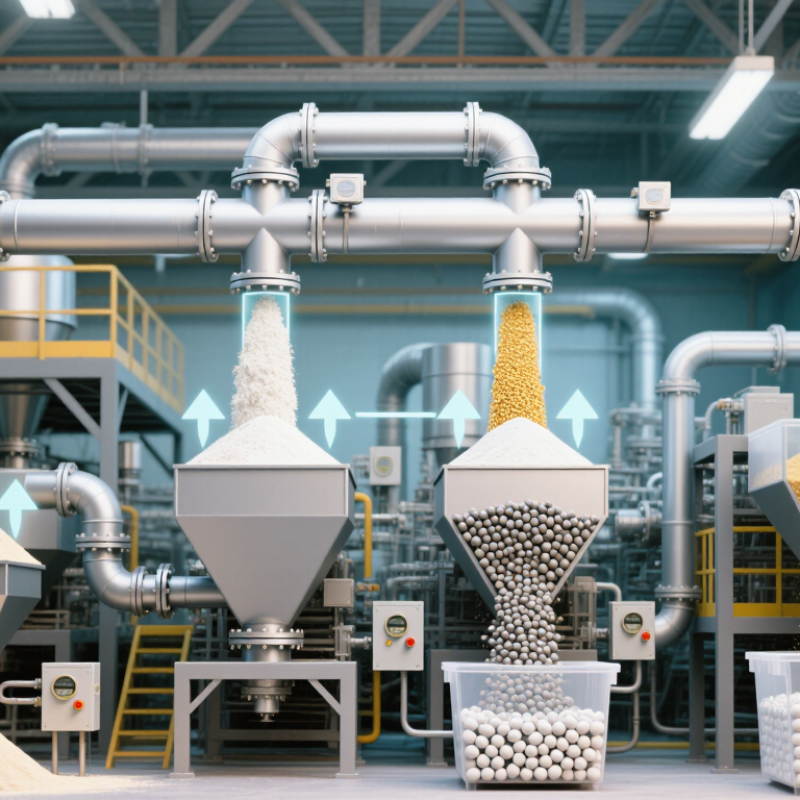
What Is a Pneumatic Conveyor and How Does It Work?

Definition and Purpose of a Pneumatic Conveyor

A pneumatic conveyor is a system that moves dry, free-flowing material through enclosed pipes using air. A blower or compressed-air source creates the airflow, while a feed point introduces material into the line. The particles travel with the air and leave through a receiver, filter, or discharge point. No open belt is needed.

Its purpose is to transfer powders and granules between locations while limiting spills and dust exposure. For example, a plant may move flour from a storage vessel to a mixer through a pipe routed above the floor. The enclosed path can also help keep material separate from nearby products. This is useful where space is tight or equipment must connect across several rooms.

The right setup depends on the material, distance, and required flow rate. Fine powder behaves differently from heavy pellets; moisture or particle shape can change how smoothly material travels. Too much air may waste energy, while too little can cause blockages. A pipe that looks suitable on a drawing may not work as expected in operation. Testing the actual material and checking filters, bends, and feed rates are practical steps, though they add time and cost.
Key Components of a Pneumatic Conveying System

A pneumatic conveyor moves dry bulk materials through enclosed pipes using a controlled stream of air. Its blower or compressor supplies positive pressure, while a vacuum pump can draw material toward a receiver. A feed device, such as a rotary valve, meters powder or pellets into the airflow. Air does the carrying. The material travels through straight pipe sections and bends, though sharp turns can increase wear and damage fragile particles.

At the discharge point, a receiver separates solids from air. A filter captures fine dust before air exits or recirculates. Valves, pressure sensors, and a control panel help regulate flow and flag blockages. Each component affects the others: pipe diameter, conveying distance, material density, and moisture all influence system performance. A setup that works for plastic pellets may struggle with a fine, cohesive powder. In practice, even a well-designed system may need adjustment after startup; material behavior is not always easy to predict from specifications alone.

Tips: Check filters and seals regularly, and watch for unusual pressure changes. Keep bends accessible for inspection. Test with the actual material and operating rate before settling on final settings.

How Material Moves Through the Conveyor

A pneumatic conveyor moves dry bulk material through a sealed pipe using air pressure or vacuum. At the pickup point, a feeder meters material into the airflow. The moving air carries particles through straight pipe sections and bends. At the destination, a receiver slows the airflow, allowing solids to drop into a hopper while a filter captures fine dust. The route is enclosed. Spillage is limited.

Material may travel as a dilute suspension or as slower, denser plugs. The required airflow depends on particle size, moisture, pipe layout, and feed rate. Too little air can let solids settle; excessive air can increase wear and energy use. A U.S. Department of Energy sourcebook reports that compressed air accounts for roughly 10% of industrial electricity use, reaching 30% in some facilities. That figure covers more than conveying, but it shows why leaks and pressure settings deserve attention. Material behavior can still be unpredictable.

Tips: Check airflow and feed rate together. Watch for pressure changes, buildup near bends, and unusual filter loading. The best setting may need adjustment as material conditions change.

What Is a Pneumatic Conveyor and How Does It Work?

Typical conveying-air velocity ranges show how dilute-phase systems generally move material faster than dense-phase systems.

A blower or compressor moves air through a pipeline, carrying material from a feed point to a separator or filter. The ranges shown are typical guidelines; the suitable velocity depends on the material and system design.

Main Types of Pneumatic Conveying Systems

Pneumatic Conveying Systems move powders and granules through pipes using air or another gas. Their main types differ in pressure, airflow, and how much material travels in each batch. Dilute-phase conveying keeps particles suspended in a fast-moving air stream. It suits many free-flowing materials, such as plastic pellets or grain, but fragile particles may break during transport. Pipe bends and air speed matter.

Positive-pressure systems push material from a source toward one or more destinations. They can serve several outlets, making them useful across a production floor. Vacuum systems draw material toward a receiver instead. This can help collect dust or feed material from multiple pickup points. Dense-phase conveying uses lower air speeds and moves material in concentrated plugs. It may reduce wear on delicate products, though it needs careful control.

That matters. A poorly chosen system can cause blockages, excess dust, or product damage. Engineers usually consider particle size, moisture, distance, and required throughput before choosing a type. Real materials can behave differently from test samples, so a conveying trial may reveal issues that calculations miss. No layout is perfect. Even a well-designed line may need adjustment as operating conditions change.

Common Materials and Industrial Applications

A pneumatic conveyor moves dry bulk material through a sealed pipe using air pressure or vacuum. Common loads include flour, sugar, starch, plastic pellets, grain, cement, lime, and fly ash. In food plants, enclosed lines can reduce spills between storage bins and mixers. In cement facilities, they move powders from mills to silos. The route may run overhead, around equipment, or across a production floor.

Scale matters. The USDA’s Crop Production 2024 Summary reports 14.9 billion bushels of U.S. corn production that year. That figure shows the scale of grain logistics, not the share handled pneumatically.

The USGS Mineral Commodity Summaries 2025 estimates U.S. cement production at 84 million metric tons in 2024. Cement plants use pneumatic systems for fine powders, where sealed transfer can help limit dust escape.

The details matter. Fast, dilute-phase airflow suits many light materials; slower, dense-phase movement can reduce damage to fragile pellets. But bends, moisture, and changing particle sizes can cause blockages or uneven flow. A clean-looking layout can still be difficult to maintain. Operators need suitable filters, pressure controls, and access points for clearing lines. Dust collection and material testing should inform system design, especially when powders behave differently across seasons or batches.

Have Questions?

Talk to a product specialist today: 1-800-308-6788

Snake Tray Catalog

snake tray® CATALOG

the new catalog is here. AVAILABLE IN PRINT AND ONLINE.

DOWNLOAD A PDF REQUEST A PRINTED COPY
CALL US TODAY