How to Choose the Right Connector Hose Pipe for Your Needs?

A Connector Hose Pipe may look like a simple link between two components, but its size and construction can affect safety, flow, and service life. Choosing one starts with the job it must do. Identify the fluid or gas, operating pressure, temperature range, and expected exposure to sunlight, oil, vibration, or abrasion. Small details count. A hose suitable for water may not suit a hot or chemically aggressive fluid. Check the manufacturer’s specifications rather than relying on appearance alone.

The end connections matter just as much as the hose itself. Confirm thread type, diameter, sealing method, and available clearance before ordering. Measure the route with the hose in its working position, allowing room for movement and avoiding sharp bends or tension. Too short is a problem. Excess length can also kink or rub against nearby surfaces. Material choices, such as rubber, PVC, or reinforced composites, have different strengths and limitations, so match them to the application and the supplier’s guidance. There is no single best option for every installation, and product descriptions do not always make comparisons easy. That deserves a second look. This guide explains the main selection factors, common fitting and sizing checks, and practical signs that a hose may be unsuitable. A careful match can reduce leaks and premature wear, though inspection and correct installation still matter.
How to Choose the Right Connector Hose Pipe for Your Needs?

What Is a Connector Hose Pipe and How Does It Work?

A connector hose pipe is a flexible tube fitted with end connections that join two parts of a fluid system. It carries water, air, oil, or another compatible medium while allowing movement and reducing vibration. Inside, pressure pushes fluid along the hose; the connector seals against the mating port to limit leakage. Small details matter. A hose may look sturdy yet fail early if its lining, reinforcement, or seals are unsuitable for the fluid or temperature. ISO 18752:2022 classifies hydraulic hose by pressure level, a useful reminder to match working pressure rather than judge by appearance alone.

The connector’s design determines how it attaches: threaded ends, quick couplings, and clamps each suit different ports and service needs. Check the connection size, sealing method, bend radius, and pressure rating together. The U.S. Department of Energy’s Improving Compressed Air System Performance sourcebook notes that leaks can waste 20–30% of compressor output in poorly maintained systems. That figure applies to compressed-air systems, not every hose installation, but it shows why sound seals matter. Inspect for cracks, bulges, abrasion, loose fittings, and leaks under normal operating conditions. A rating label helps, but it cannot confirm compatibility by itself; that part deserves a second look.

Which Types and Materials Are Available?

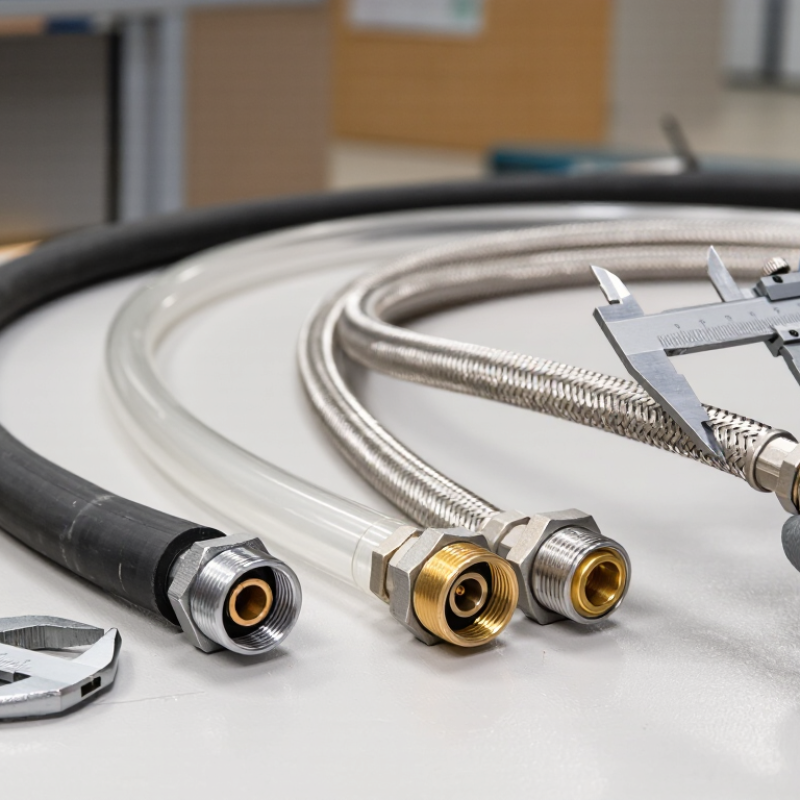
Connector hose pipes are available in several constructions, and each suits different working conditions. Flexible rubber hoses handle movement well and are common in water and air lines. Reinforced rubber adds textile or metal layers for greater pressure resistance. Stainless-steel braided hoses resist heat and external abrasion, though their inner tube still determines chemical compatibility. That detail matters.

Thermoplastic hoses are lightweight and can suit hydraulic or chemical service when their specifications match the fluid. Silicone hoses tolerate a broad temperature range, but they are not automatically suitable for every oil or solvent. Common end connections include threaded, compression, push-fit, and flanged fittings. Choose the fitting to match the equipment, not just the hose diameter. A mismatch can cause leaks or make installation awkward. Check the stated pressure and temperature limits, fluid compatibility, bend radius, and whether the hose must meet potable-water requirements. In practice, a hose may look robust yet fail early when repeatedly kinked or exposed to the wrong cleaning fluid. I would verify the full assembly rating, since the weakest fitting can limit the entire line.

How to Choose the Right Connector Hose Pipe for Your Needs? — Which Types and Materials Are Available?

Hose Type Common Materials Typical Uses Advantages Selection Considerations
Flexible water connector hose EPDM or other elastomer inner tube, often with a stainless-steel wire braid Potable-water connections for sinks, toilets, and appliances, when the product is certified for that use Flexible, convenient to install, and suited to connecting fixed plumbing to movable or offset inlets Check the hose’s drinking-water approval, end-fitting size, length, and stated pressure and temperature limits. Do not kink or twist it during installation.
PVC hose Plasticized polyvinyl chloride (PVC), sometimes reinforced with textile or wire Water transfer, drainage, and some low-pressure air or chemical applications, depending on the grade Lightweight and often transparent; reinforcement can improve resistance to pressure and collapse PVC flexibility can change with temperature. Confirm chemical compatibility and the pressure rating for the exact hose, fittings, and operating conditions.
EPDM rubber hose Ethylene propylene diene monomer (EPDM) rubber, with textile or wire reinforcement where required Hot- and cold-water service, heating circuits, and some weather-exposed water lines Generally resists water, weathering, and ozone well EPDM is generally not suitable for petroleum oils and fuels. Verify the compound’s compatibility, temperature range, and pressure rating.
Silicone hose Silicone elastomer, sometimes reinforced with textile or wire Applications requiring flexibility over a broad temperature range, including selected food, medical, or process uses when appropriately certified Flexible and commonly available in formulations designed for elevated temperatures Not every silicone hose is food-grade or suitable for pressure service. Check certifications, permeation limits, fittings, and the manufacturer’s temperature and pressure data.
PTFE hose with stainless-steel braid Polytetrafluoroethylene (PTFE) liner with stainless-steel braid reinforcement Selected chemical, process, and high-temperature fluid lines PTFE has broad chemical resistance; the braid supports the liner and helps resist pressure Compatibility depends on the fluid, concentration, temperature, and fittings. The braid does not make every assembly suitable for every chemical or pressure.
Corrugated stainless-steel hose Formed stainless-steel tube, sometimes with an external braid Industrial connections, equipment hook-ups, and services where a metal hose is specified Metal construction tolerates conditions that may rule out many elastomer hoses; corrugations provide flexibility Check alloy compatibility, movement and vibration limits, bend radius, and assembly pressure rating. Avoid sharp bends and repeated flexing beyond the design limits.
Reinforced hydraulic hose Oil-resistant elastomer or thermoplastic tube with textile or steel-wire reinforcement Hydraulic machinery and fluid-power systems Designed in pressure-rated constructions for hydraulic service Select by fluid type, working pressure, temperature, impulse duty, and fitting system. Use the rated assembly; never substitute a general-purpose water hose.

Before choosing a hose, confirm the fluid, operating and peak pressure, temperature, required flow and inner diameter, hose length, bend radius, fitting type, and applicable safety or potable-water approvals. Ratings vary by product and assembly; use the manufacturer’s specifications for the exact hose and fittings.

What Specifications Should You Check Before Choosing?

Before choosing a connector hose pipe, check the required flow rate and inner diameter. A hose that is too narrow can restrict flow; one that is oversized may be awkward to route. Confirm the maximum working pressure, including pressure spikes from pumps or valves. Do not rely on burst pressure as a normal operating limit. Temperature ratings matter, too. Compare them with both the fluid temperature and the surrounding conditions. Small details matter. Check that the hose material is compatible with the fluid, especially if it is oily, acidic, or intended for food contact.

Inspect the end connections carefully. Match thread type, size, and sealing method to the equipment; similar-looking threads may not seal properly. Check the hose’s overall length and minimum bend radius against the space where it will be installed. A tight bend near a fitting can cause early wear. Consider abrasion, vibration, and outdoor exposure as well. It is easy to focus on pressure and overlook routing, so measure the installation path before ordering. Finally, compare the hose and fitting ratings, since the lower-rated part sets the practical limit. Verify specifications in the product documentation rather than guessing from appearance.

How Do You Match a Hose Pipe to Your Application?

Match the hose to the actual duty, not just the machine label. Record working and surge pressure, fluid, temperature, flow rate, and whether the line bends, vibrates, or drags. A hose carrying hot oil beside a pump needs different cover and reinforcement from a stationary water line. Not pressure alone. Check the connector thread, sealing face, and bore; a mismatched fitting can restrict flow or leak even when the hose is correctly rated. Allow a generous bend radius, especially near the crimp, where repeated flexing can cause early failure.

The U.S. Department of Energy’s report Improving Compressed Air System Performance: A Sourcebook for Industry notes that leaks can waste 20–30% of compressor output in poorly maintained systems. That figure concerns system leakage, not hose efficiency, but it shows why connector sealing and inspection matter. Choose a working-pressure rating that covers the system’s maximum pressure and surges. Then check temperature derating and fluid compatibility in the technical data. Inspect for cracks, blisters, exposed reinforcement, loose couplings, and abrasion against sharp edges. I still recheck the hose route after installation; even a suitable hose can wear against a bracket.

How Should You Install and Maintain a Connector Hose Pipe?

Before installing a connector hose pipe, shut off the water or equipment supply and release any trapped pressure. Check that the hose length, diameter, and end fittings match the connection. A fitting that looks close may still leak. Inspect the sealing washer for cuts, flattening, or grit, then clean the mating surfaces with a lint-free cloth. Keep the hose straight, with enough slack for movement, but do not let it kink or rub against a sharp edge. Hand-tighten the connections, then use a tool only if the fitting instructions call for it. Over-tightening can damage threads or seals. Go slowly.

Restore pressure gradually and watch both ends for several minutes. Dry the joints first; a fresh bead of water is easier to spot on a clean surface. If a connection leaks, shut the supply off before checking the seal and alignment. Do not simply force the fitting tighter. During routine checks, look for cracks, bulges, corrosion, loose supports, or stiffness near the ends. Notice changes. Replace a hose that shows damage, and follow its stated service conditions for pressure and temperature. I have found that small leaks can be easy to miss when a hose sits behind equipment, so check concealed sections with a light and a dry paper towel. If the setup remains uncertain, consult a qualified installer.

Have Questions?

Talk to a product specialist today: 1-800-308-6788

Snake Tray Catalog

snake tray® CATALOG

the new catalog is here. AVAILABLE IN PRINT AND ONLINE.

DOWNLOAD A PDF REQUEST A PRINTED COPY
CALL US TODAY