How Does an On Grid Solar System Work in 2026?
In 2026, an On Grid Solar System connects rooftop solar panels to a building and the local electricity grid. Sunlight creates direct-current electricity, which an inverter converts into alternating current for household appliances. A meter records electricity moving between the home and grid. Simple in principle. Real performance depends on roof direction, shade, weather, equipment, and daily usage.
When panels produce more power than a home needs, excess electricity may flow to the grid. When production falls, the home can draw electricity from the grid as usual. How exported power is valued varies by utility and location, so projected savings should be checked against current local rates. Monitoring apps can show production and consumption, though their estimates are not a substitute for a verified bill.
A grid-connected system typically stops supplying power during a grid outage, even in bright sunshine. This safety feature helps protect utility workers; backup power usually requires compatible battery equipment and approved system design. That detail surprises some new owners. It matters. This guide explains the main components, how electricity flows, and what installation involves in 2026. It also considers performance limits, monitoring, and questions to ask a qualified installer. Solar can reduce grid purchases, but it is not a guaranteed bill-free solution. Actual results deserve careful review.
Core Components of an On-Grid Solar System
How Does an On Grid Solar System Work in 2026?
Core Components of an On-Grid Solar System
An on-grid system starts with photovoltaic panels, which convert sunlight into direct-current electricity. A mounting structure holds the panels at a suitable angle, while cables carry their output to an inverter. The inverter changes DC into grid-compatible alternating current. No battery is required. The home uses solar power when it is available; a bidirectional meter records electricity imported from or exported to the utility grid. In many systems, protection devices and a disconnect switch help isolate equipment during faults or maintenance.
The details matter. In its Snapshot of Global PV Markets 2024, IEA PVPS estimated that at least 407 GW of solar capacity was added worldwide in 2023. That scale makes dependable inverters, wiring, and grid connections more than minor accessories. Small parts matter. A monitoring unit can show production and faults, but readings do not replace an electrician’s inspection. The U.S. National Renewable Energy Laboratory’s Q1 2023 PV cost benchmark treats modules, inverters, and balance-of-system equipment as distinct cost elements, reflecting how much sits beyond the panels. One easy detail to underestimate is shading: a narrow shadow from a vent can reduce output, depending on system design and inverter configuration.
How Does an On-Grid Solar System Work in 2026? — Core Components
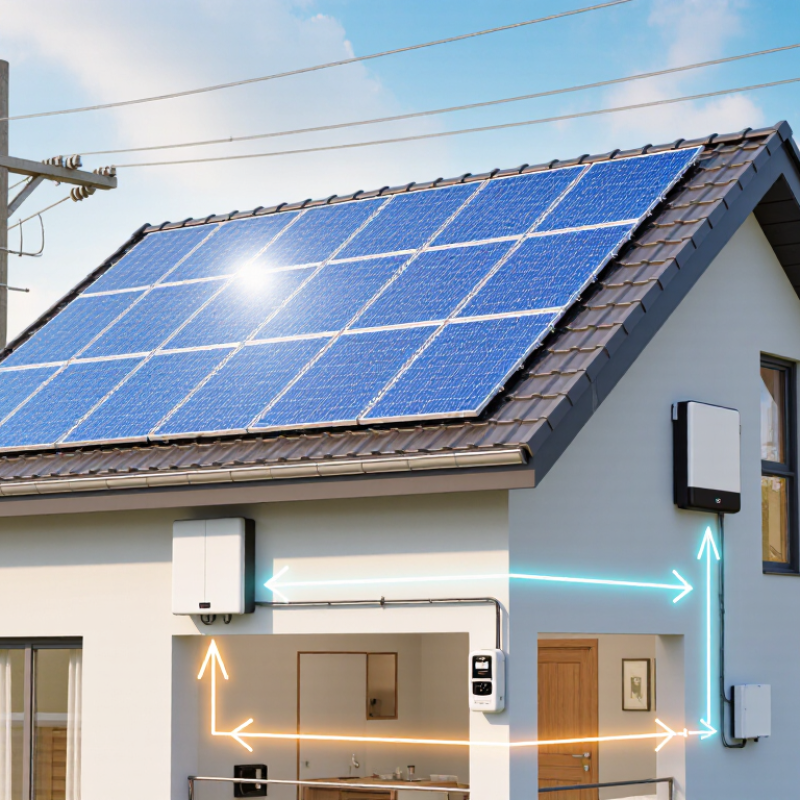
In this illustrative example, solar panels generate 20 kWh in a day. The inverter converts their DC electricity into AC power for the home; 10 kWh is used directly and 10 kWh is exported to the utility grid. When solar generation is insufficient, the home imports 8 kWh from the grid. A bidirectional meter records electricity imported and exported. Actual energy flows vary with system size, weather, and household use.
How an Inverter Converts Solar Power for Home Use
How Does an On Grid Solar System Work in 2026?
How an Inverter Converts Solar Power for Home Use
Solar panels produce direct current (DC), but household outlets use alternating current (AC). The inverter converts DC into AC by rapidly switching electrical current, then checks that its output matches the grid’s voltage and frequency. When sunlight is strong, the home uses solar power first; surplus electricity can flow to the grid. At night or during cloudy spells, the home draws power from the grid. Not magic.
NREL’s PVWatts documentation uses 96% as a default inverter-efficiency input in its system model. That is a modeling assumption, not a promise about every installation.
Tips: Ask for the inverter’s efficiency rating and confirm it suits your system’s panel layout. Watch its monitoring display on a sunny afternoon: a sudden drop can signal shading, a tripped circuit, or a fault. Simple checks help, but leave electrical inspection to a qualified professional.
During a grid outage, a standard grid-connected inverter usually shuts down to prevent sending power onto lines crews may be repairing. Backup power requires compatible equipment, often including a battery and specific backup circuits. The wiring diagram can look tidy; real roofs rarely are. Shade from one chimney may affect output differently depending on the system design, so estimated production should be checked against actual site conditions.
How the System Shares Electricity Between Your Home and the Grid
How Does an On Grid Solar System Work in 2026?
How the System Shares Electricity Between Your Home and the Grid
A grid-connected solar system sends panel electricity through an inverter, which converts it into household-ready AC power. Your home uses solar power as it is generated. If the panels produce more than your appliances need, the surplus flows through a bidirectional meter to the grid. When production falls short, such as after sunset, your home imports electricity from the grid. Clouds move fast. A meter records the exchange, but the financial value of exported power depends on your utility’s rate structure.
The grid also provides scale beyond one roof. The U.S. Energy Information Administration’s Electric Power Monthly reported that solar supplied about 5% of U.S. electricity generation in 2023. That figure includes both large solar plants and smaller systems, so it is not a measure of household exports alone. A standard grid-tied system usually shuts down during an outage to protect utility workers; backup power requires suitable equipment and configuration. The meter does not make every kilowatt-hour equal in value. Export credits and evening import rates can differ, a detail that is easy to underestimate.
Tips: Check your meter’s import and export readings alongside your bill. Compare sunny-hour production with evening use. If backup power matters, ask a qualified installer whether the system can operate safely during an outage.
How Does an On Grid Solar System Work in 2026? - How the System Shares Electricity Between Your Home and the Grid
| Time Period | Home Electricity Use (kWh) | Solar Generation (kWh) | Solar Used at Home (kWh) | Exported to Grid (kWh) | Imported from Grid (kWh) |
| 12:00 a.m.–4:00 a.m. | 1.2 | 0.0 | 0.0 | 0.0 | 1.2 |
| 4:00 a.m.–8:00 a.m. | 1.6 | 0.8 | 0.8 | 0.0 | 0.8 |
| 8:00 a.m.–12:00 p.m. | 2.4 | 3.2 | 2.4 | 0.8 | 0.0 |
| 12:00 p.m.–4:00 p.m. | 2.8 | 4.0 | 2.8 | 1.2 | 0.0 |
| 4:00 p.m.–8:00 p.m. | 3.6 | 1.6 | 1.6 | 0.0 | 2.0 |
| 8:00 p.m.–12:00 a.m. | 2.4 | 0.0 | 0.0 | 0.0 | 2.4 |
| Daily total | 14.0 | 9.6 | 7.6 | 2.0 | 6.4 |
Example daily energy balance for a grid-connected home with a 5 kW solar array and no battery. Solar electricity is used by the home first; surplus is exported to the grid, while the home imports electricity when solar production is insufficient. Actual results vary with weather, season, system size, household use, and local utility rules. Energy values are illustrative.
How Metering and Grid Outages Affect System Operation
An on-grid solar system exchanges electricity with the utility through an inverter and meter. When panels produce more than the home uses, excess power flows to the grid. The meter records imports and exports, but the value of exported electricity depends on the local billing arrangement. Credits may not match the retail price, so the bill can surprise owners.
Outages change the picture. A standard grid-connected inverter shuts down when utility power fails, even in bright sunshine. This anti-islanding protection helps prevent electricity from feeding damaged lines.
IEEE Standard 1547-2018 sets requirements for distributed energy resources connected to the grid. EIA’s Electric Power Annual 2022 reported an average U.S. interruption duration of about 5.6 hours when major events were included. That is a national average, not a prediction for any home.
A battery and suitable islanding equipment can keep selected circuits running, but a basic grid-tied system usually cannot.
The detail I still see homeowners underestimate is the difference between having panels and having backup power. Check the meter rules, outage settings, and backed-up circuits before installation.