Cold Rolled Steel is often chosen when a part needs a smooth surface, close thickness tolerances, and a precise fit. The difference begins at the mill. Hot rolled steel is shaped at high temperatures, while cold rolled steel is further reduced at room temperature. That extra processing can improve dimensional consistency and surface finish. It also adds cost, and may increase hardness.
The World Steel Association’s World Steel in Figures 2024 reports 1.89 billion tonnes of crude steel production in 2023. That scale matters: steel selection affects fabrication, waste, and product performance across major industries. ASTM A1008/A1008M covers cold-rolled carbon steel sheet, while ASTM A1011/A1011M covers hot-rolled sheet. These standards help buyers compare material requirements, not declare one process universally superior. Details matter.
Metallurgist John D. Verhoeven’s published work on steel offers a useful principle, paraphrased here: “Processing changes performance.” For a cabinet panel under bright factory lights, a cleaner finish may justify cold rolling. For a structural component hidden from view, hot rolled steel may be the practical choice. Neither wins every time. This comparison looks at finish, tolerances, strength, cost, and real application needs, while recognizing that grade and processing details can change the result. A careful choice starts with the part—not the label.
Hot-rolled steel is shaped while heated above its recrystallization temperature. Large slabs pass through rollers while glowing red, making them easier to form into beams, plates, and bars. After rolling, the steel cools in open air. That cooling can leave a dark, scaly surface and small variations in thickness or shape. For a structural beam hidden inside a building, those details may matter less than cost and easy fabrication.
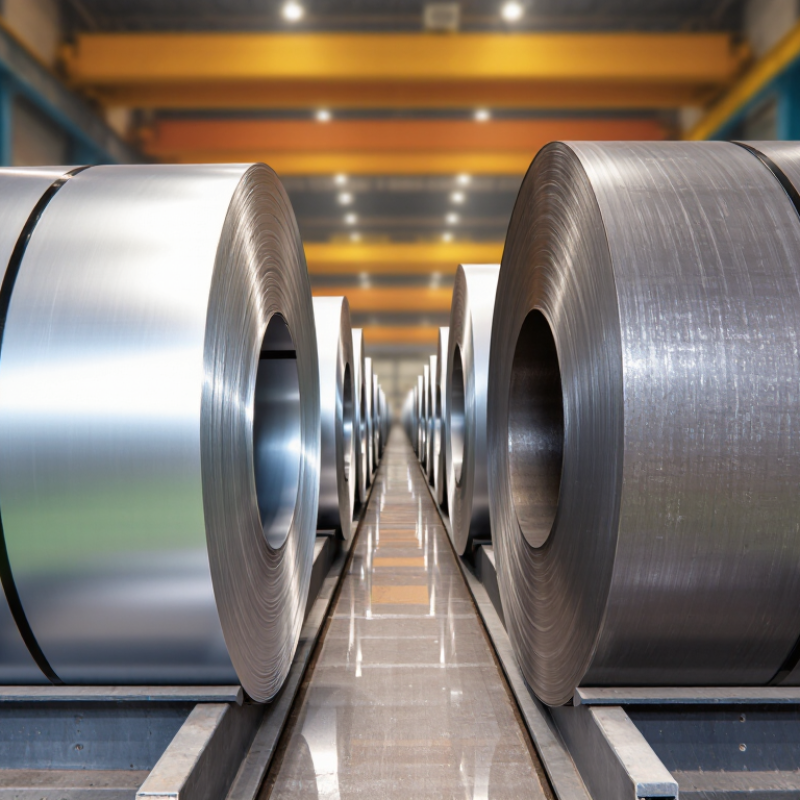
Cold-rolled steel usually starts as hot-rolled steel that has cooled. It passes through rollers again at room temperature, often after surface scale has been removed. The extra pressure produces a smoother finish and more consistent dimensions. It also work-hardens the steel, increasing its strength and hardness while sometimes reducing its ductility. That matters. A cabinet panel or machine part may need a clean surface and a close fit; cold-rolled stock can help. Yet it is not automatically better. It often costs more, and tight bends can be less forgiving. In practice, the right choice depends on the part’s required finish, tolerances, forming steps, and working loads. A quick glance at a shiny surface alone can be misleading.

Hot rolling forms steel above its recrystallization temperature, making thick sections and large shapes practical. The surface often carries dark mill scale, and cooling can leave modest thickness variation. Cold rolling further reduces previously hot-rolled steel near room temperature. It usually produces a smoother surface and tighter dimensions, with extra strength from work hardening. Real parts vary.
The World Steel Association’s World Steel in Figures 2024 reports 1,892.2 million tonnes of crude steel production in 2023. That figure shows the industry’s scale, not that one rolling route is universally superior. ASTM A1011 covers hot-rolled sheet and strip; ASTM A1008 covers cold-rolled sheet. These specifications distinguish product requirements, rather than declaring a winner. Cold-rolled sheet often suits visible panels and precise formed parts. Hot-rolled steel is commonly chosen for structural components where finish is less critical. Cold rolling can also add cost, and some applications need annealing afterward.
Tips: Check the part drawing for thickness tolerance, surface finish, and forming needs. For a painted cabinet panel, a smoother surface may matter; for a hidden bracket, it may not. Compare the grade and specification, not just the process name.
| Comparison Dimension | Cold Rolled Steel | Hot Rolled Steel |
|---|---|---|
| Rolling temperature and process | Rolled at or near room temperature, below the steel’s recrystallization temperature. It is commonly made by further reducing hot-rolled, descaled steel. | Rolled at high temperature, above the steel’s recrystallization temperature, allowing substantial shaping while the steel is hot. |
| Surface appearance | Typically smoother and more uniform, with a cleaner finish because scale is removed before cold reduction. | Often has a rougher surface and dark mill scale formed during high-temperature processing; descaling or pickling can improve the surface. |
| Dimensional consistency | Generally offers closer thickness tolerances and more consistent dimensions, subject to the product specification and mill capability. | Generally has wider dimensional variation because the steel contracts as it cools; permitted tolerances depend on the product specification. |
| Strength and hardness | Cold work typically increases strength and hardness compared with the same grade in an annealed condition, while reducing ductility. Final properties depend on grade and processing. | Often supplied in a more formable condition than a cold-worked product of the same grade, but actual strength and ductility depend on grade, cooling, and processing. |
| Formability | Suitable for many precision forming operations, but its increased work hardening can limit forming compared with an annealed condition. Deep drawing may require specially processed grades. | Often chosen for applications requiring substantial forming or bending, depending on the steel grade and product condition. |
| Typical applications | Precision sheet parts, appliance panels, furniture components, electrical enclosures, and formed parts that need a smoother finish or tighter dimensions. | Structural sections, plates, beams, rails, frames, and general-purpose parts where a mill-scale finish or wider tolerances are acceptable. |
| Relative cost and availability | Usually costs more than a comparable hot-rolled product because it involves additional processing. Availability depends on grade, thickness, and market. | Often a more economical choice for common structural and general-purpose applications, though prices vary with grade, dimensions, and market conditions. |
| Best choice when... | Surface quality, dimensional precision, or the strength gained from cold working is important, and the added cost and reduced ductility are acceptable. | Lower cost, thicker sections, or good formability in the specified grade is more important than a smooth as-rolled surface or especially close tolerances. |
Note: Properties and tolerances vary by steel grade, thickness, heat treatment, and applicable product standard. “Better” depends on the requirements of the application.
Cold rolling changes steel through pressure, not heat. The steel passes between rollers at room temperature, often in several controlled stages. This compresses the material and reduces its thickness. The process also stretches surface irregularities, producing a smoother, more uniform finish.
The pressure increases hardness and tensile strength through work hardening. It can also improve thickness consistency, which matters when parts must fit closely together. A sheet may feel stiffer and show sharper edges than a comparable hot rolled sheet. That precision is useful in appliance panels, cabinets, and formed components. Not always. Greater hardness can reduce ductility, making tight bends more likely to crack unless the grade and forming method are suitable.
Cold rolled steel may contain residual stress from uneven deformation. In practice, this can affect flatness when a sheet is cut or machined, even if it looked level beforehand. Annealing can restore some ductility, but it changes the material’s properties and adds processing. The choice is not simply “better” steel; it depends on the required finish, tolerances, and forming demands. A clean surface is valuable, but it does not guarantee easier fabrication.
Cold-rolled steel offers practical advantages where fit and finish matter more than the lowest purchase price. Its smoother surface suits visible panels, painted enclosures, and appliance housings. More consistent thickness also helps parts sit flush during assembly, reducing the need for shimming at a door edge or cabinet seam. In stamping, predictable sheet behavior can support repeatable bends and draws. That matters on a busy production line. Still, the result depends on grade, tooling, and process control; cold rolling alone cannot guarantee a perfect part.
The weight case needs careful wording. The FutureSteelVehicle technical study reported a 35% reduction in body-structure mass against its benchmark design, using advanced high-strength steels. That is a design-study result, not a promise for every cold-rolled product. The U.S. Department of Energy estimates that a 10% reduction in vehicle weight can improve fuel economy by about 6–8%, showing why precise material choices matter. But high-strength grades may spring back after forming, and a clean surface is not corrosion protection. Not always. For exposed or damp applications, coating and finishing still need attention. I would compare the finished part’s tolerance, forming needs, and service conditions—not just the steel’s label.
Hot-rolled steel may be the better choice when a project needs thick sections, large quantities, or a practical price. It is shaped while hot, so mills can produce beams, plates, and structural shapes efficiently. For a warehouse frame or a heavy equipment base, that can matter more than a smooth finish. The surface often carries dark mill scale. That trade-off matters.
Its dimensional tolerances are generally wider than those of cold-rolled steel, and the finish may need extra preparation before painting. But many structural parts do not need furniture-grade surfaces or especially tight dimensions. A fabricator can cut and weld hot-rolled plate to suit the design, though the steel grade and welding procedure still need checking. It is not automatically the easier option.
I would compare the finished part, not just the price per kilogram. A low-cost plate can require more grinding, machining, or coating work than expected. That is easy to overlook on a spreadsheet. For a load-bearing frame with visible welds and generous tolerances, hot-rolled steel may still be the sensible fit.
Cold-rolled steel is often preferred when a smoother surface and tighter dimensional consistency matter. Hot-rolled steel is often the practical choice for heavier sections and cost-conscious structural work. Ratings are qualitative comparisons of common applications, not measured material properties; actual performance varies by grade, thickness, and manufacturing specification.
Fill out the form below and our team will get back to you ASAP.
Snake Tray® is Green and Proudly Powered by the Sun! Snake Tray is committed to designing and manufacturing products that have many green benefits. Our products are made of recycled goods, minimize material waste, are energy efficient, use less non-renewable resources and nest together read more…
Snake Tray® 291 Skip Lane, Bay Shore NY 11706 | PHONE: 631-674-0004 | FAX: 631-674-0010 | www.bakoselectric.com | LEGAL | MADE IN USA
© 2025 SnakeTray. All rights reserved
Fill out the form below to download your document.