Top Tips for Choosing the Best Solar Panel Roof Mount?

Choosing the right solar panel roof mount is essential for maximizing the efficiency of your solar power system. The right mount can ensure stability, durability, and optimal sun exposure. Many homeowners feel overwhelmed by the options available. It’s important to understand the types of solar panel roof mounts and their benefits.

When selecting a solar panel roof mount, consider factors such as roof type, climate, and local regulations. A solid understanding of these aspects can lead to better decisions. Some mounts work better on certain roof materials than others. Additionally, seeking professional advice may clarify your choices and enhance installation success.

Be cautious of common pitfalls. Not every solar panel roof mount is suitable for every situation. Choosing a mount without adequate research can lead to problems in the long run. Always weigh the options carefully. Your investment in solar energy deserves attention to detail and informed decisions.
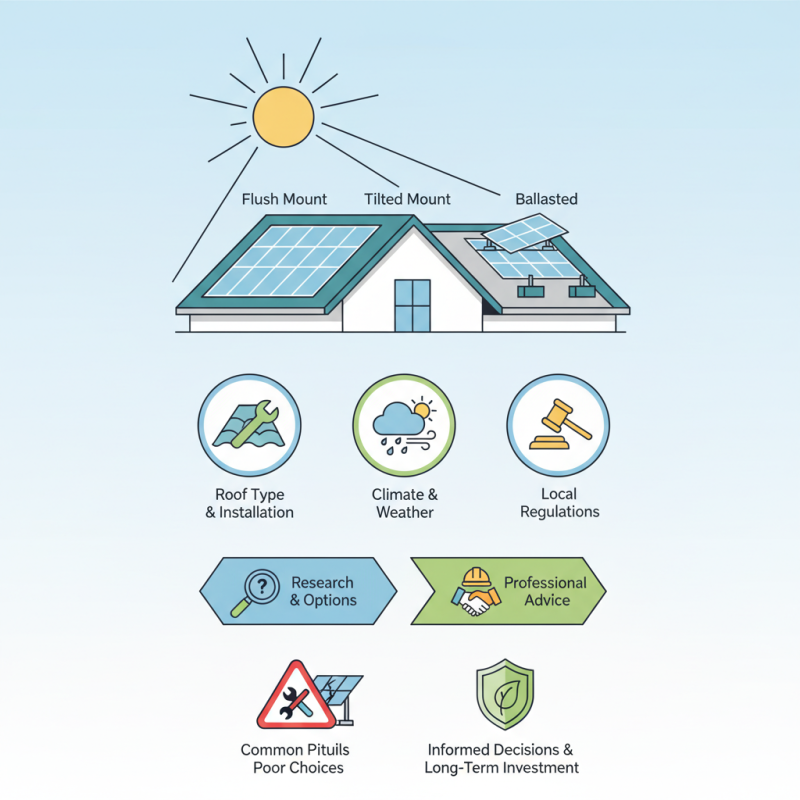
Top Tips for Choosing the Best Solar Panel Roof Mount?

Factors to Consider When Choosing Solar Panel Roof Mount Systems

When selecting a solar panel roof mount system, several critical factors come into play. The type of roof is paramount. For instance, a flat roof may require a different mounting system than a pitched roof. An effective mounting solution should fit securely and accommodate roof drainage. Ensure the chosen system will not cause water pooling, which leads to leaks over time.

Another aspect to consider is wind load capacity. In areas prone to high winds, a robust mounting system is essential to secure your panels. This stability protects both your investment and your home. Additionally, assessing local building codes can prevent issues. Some regions have specific regulations governing solar installations. Ignoring these can lead to fines or the need for costly modifications.

Moreover, think about the ease of installation. Kits that promise quick setup might seem appealing. However, if they compromise on structural integrity or durability, they become a liability. Therefore, investing time in research and reviewing installation experiences can yield valuable insights. Reflect on the long-term implications of your choices, and prioritize quality over convenience.

Understanding Different Types of Solar Panel Mounting Solutions

When selecting a solar panel mounting solution, understanding the various types available is crucial. Roof mounts are the most popular choice due to their efficiency and space-saving design. There are fixed mounts, which keep panels at a constant angle, and adjustable mounts that allow for seasonal modifications. Adjustable mounts can enhance energy capture but often require more maintenance and installation skill.

Ground mounts are another option, especially when roof space is limited. They offer flexibility in positioning but can be more expensive to install. Tracking mounts, which follow the sun's path, maximize solar energy collection. However, they come with mechanical complexities and higher costs. It's important to evaluate your roof's structure before deciding. Not all roofs can accommodate heavy solar panels safely.

In the end, the right mounting solution depends on individual needs, site conditions, and budget. Each type has trade-offs between cost and efficiency. Consulting with a solar expert can help navigate these choices. Understanding these factors is essential in making a reliable and informed decision.

Assessing Roof Types and Structural Integrity for Mount Installation

When considering solar panel roof mounts, evaluating your roof type and structural integrity is crucial. Different roofs offer varying support levels. For instance, flat roofs require specialized mounting systems. This can lead to complications; adaptations may be necessary. If your roof is sloped, ensure it maintains a safe angle. A steep slope can create mounting challenges, potentially leading to water issues.

Next, assess your roof's structural integrity. Old roofs may not support additional weight. Check for potential damage like sagging or rotting materials. These factors can impact installation quality and long-term performance. It's advisable to consult a structural engineer if in doubt. A thorough inspection can save you money and headaches later.

Lastly, consider roof materials. Asphalt shingles, tiles, and metal roofs each have unique installation requirements. Some materials might complicate the mounting process. Poor choices can affect your solar system's effectiveness. Your goal is to create a secure and lasting installation that maximizes energy production.

Evaluating Geographic Location and Climate Impact on Solar Efficiency

When selecting a solar panel roof mount, one critical aspect to consider is your geographic location. Regions with ample sunlight can significantly enhance solar efficiency. Areas near the equator usually receive more direct sunlight year-round, which leads to better energy production. Conversely, regions with frequent cloud cover or higher latitudes may see reduced efficiency. Understanding the solar potential of your location is essential for making an informed decision.

Climate also plays a vital role. Extreme weather conditions can impact the durability and performance of solar panels. For instance, areas prone to heavy snow or hail may require sturdier mounts to withstand these conditions. Additionally, temperature fluctuations can affect panel efficiency. While solar panels tend to work well in warmer temperatures, excessive heat can lead to decreased performance. Thus, it's important to evaluate your local climate and choose a roof mount system that suits these specific challenges.

Incorporating this knowledge can help you avoid potential problems. Many homeowners overlook the importance of location and climate. They often focus solely on cost or aesthetics. This can lead to disappointment and inefficiencies down the line. Investing time to analyze environmental factors empowers you to make a choice that maximizes your solar system's efficiency.

Cost Analysis and Return on Investment for Solar Mount Systems

When considering solar mount systems, analyzing costs is crucial. The initial investment can be substantial, yet understanding long-term savings is essential. Mounting systems come in various types, with each having different price points. Generally, fixed mounts are less expensive, while adjustable ones offer flexibility.

Calculating return on investment (ROI) involves more than just equipment costs. Installation fees, maintenance expenses, and energy savings play a significant role. Over time, many homeowners see a decrease in electricity bills. It’s important to estimate how long it takes to recoup initial costs. Some may find it takes longer than expected.

Also, local government incentives can influence ROI significantly. Researching available tax credits and rebates is worthwhile. These can substantially reduce the overall cost. However, not all incentives are guaranteed. Therefore, it’s wise to stay updated on changes in local solar policies. Overall, meticulous planning and research are needed to ensure the best financial outcome.

Have Questions?

Talk to a product specialist today: 1-800-308-6788

Snake Tray Catalog

snake tray® CATALOG

the new catalog is here. AVAILABLE IN PRINT AND ONLINE.

DOWNLOAD A PDF REQUEST A PRINTED COPY
CALL US TODAY