How to Choose the Best Money Bill Counter Machine?
Cash is not disappearing from everyday commerce. The Federal Reserve’s 2024 Diary of Consumer Payment Choice found that U.S. consumers used cash for 16% of payments in 2023. For shops, cash-intensive businesses, and financial offices, accurate counting still matters. A Money Bill Counter Machine can speed up routine work, but the right choice depends on the notes you handle and the checks your staff need.
Look beyond the advertised counting speed. Consider whether the machine counts mixed denominations, detects suspected counterfeit notes, and supports batch totals for deposits or till preparation. Hopper capacity, display readability, noise, jam handling, and local service support also affect daily use. A bright display and clear error alerts can make a real difference during a busy shift. Small details matter.
Industry figures help frame demand, but they cannot choose a machine for your counter. The Federal Reserve report describes U.S. payment behavior; it does not measure every business’s cash volume or workflow. That distinction is easy to miss. Before comparing models, estimate your busiest cash-counting periods and test the machine with the banknotes you actually process. Check how it handles worn or folded notes, too. Even capable machines may require manual review when notes overlap or trigger an alert. This guide explains the features, trade-offs, and practical checks that can help you choose confidently—without paying for functions you will rarely use.
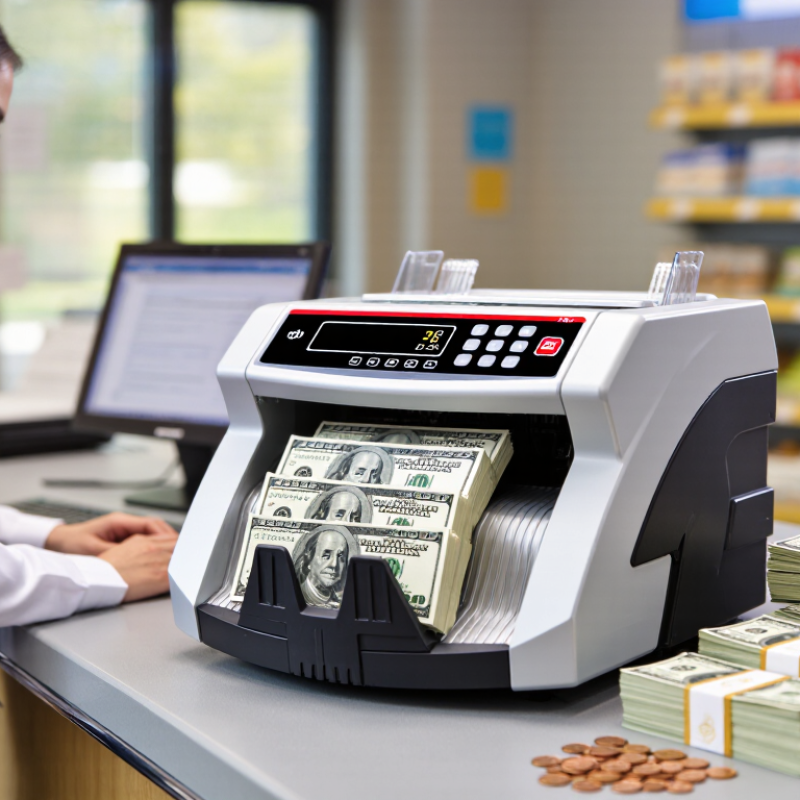
Identify Your Cash-Counting Needs and Typical Workload
Before comparing machines, measure the cash your team actually handles. Record notes counted per shift, busiest periods, denomination mix, and how often staff prepare deposits. A quiet morning can hide a sharp Friday-afternoon rush. The Federal Reserve’s 2024 Diary of Consumer Payment Choice found that cash made up 16% of U.S. consumer payments in 2023. That figure describes consumer payments, not every business’s cash room. Still, it signals why cash needs differ by location and customer base.
Match capacity to your busiest realistic workload, not an optimistic daily average. A small shop counting a few hundred notes may value simple batch settings and a compact footprint. A cash-heavy operation may need higher processing speed, mixed-denomination recognition, and clear error alerts. Check whether the machine handles the currencies and note conditions you encounter, including worn or folded bills. Also consider who will operate it and how often counts must be verified. A Federal Reserve report cannot tell you your exact peak volume; your own shift logs can. That detail is easy to overlook. One useful test is to time a typical deposit, then repeat it during your busiest period. If staff still sort notes manually, the machine may solve only part of the workload.
Compare Counting Speeds, Batch Modes, and Bill Handling Capacity
When comparing money bill counters, treat advertised speed as a starting point, not a promise. Check notes per minute, then test a real stack containing worn, crisp, and slightly curled bills. The Federal Reserve’s 2024 Diary of Consumer Payment Choice reports that cash made up 16% of U.S. payments in 2023. The European Central Bank’s 2022 SPACE study found cash represented 59% of point-of-sale transactions in the euro area. Those different patterns matter: a busy cashier may value quick daily batches, while a back office may need longer runs and careful verification. Test your own workflow.
Batch modes should match how cash is prepared: fixed bundles for deposits, smaller counts for tills, and continuous counting for reconciliation. Look for simple preset controls and a clear signal when a batch is complete. Hopper and stacker capacity also shape productivity. A large hopper reduces refills, but only if the stacker can hold the output. Otherwise, the machine pauses mid-count. Check whether capacity ratings apply to new, flat notes; real bills are rarely that tidy. And specifications can flatter. Compare the rated speed with a timed test using your usual notes, and record pauses, misfeeds, and recounts. A slower machine that handles mixed-condition bills steadily may save more time than a faster one that needs constant attention.
| How to Choose the Best Money Bill Counter Machine? — Compare Counting Speeds, Batch Modes, and Bill Handling Capacity |
| Machine Type | Typical Counting Speed | Hopper Capacity | Output Stack Capacity | Batch Modes | Bill Handling and Detection | Best Suited For |
| Basic bill counter | 600–1,000 bills per minute | Approximately 100–200 bills | Approximately 100–200 bills | Preset batches; commonly 1–999 bills | Usually counts sorted bills; counterfeit detection may be absent or limited to basic UV features | Low-volume cash handling and occasional counts |
| General-purpose counter | 800–1,200 bills per minute | Approximately 200–500 bills | Approximately 200–300 bills | Preset batch, add, and continuous-count modes | Typically handles sorted bills; UV and magnetic detection are common options | Retail shops, offices, and small cash rooms |
| Heavy-duty counter | 1,000–1,500 bills per minute | Approximately 300–500 bills | Approximately 200–500 bills | Preset batch, add, and continuous-count modes | Designed for frequent use; sensors may flag suspected double, half, or chained notes | Busy retail operations and regular cash processing |
| Value-counting counter | Typically 800–1,200 bills per minute, depending on currency and mode | Approximately 200–500 bills | Approximately 100–300 bills | Batch and add modes; may total value when denominations are recognized | Often uses image or denomination-recognition sensors; mixed-note functions vary by model | Users who need denomination totals as well as bill counts |
| Buying tip: Compare the machine’s stated speed, hopper and stacker capacities, batch controls, and supported detection features. Figures above are representative ranges; specifications vary by model, currency, and operating mode. |
Evaluate Counterfeit Detection and Currency Compatibility
When comparing a money bill counter, check that it supports the currencies, denominations, and note series your team handles. A machine may count unfamiliar notes while failing to verify them reliably. Confirm its counterfeit-detection methods, such as ultraviolet, infrared, and magnetic checks, and ask whether each applies to your currency. More sensors do not automatically mean better detection.
The European Central Bank reported 467,000 counterfeit euro banknotes withdrawn from circulation in 2023, or 16 counterfeits per million genuine notes. This is a useful measure of the issue, not a guarantee that any counter will catch every counterfeit. The ECB also maintains test results for banknote authentication devices. Check whether a model’s tested currencies and banknote versions match your daily cash. Small differences matter.
Test with clean notes and worn notes, including different denominations and orientations. Watch for frequent false rejects, missed feeds, and unclear alerts. A spec sheet can look reassuring; real notes are less tidy. Ask how detection software updates, and whether the machine flags a suspicious bill without disrupting the whole count. I would not rely on one setting for every currency. Check compatibility again when new note series enter circulation.
Assess Ease of Use, Accuracy, Maintenance, and Reliability
How to Choose the Best Money Bill Counter Machine?
Assess Ease of Use, Accuracy, Maintenance, and Reliability
A good counter should feel straightforward during a busy shift. Look for clear controls, readable displays, and simple batch settings. Test it with bills in different conditions, including worn edges and folded corners. A displayed total is useful, but it should not replace spot checks. Check whether the machine flags suspected double feeds or jams, and whether staff can clear them without tools. Small details matter.
Accuracy depends on more than advertised speed. Run several sample batches and compare the count with a careful manual tally. Watch for skipped notes, double feeds, and frequent false alerts. I would not judge a machine from one clean stack; real cash is rarely that tidy. Reliability means steady performance across repeated sessions, not just a promising first test. Ask how often routine cleaning is needed and whether key parts are easy to access.
Tips: Before buying, test the counter with your usual bills and workload. Note setup time, noise, jam frequency, and cleaning steps. Keep a simple maintenance log. If staff need repeated instruction, the interface may be too fussy. A slightly slower machine can be the better choice when counts stay consistent and downtime is low.
How to Choose the Best Money Bill Counter Machine
Suggested decision weights for comparing machines. These are a practical evaluation framework, not measured results for specific products.
How to use it: Give accuracy and reliability the most weight, then compare ease of operation and routine maintenance. Verify performance with a representative mix of bills, and check the machine’s documented error handling, cleaning requirements, and support terms.
Compare Total Cost, Warranty Coverage, and Service Support
A money counter’s price tag is only the opening cost. Compare the purchase price with expected maintenance, replacement parts, and downtime over several years. The Federal Reserve’s 2024 Diary of Consumer Payment Choice reports that cash represented 16% of U.S. consumer payments in 2023. Cash handling still matters. For a busy shop, a stalled counter during closing can mean delayed till checks and extra staff time.
Warranty terms deserve a line-by-line review. Check whether coverage includes labor, shipping, sensors, and wear parts, and note when coverage begins. A low-cost machine may become expensive if repairs require overseas shipping or long service delays. Ask the seller for typical repair turnaround times and the location of authorized technicians. Get the answer in writing. The U.S. Bureau of Labor Statistics tracks producer prices for business equipment, but it cannot predict a specific counter’s repair bill; build your own estimate from written quotes. For example, compare three-year costs using the same expected note volume and service assumptions. I would not treat that estimate as a promise. Usage varies, and dusty counters or rushed cleaning can change maintenance needs. Read the fine print.