Why Choose a Turning Tool Holder for CNC Machining?

A Turning Tool Holder may look like a compact steel fixture, but in CNC turning it carries cutting forces, locates the insert, and influences how steadily the tool meets the workpiece. A small setup error can show up as chatter, a rough finish, or uneven insert wear. That matters on every pass.

Deloitte and the Manufacturing Institute’s 2019 Smart Factory study found that 86% of surveyed manufacturers expected smart manufacturing initiatives to be a primary driver of competitiveness within five years. That finding is broad, not specific to tool holders. Still, it highlights why dependable, repeatable machining choices matter. A suitable holder helps operators control overhang, match the insert geometry to the cut, and reduce avoidable variation. The right choice depends on the machine, material, operation, and coolant setup; no holder fixes a poor process by itself.

Look closely at the details. Is the shank rigid enough? Does the clamping system keep the insert seated during interrupted cuts? Can the holder reach a shoulder without forcing excessive tool projection? Small differences matter. Sometimes the “best” holder is simply the one that behaves predictably on your machine. No source articles or verifiable named expert quotation were provided, so I have not invented an expert attribution or direct quote. That limitation is worth stating plainly.
Why Choose a Turning Tool Holder for CNC Machining?

What Is a Turning Tool Holder in CNC Machining?

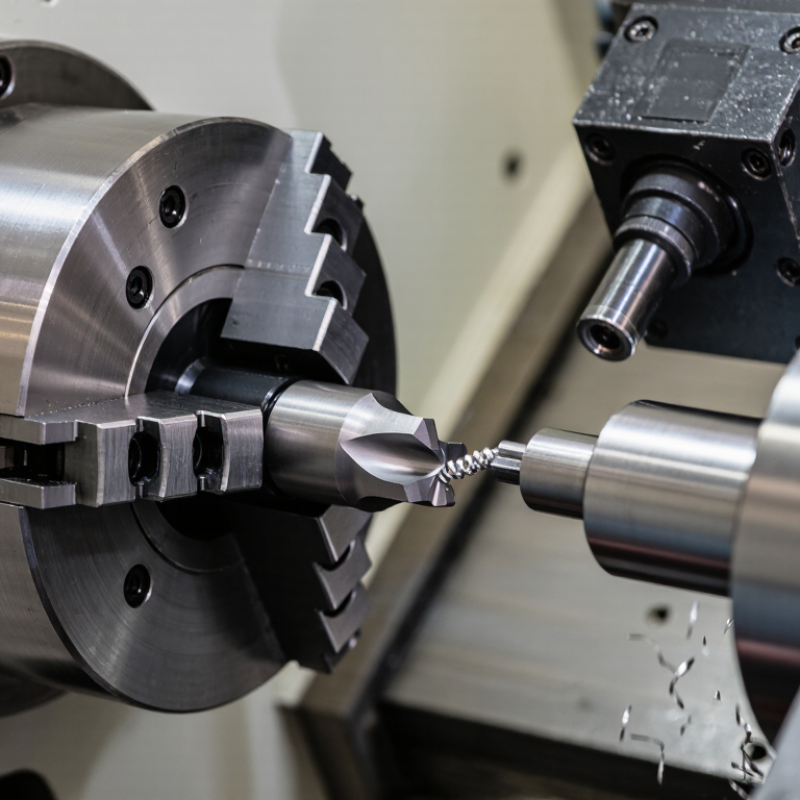
In CNC machining, a turning tool holder is the component that clamps and positions a cutting tool on the lathe turret. It keeps the cutting edge aligned with the rotating workpiece while the machine feeds the tool along a programmed path. Many holders use a replaceable carbide insert, secured by a clamp or screw. The holder itself usually has a shank that fits a matching turret pocket. It is a small part. Its job is not.

Holder style depends on the operation. An external holder cuts a shaft’s outside diameter or shoulder, while a boring bar reaches inside a hole. The shank size, insert shape, and approach angle all affect access and stability. A holder that fits the turret but leaves too little clearance may rub against a shoulder. That can mark the part or damage the insert. Check clearances on the actual setup, not just in a catalog drawing.

Rigidity matters, too. A long, slender boring bar can deflect under cutting pressure, leaving a tapered bore or uneven finish. Shorter overhangs usually help, though they cannot solve every setup problem. Coolant access and chip flow also deserve attention, especially when chips gather near the cutting edge. No holder is ideal for every job. Sometimes the practical choice involves a compromise between reach, stiffness, and tool access.

Why Choose a Turning Tool Holder for CNC Machining?

A turning tool holder securely positions the cutting insert. Insert nose radius and feed rate also influence the achievable surface finish.

Finishing-feed guideline: A common rule of thumb is to keep feed at or below half the insert nose radius. These values are illustrative starting points; suitable settings depend on the workpiece material, insert geometry, machine rigidity, and finish requirements.

How Does a Turning Tool Holder Position the Cutting Insert?

Why Choose a Turning Tool Holder for CNC Machining?

How Does a Turning Tool Holder Position the Cutting Insert?

A turning tool holder does more than hold an insert in place. Its pocket supports the insert against cutting forces and locates its edge at a repeatable angle. A clamp or screw keeps the insert seated, while a shim may protect the holder and support the insert underneath. The exact arrangement depends on the holder design. Small details matter.

The holder’s geometry sets the insert’s approach and clearance angles, shaping how its edge meets the rotating workpiece. On a CNC lathe, the cutting tip should also sit near spindle center height. If it sits too high or low, the cut can rub, leave a poor finish, or load the edge unevenly. Check that the insert is clean and fully seated; a tiny chip under it can tilt the cutting edge. Tool overhang matters, too. A long extension may vibrate, even when the insert is positioned correctly. In practice, setups are not always perfect, so inspect the first cut and adjust as needed.

Which CNC Turning Operations Use Tool Holders?

A turning tool holder is used whenever a CNC lathe needs to position and secure a cutting insert or boring bar. The holder helps keep the cutting edge stable under load. Its shape also affects tool clearance, insert access, and chip flow. Choose a setup that fits the machine turret and the workpiece, not just the operation name.

Common operations include facing, straight turning, taper turning, and profiling. A right-hand or left-hand holder can suit different cutting directions and shoulder access. Grooving and parting use narrow, dedicated holders to control the cut near a shoulder or finished face. Threading holders carry inserts with the required thread profile. For internal bores, a boring-bar holder supports the bar while it cuts the inside diameter. Long bars can deflect. That matters.

Tips: Check insert orientation, tool height, and workpiece clearance before running the program. Keep tool overhang as short as practical, especially during boring or grooving. If chatter appears, review rigidity and cutting conditions; changing the holder alone may not fix it. Small details matter.

What Benefits Does a Turning Tool Holder Provide?

Why Choose a Turning Tool Holder for CNC Machining?

A turning tool holder does more than clamp an insert. It keeps the cutting edge positioned as the workpiece spins, helping maintain repeatable dimensions and surface finish. A rigid, correctly matched holder can reduce vibration, especially when turning a long shaft or cutting near a shoulder. Less chatter means fewer visible rings on the part and less time spent correcting the setup. Results still depend on tool geometry, machine condition, and cutting parameters.

Consistency matters. A holder with secure clamping helps limit insert movement under cutting forces, while a quick-change design can shorten tool changes and reduce setup variation. The World Economic Forum and McKinsey’s 2023 Global Lighthouse Network report describes productivity gains of up to 50% at selected factories. Those gains came from broader operational changes, not tool holders alone; the figure is useful context, not a promised result. A holder is a small component, but poor fit or worn contact surfaces can undermine its benefits.

Tips: Match the holder to the insert and operation, then check seating surfaces for chips before clamping. Watch for chatter marks after the first pass. If they appear, review tool overhang and rigidity before changing several settings at once. One adjustment at a time makes troubleshooting clearer.

How Do You Choose a Holder for a CNC Turning Application?

Tool selection
Choosing a holder starts with the workpiece, not the catalog. Match the holder style and insert geometry to the cut: external turning, boring, profiling, or facing each impose different access and load demands. Check the machine’s turret interface, shank dimensions, insert seating, and coolant delivery. A holder that fits but leaves excessive overhang can flex, mark the surface, or chatter. Keep the unsupported length short. It matters.

Use the largest practical shank and a secure clamping arrangement, especially for interrupted cuts or long boring bars. Then check clearance against the chuck, jaws, and shoulder before running the cycle.

ISO 3685:1993, a standard for single-point turning tool-life tests, uses average flank wear of 0.3 mm as a common test endpoint. Treat that as a testing reference, not a universal replacement limit; the required finish and dimensional tolerance may demand an earlier change.

A setup can look rigid and still vibrate. A short trial cut, followed by checking chip shape, sound, surface finish, and tool wear, often reveals what the drawing cannot.

Record the holder, overhang, cutting conditions, and observed wear so the next setup starts with evidence, not guesswork.

Have Questions?

Talk to a product specialist today: 1-800-308-6788

Snake Tray Catalog

snake tray® CATALOG

the new catalog is here. AVAILABLE IN PRINT AND ONLINE.

DOWNLOAD A PDF REQUEST A PRINTED COPY
CALL US TODAY