Choosing the right Valve DC Gear Motor is critical for your project’s success. A well-selected motor can enhance performance and efficiency. However, many face challenges when making this choice. The market is flooded with options, each catering to specific needs.
Understanding the specifications of a Valve DC Gear Motor is essential. Consider factors like torque, speed, and power requirements. Each project varies in these aspects, making it tricky to find a perfect match. One must also reflect on the physical size and dimensions of the motor. Space constraints can complicate motor selection.
Sometimes, people overlook the importance of these details. A small mistake in calculations can lead to project failure. It’s crucial to balance your needs with available options. A thoughtful choice of a Valve DC Gear Motor can lead to lasting benefits for your project. Embrace the complexities and make informed decisions.
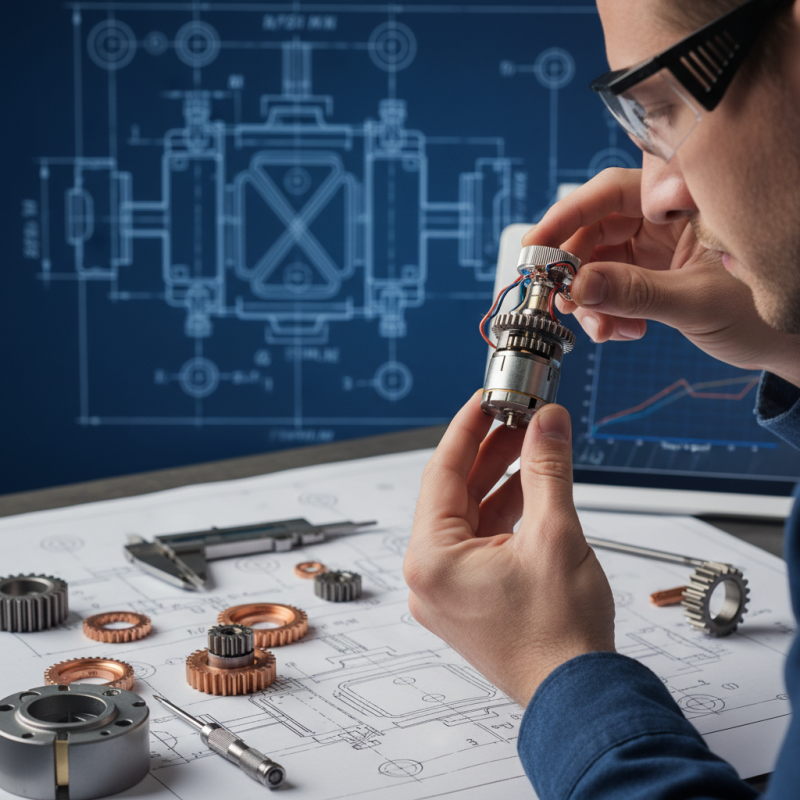
Understanding DC gear motors is crucial for valve applications. These motors integrate a direct current (DC) motor with a gear reduction system. This combination offers precise control and high torque at low speeds, making them ideal for valve operation. A report from the International Society of Automation (ISA) indicates that roughly 30% of valve failures stem from motor malfunctions. Therefore, selecting the right gear motor is essential.
When choosing a DC gear motor, consider torque requirements and operating conditions. For instance, if the valve experiences frequent cycling, a motor with a higher duty cycle rating is needed. Efficiency matters; a motor running at 85% efficiency can save energy over time. Moreover, noise levels can be an issue. A quieter motor might be essential in settings like laboratories or residential areas.
Pay attention to the gearbox type. Types include spur, bevel, and planetary gears. Each has its pros and cons. A spur gear offers simple design and cost-effectiveness, but may lack the torque of planetary gears. Reflecting on these details can be overwhelming. It's easy to overlook specifications or make assumptions. A valid approach is to perform simulations or consult with engineers for validation. Factors like heat generation and load capacity must not be ignored. Balancing these elements is key to successful valve motor integration.
| Parameter | Description | Importance |
|---|---|---|
| Voltage | The operating voltage of the motor (e.g., 12V, 24V) | Essential for compatibility with power supply |
| Torque | The rotational force needed to operate the valve | Critical for ensuring the valve operates correctly |
| Speed | The speed at which the motor rotates (RPM) | Affects the response time of the valve operation |
| Size and Weight | Physical dimensions and weight of the motor | Important for space-constrained applications |
| Gear Ratio | The ratio of input speed to output speed | Determines the torque and speed characteristics |
| Duty Cycle | The ratio of on-time to total time | Important for reliability and motor lifespan |
| Operating Environment | Conditions such as temperature, humidity, and exposure | Affects the choice of motor material and design |
| Control Type | Type of control system (e.g., PWM, analog) | Influences motor response and efficiency |

When selecting a DC gear motor for your project, several factors deserve special attention. Begin with torque requirements. Understand the load your motor will handle. Insufficient torque could lead to motor failure. Conversely, excessive torque can waste energy. It’s crucial to match torque with your application's needs.
Next, consider speed specifications. Different projects may require different speeds. A motor's speed can significantly impact performance. Too slow, and your mechanism may stall. Too fast, and you risk damaging components. Ensure you choose a gear motor that aligns with your speed requirements.
Finally, think about size and weight. Your gear motor should fit within the constraints of your design. Avoid bulky motors that could complicate assembly. Compact motors save space but might sacrifice power. Evaluate the trade-offs carefully. Reflect on your project needs and what compromises you can accept. This process is iterative and may require revisiting initial choices.
When selecting a valve DC gear motor, it's essential to understand the various types available. These motors come in different configurations, such as planetary and spur gear designs. Planetary gear motors are compact and efficient, often used in robotics and automation. They provide high torque and speed control, making them ideal for precise applications. On the other hand, spur gear motors are simpler in design. They tend to be more cost-effective and are used in various basic applications.
Different projects may require specific functions. For example, in irrigation systems, a robust valve DC gear motor can control water flow effectively. These motors can withstand harsh environments, which is crucial for outdoor use. Moreover, in HVAC systems, they help modulate airflow, ensuring comfort in buildings.
However, choosing the right motor isn't always straightforward. It's essential to match the motor with the project's needs. Overestimating requirements may lead to unnecessary costs. Less powerful motors might struggle in demanding situations. Reflecting on the motor's capacity and its application ensures effective performance. Consider how the motor will integrate within your system. This evaluation could save future headaches and improve efficiency.
When selecting a DC gear motor for your project, evaluating performance specifications is crucial. Understanding torque and speed ratings is essential. For instance, a motor rated at 12V with a torque of 0.5 Nm is ideal for light-duty applications. However, for heavier tasks, look for motors that provide higher torque values. The Motor Industry Data report suggests that up to 60% of projects fail due to improper torque selection.
Efficiency should also be considered. A high-efficiency motor helps reduce energy consumption. Reportedly, efficient motors can improve system performance by 20% or more. This means your project could save significant energy costs over time. Additionally, keep in mind the service life of the motor. A motor with a lifespan of 10,000 hours might not be suitable for long-term heavy use.
Pay close attention to heat generation and noise levels. Excessive heat can lead to motor failure. Noise levels above 60 dB may not be tolerable in most applications. Check the manufacturer's specifications thoroughly. Reflecting on these specifications can reveal nuances that influence your motor choice. Don't overlook these details. They can make or break your project's success.
When it comes to installing valve DC gear motors, attention to detail is crucial. Start by selecting a clean and dry area for installation. Ensure that the mounting surface is level and sturdy. This minimizes vibrations that can lead to premature wear. Secure the motor tightly with the appropriate fasteners. Loose connections can cause malfunction.
Regular maintenance can significantly extend the life of your gear motor. Check for any signs of wear regularly. Listen for unusual noises while in operation. These can be early indicators of problems. It's also vital to keep the motor free from dust and debris. Use a soft brush or compressed air for this task. Failure to maintain cleanliness can lead to overheating.
Sometimes, despite thorough installation and maintenance, issues still arise. It’s important to have a troubleshooting plan. Document any irregularities you notice. This will help in diagnosing problems down the line. Keep spare parts on hand to avoid downtime. However, always refer to manufacturer guidelines when replacing components. This will help ensure compatibility and proper function.
Fill out the form below and our team will get back to you ASAP.
Snake Tray® is Green and Proudly Powered by the Sun! Snake Tray is committed to designing and manufacturing products that have many green benefits. Our products are made of recycled goods, minimize material waste, are energy efficient, use less non-renewable resources and nest together read more…
Snake Tray® 291 Skip Lane, Bay Shore NY 11706 | PHONE: 631-674-0004 | FAX: 631-674-0010 | www.bakoselectric.com | LEGAL | MADE IN USA
© 2025 SnakeTray. All rights reserved
Fill out the form below to download your document.