China Top 10 Power Factor Correction CKD Suppliers

Power Factor Correction CKD sourcing matters when manufacturers need reliable assemblies, predictable lead times, and components that fit local production lines. A capacitor bank may look simple on a specification sheet. In service, enclosure temperature, switching frequency, harmonic distortion, and maintenance access all affect performance. Small details matter.

The U.S. Department of Energy’s Improving Motor and Drive System Performance sourcebook treats motor-driven equipment as a major industrial electricity load. IEEE Std 1459-2010 provides recognized definitions for power quantities, including power factor. These references offer useful technical context, but neither ranks CKD suppliers. Buyers should compare documented component ratings, test procedures, warranty terms, and support for commissioning. Ask for evidence, not polished claims.

A practical shortlist also needs to reflect the intended market. A supplier with strong export experience may still lack clear assembly instructions or dependable replacement-part support. That deserves scrutiny. The source material supplied for this introduction contains no verifiable named expert quotation or CKD-specific market figures, so inventing either would weaken its reliability. Before publication, add a directly sourced comment from a qualified power-quality engineer and identify the report, date, and measurement basis behind every market statistic. This guide can then assess ten suppliers against consistent criteria, while recognizing an important limitation: supplier capability varies by project, and no ranking replaces technical due diligence.
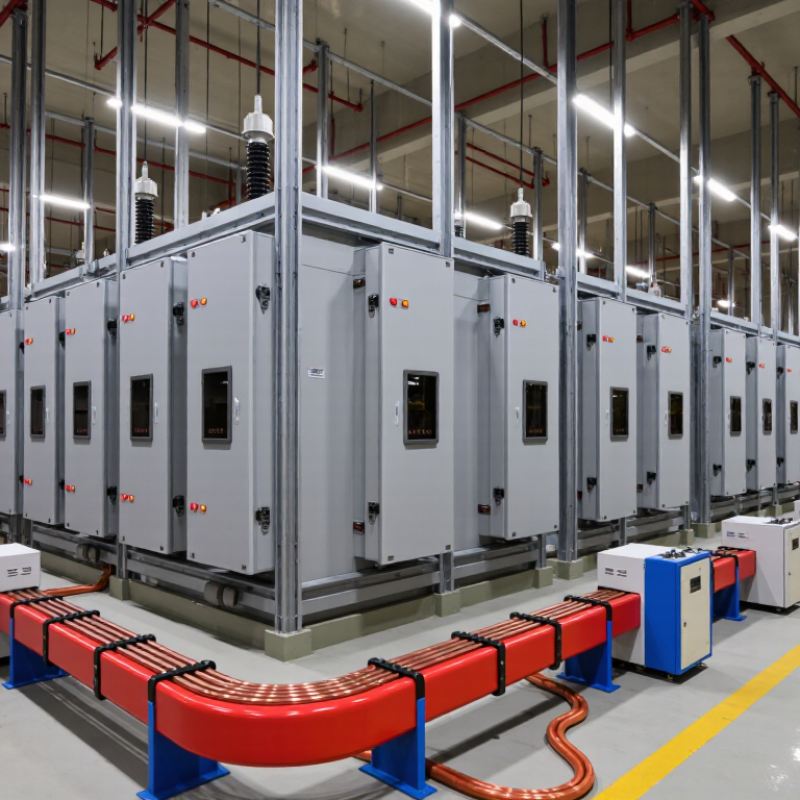
China Top 10 Power Factor Correction CKD Suppliers

Power Factor Correction CKD Kits: Scope and Core Components

Power factor correction CKD kits are supplied as component sets for local assembly, rather than as finished capacitor banks. Their scope can vary: one kit may include a complete bill of materials, while another leaves enclosure fabrication or wiring to the buyer. Confirming the assembly boundary early prevents costly gaps.

A typical kit contains power capacitors, switching contactors or thyristor modules, a reactive power controller, current transformers, fuses, busbars, and connection hardware. Detuned designs also include series reactors to reduce exposure to harmonic currents. Capacitor steps should match the site’s load profile; a workshop with frequent motor starts may need finer step control than a steady-process facility. Check rated voltage, kvar per step, temperature limits, and protection coordination against the installation data. Small details matter.

One detail is easy to miss. The current transformer’s position and polarity affect controller readings, so clear wiring diagrams and terminal labels are practical necessities. Ask suppliers for component specifications, inspection records, packing lists, and assembly instructions. These documents help verify that the shipped parts match the approved design, especially when components arrive in separate cartons. A kit may appear complete but still lack a small connector or mounting part. That happens. Inspecting the bill of materials and sample assembly process can reveal such gaps before installation.

China Top 10 Power Factor Correction CKD Suppliers – Power Factor Correction CKD Kits: Scope and Core Components

Illustrative sizing example: For a 100 kW load starting at a 0.80 power factor, the chart shows the calculated capacitor rating needed to reach each target power factor. Values are based on the standard reactive-power correction formula; actual equipment selection depends on site measurements, harmonics, voltage, and operating conditions.

Typical CKD kit scope: Capacitor units, switching contactors, overcurrent protection, discharge resistors, a power factor controller, and connection hardware. Kit contents and ratings vary by application.

China’s PFC CKD Supplier Landscape and Market Context

China’s power factor correction CKD market is shaped by more than factory capacity. Buyers compare capacitor quality, reactor design, controller options, and the consistency of supplied drawings. CKD packages can reduce assembly costs near the destination, but they shift more responsibility to local technicians. That trade-off matters.

A practical supplier review should examine component traceability, test records, and packing details. Ask how capacitors are matched, how detuned reactors are specified, and whether controller settings are documented before shipment. Small details matter. A missing wiring label can slow commissioning, while unclear thermal limits may complicate panel design. Samples and inspection reports provide useful evidence, though they cannot replace site validation.

China has a broad electrical manufacturing base, yet supplier capability varies by application and export experience. A supplier serving standard commercial panels may not be ready for harmonic-heavy industrial loads. Buyers should compare responses against actual load data, including measured power factor and harmonic levels. Be cautious with headline savings claims; system performance depends on installation and operating conditions. Supplier lists can offer leads, not proof of fit. One awkward point remains: public information on CKD capacity is often incomplete, so direct technical checks are still necessary.

China Top 10 Power Factor Correction CKD Suppliers - China’s PFC CKD Supplier Landscape and Market Context

This table describes ten common capability areas in China’s power-factor-correction (PFC) CKD supply chain, not a ranked list of companies. CKD means “completely knocked down”; it is a supply and assembly format, not a product certification. Publicly verifiable, like-for-like data establishing a definitive national top-ten supplier ranking is not provided here.

No. CKD Capability Area Typical Supply Scope Relevant Technical Context Buyer Verification Point
1 Power capacitors Capacitor units and connection accessories Low-voltage shunt power capacitors are covered by IEC 60831-1 for AC systems up to and including 1,000 V at 15–60 Hz. Check rated voltage, capacitance, temperature limits, discharge provisions, and applicable test reports for the offered model.
2 Detuned reactors Series reactors for capacitor-bank assemblies Reactors are selected with the capacitor bank to address harmonic conditions; tuning and thermal design depend on the system study. Request the reactor rating, impedance or tuning data, loss information, temperature-rise results, and the matching capacitor configuration.
3 Reactive-power controllers Measurement, switching logic, and control components Controller settings depend on the measured network conditions and the required control strategy; a single target power factor is not universal for every installation. Confirm measurement inputs, switching sequence, alarm functions, settings access, and compatibility with the supplied switching devices.
4 Capacitor switching devices Contactors or other capacitor-duty switching components Capacitor switching can involve inrush current, so devices should be selected for the intended capacitor-duty application. Verify the device’s declared capacitor-switching duty, voltage and current ratings, endurance data, and coordination with protection.
5 Protection components Fuses, circuit-breakers, and related protection accessories Protection selection depends on rated current, prospective fault current, capacitor-bank configuration, and the assembly design. Request the protection coordination basis, short-circuit rating, component data sheets, and assembly-level verification documents.
6 Measurement and sensing Current transformers, wiring, and measurement interfaces Correct current-transformer placement and polarity are essential for the controller to measure reactive power in the intended way. Confirm ratio, accuracy class, burden, installation location, polarity markings, and compatibility with the controller input.
7 Busbars and internal connections Conductors, terminals, supports, and connection hardware Conductor sizing and temperature performance depend on current, installation conditions, enclosure design, and the applicable assembly requirements. Check material, dimensions, rated current, clearances, connection torque instructions, and supporting test or design evidence.
8 Enclosures and thermal management Cabinets, mounting structures, ventilation, and related parts Heat dissipation and environmental protection need to be assessed for the complete assembled bank and its installation environment. Specify enclosure protection, ambient conditions, ventilation arrangement, access requirements, and temperature-rise evidence.
9 CKD assembly and integration Component kits, assembly instructions, and integration support IEC 61439-1 sets general rules for low-voltage switchgear and controlgear assemblies; component conformity alone does not establish conformity of the finished assembly. Agree on the bill of materials, drawings, wiring diagrams, assembly responsibility, inspection plan, and applicable assembly verification.
10 Testing and documentation Routine checks, records, and technical files China’s public electricity supply uses a 50 Hz frequency; nominal voltage and installation conditions must be confirmed for the specific project. Request traceable model-specific reports, routine inspection records, nameplate data, installation instructions, and warranty terms.

Key Criteria for Evaluating PFC CKD Suppliers

When evaluating China-based power factor correction CKD suppliers, check engineering fit before comparing prices. The IEA’s Electricity 2024 report projects global electricity demand will grow by an average 3.4% annually from 2024 to 2026. That trend makes dependable electrical performance increasingly important, though it does not guarantee demand for any specific PFC assembly.

Ask for capacitor and reactor ratings, wiring diagrams, bill of materials, and test records. Confirm that the supplied parts match the drawings and that terminals, clearances, and enclosure dimensions suit your final assembly.

Small mismatches matter.

Request measured capacitance tolerance, dielectric-loss data, temperature limits, and harmonic-duty capability. IEEE 519-2022 offers a framework for assessing harmonic distortion at the point of common coupling; supplier claims should be backed by test conditions and results.

For CKD logistics, review part labeling, batch traceability, packing protection, and replacement-part lead times.

A box arriving with damp labels is not a minor detail.

The U.S. Department of Energy’s Improving Motor and Drive System Performance sourcebook emphasizes evaluating motor-drive systems as a whole, a useful reminder when judging component compatibility.

Also assess engineering response quality: ask how the supplier handles a drawing revision or a failed incoming inspection. A polished document pack helps, but it cannot replace sample checks.

That distinction is easy to overlook.

Profiles of China’s Top 10 PFC CKD Suppliers

Profiles of China’s Top 10 PFC CKD Suppliers

A useful comparison of ten Chinese power factor correction CKD suppliers should focus on what each can document, not on an unsupported ranking. One profile may emphasize capacitor banks; another may specialize in detuned reactors or control panels. Some suppliers offer compact kits for factory upgrades, while others handle larger assemblies for switchboards. Look for drawings that show cabinet dimensions, wiring points, capacitor steps, and connection details. These specifics help reveal whether a kit suits your project. Small details matter.

A credible supplier profile should also explain its testing process, component traceability, packing method, and technical support after delivery. Ask for sample inspection records and clear responses about voltage, frequency, and operating conditions. A polished catalogue is not enough.

CKD shipments require careful coordination between supplied parts and local assembly, and unclear instructions can create avoidable delays. Compare lead times and documentation in writing, then check whether answers remain consistent.

No profile is perfect. Some suppliers may have strong engineering support but limited customization; others may adapt quickly yet provide sparse test evidence. Note those gaps before choosing, rather than assuming every capability is included.

Comparing Supplier Capabilities, Compliance, and Export Support

China Top 10 Power Factor Correction CKD Suppliers

Comparing Supplier Capabilities, Compliance, and Export Support

When comparing China’s top ten power factor correction CKD suppliers, look beyond price and catalog size. Check whether each supplier can provide consistent capacitor, reactor, controller, and switching-component specifications. Ask for rated voltage, capacitance tolerance, thermal limits, and test records for the exact configuration. Small details matter. A capable supplier should explain how its components suit your panel design and operating conditions, including expected harmonic levels. I would not treat a polished brochure as proof of performance; sample documents and clear technical answers are more useful.

Compliance requires careful comparison. Request current certificates and test reports, then confirm that they apply to the products and destination market you have selected. CKD packages may differ in component origin, assembly scope, and inspection coverage. That can complicate traceability. Compare suppliers’ quality-control steps, labeling, and change-notification practices, rather than relying on a single certificate. If information is incomplete, record the gap and ask for clarification before approval.

Tips: Request a sample packing list, export document set, lead-time estimate, and spare-parts policy. Confirm packaging for moisture and transport vibration, especially for capacitors and control equipment. Agree on inspection points and response times in writing. Export support is practical evidence of supplier readiness, though even a strong process can miss a detail. Keep a checklist and verify the final shipment against approved specifications.

Have Questions?

Talk to a product specialist today: 1-800-308-6788

Snake Tray Catalog

snake tray® CATALOG

the new catalog is here. AVAILABLE IN PRINT AND ONLINE.

DOWNLOAD A PDF REQUEST A PRINTED COPY
CALL US TODAY