Acid Dye selection can look simple on a shade card. The real test comes when a buyer checks the fiber, bath conditions, color strength, and fastness requirements. Acid dyes are commonly used on wool, silk, and nylon, but performance depends on the exact material and process. A bright sample alone proves very little.
The United Nations Environment Programme’s textile-value-chain reports estimate that textiles contribute around 2–8% of global greenhouse-gas emissions. This figure covers the wider textile sector, not acid dyes alone. Still, it highlights why responsible sourcing and clear process information matter. Buyers should request technical data sheets, safety documentation, batch consistency records, and independent test results where available. Small details count: a shade shift between lots can disrupt an entire production run.
Textile coloration researcher S. M. Burkinshaw has published extensively on dye chemistry and fiber–dye interactions. A practical takeaway from his technical work is: “Match the dye to the fiber, then verify performance under the intended process.” This is a concise paraphrase, not a verified verbatim quotation. It is also a useful reminder that supplier claims need checking.
This guide introduces ten China-based Acid Dye manufacturers for global buyers. It focuses on product range, technical support, quality controls, and export readiness. Company information can change, and published claims are not a substitute for sample testing. A careful comparison begins with evidence, not promises.
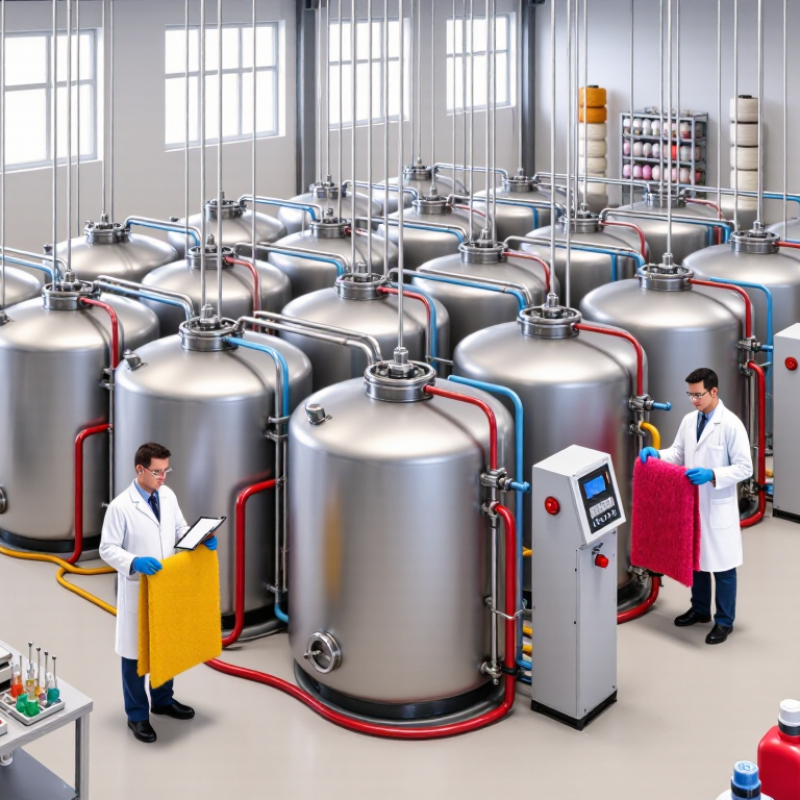
Acid dyes are named for the acidic conditions often used during dyeing, not because every dye behaves identically. Many contain sulfonate groups, which carry negative charges and help the dye dissolve in water. In an acidic bath, amino sites in wool or nylon can become positively charged. These sites attract the dye’s anionic groups, helping color bind to the fiber. Ionic attraction matters. Molecular structure, pH, temperature, and fiber type all affect the result, so water solubility alone does not predict performance.
For global buyers comparing manufacturers, request technical data on solubility, recommended bath conditions, and shade reproducibility. A clear sample test can reveal uneven color or poor exhaustion before a larger order. Keep the bath pH steady and allow powder to disperse fully; undissolved particles may leave specks on fabric. Small pH shifts can matter more than expected. This is an easy detail to underestimate, and lab results may not transfer perfectly to production.
Tips: Dissolve dye in clean, warm water according to its technical sheet. Check the bath with a calibrated pH meter, then test the shade on the intended fiber. Don’t assume two dyes with similar names will behave alike.
Acid dyes are widely used for wool, silk, and nylon, offering a broad range of clear shades. Dyeing commonly takes place between pH 2 and 6, though the suitable point depends on the fiber, dye type, shade, and equipment. Small pH changes matter. On wool, dye uptake can become uneven if the bath turns acidic too quickly. Gradual acid addition and steady heating can help limit patchiness, especially around seams and tightly packed material.
Silk usually benefits from gentle handling and carefully controlled temperature, since harsh conditions may affect its smooth feel. Nylon’s dye affinity varies with its construction and finish, so recipes should be tested rather than copied directly. Keep notes. Record pH, temperature, time, and additions for each trial. A small laboratory dyeing test can reveal differences before a larger batch is prepared.
For global buyers, a manufacturer’s technical guidance matters as much as its shade range. Ask for clear application data, recommended pH conditions, and support for troubleshooting levelness or fastness. Results can surprise. Even a sound recipe may need adjustment when water quality or machinery changes. That uncertainty is worth acknowledging, not hiding.
| No. | Fiber / Application | Common Acid Dye Type | Typical Dye-Bath pH | Typical Exhaust Dyeing Conditions | Key Buyer Consideration |
|---|---|---|---|---|---|
| 1 | Wool — pale and medium shades | Leveling acid dyes | About 4–6 | Gradual heating, commonly to around 95–100°C | Good migration and levelness; wet fastness varies by dye and shade. |
| 2 | Wool — medium to deep shades | Milling acid dyes | About 4–5 | Near-boil dyeing, with controlled heating and cooling | Often selected when better wet fastness is needed than conventional leveling dyes provide. |
| 3 | Wool — high wet-fastness requirements | Supermilling acid dyes | About 4–5 | Near-boil dyeing; follow the dye’s recommended hold time | Assess shade build-up, levelness, and fastness on the actual wool construction. |
| 4 | Silk — bright shades and level dyeing | Leveling acid dyes | About 4–5 | Typically 80–95°C; use a gradual temperature rise | Avoid unnecessarily harsh, prolonged boiling that may affect the silk’s handle and appearance. |
| 5 | Silk — improved fastness requirements | Selected metal-complex acid dyes | Usually about 4–6, subject to product guidance | Typically 90–98°C with controlled circulation | Check the specific dye’s suitability for silk, shade range, and required fastness tests. |
| 6 | Nylon — pale and medium shades | Leveling acid dyes | About 5–6 | Gradual heating, commonly to around 95–100°C | A controlled pH and dye addition help reduce rapid, uneven uptake. |
| 7 | Nylon — deep shades or faster exhaustion | Selected acid dyes at lower pH | About 3–4, where the dye and nylon grade permit | Near-boil dyeing with careful pH adjustment and dosing | Lower pH can increase exhaustion and may make levelness control more demanding. |
| 8 | Nylon — fastness-focused shades | Selected 1:2 metal-complex acid dyes | Commonly about 4–6, depending on the product | Typically near-boil dyeing; use the supplier’s technical instructions | Verify shade reproducibility and relevant wash, perspiration, and light fastness. |
| 9 | Wool / nylon blends — matched shades | Compatible acid dye combinations | Often about 4–5; confirm for the blend and dye set | Near-boil dyeing with a controlled heating profile | Test component-wise staining and shade balance because wool and nylon may exhaust differently. |
| 10 | Laboratory screening — wool, silk, or nylon | Candidate acid dye range and auxiliaries | Screen within pH 2–6 only as appropriate for the fiber and product | Record liquor ratio, heating rate, peak temperature, and hold time | Compare shade, levelness, exhaustion, and fastness using the intended substrate and process. |
Note: Dye-bath pH and temperature are indicative ranges, not universal recipes. Follow the technical data for the specific dye, fiber grade, machinery, and required fastness standard.
For global buyers comparing acid dye manufacturers, ISO 105-C06 wash testing and ISO 105-X12 rubbing tests offer practical performance checks. The wash test measures color change and staining after a specified washing procedure. The rubbing test checks color transfer under dry and wet conditions. Small differences matter. A pale nylon sample may look clean before testing, then leave visible color on adjacent fabric after wet rubbing.
Ask suppliers for reports that identify the tested fiber, shade, test conditions, and rating method. Compare results only when these details match. A strong wash rating does not automatically mean strong rubbing performance. Dye selection, fiber preparation, fixation, and after-treatment can all affect results. In practice, a laboratory report is useful, but it cannot replace testing on your own fabric and production setup. This point is easy to overlook.
Tips: Request both dry and wet rubbing results, and confirm the wash-test conditions before comparing samples. Keep a retained swatch beside the report. If one result seems unexpectedly high, repeat the test; variation can happen.
China’s leading acid dye manufacturers offer grades for wool, silk, nylon, and other protein or polyamide fibers. Product ranges commonly include leveling, milling, and metal-complex acid dyes, with different shades and fastness profiles. A useful supplier can explain how pH, temperature, and dyeing time affect shade development. Small details matter.
For global buyers, export capability means more than shipping overseas. Ask whether the manufacturer can provide current technical data sheets, safety information, batch records, and samples that match production lots. Check packaging options, minimum order quantities, and realistic lead times. These details vary by product and destination, so confirm them directly rather than relying on a broad catalog claim.
A practical evaluation compares shade consistency, solubility, application performance, and support for troubleshooting. Requesting a small trial before a large order can reveal issues with leveling or color matching. It takes time. Even experienced buyers may overlook how a different water quality changes results. Export experience is valuable, but clear communication and repeatable quality are better evidence than a polished brochure.
When comparing China’s acid dye manufacturers, request a lot-specific COA, not a sample document from last year. Check shade strength, moisture, pH, solubility, and insoluble matter against agreed limits. Ask for results from three consecutive production batches. The numbers should sit close, not merely pass. A small shade shift can show up clearly on a pale wool swatch. Keep a retained sample for your own lab comparison. It is a simple safeguard, though it adds time and cost.
For REACH, ask which substances in the dye mixture are registered, who holds the registration, and whether the supplied volume is covered. ECHA’s REACH guidance sets a registration threshold of one tonne per year per manufacturer or importer for each substance. A generic “REACH compliant” letter is not enough; request relevant SDS information and supporting substance-level evidence. Where needed, verify restricted-substance results through a laboratory working to ISO/IEC 17025. Compare test methods and detection limits, not just pass/fail wording. I have seen tidy paperwork hide gaps between the tested sample and the shipped lot. That detail is easy to miss. (Sources: ECHA, Guidance on Registration; ISO/IEC 17025:2017.)
Fill out the form below and our team will get back to you ASAP.
Snake Tray® is Green and Proudly Powered by the Sun! Snake Tray is committed to designing and manufacturing products that have many green benefits. Our products are made of recycled goods, minimize material waste, are energy efficient, use less non-renewable resources and nest together read more…
Snake Tray® 291 Skip Lane, Bay Shore NY 11706 | PHONE: 631-674-0004 | FAX: 631-674-0010 | www.bakoselectric.com | LEGAL | MADE IN USA
© 2025 SnakeTray. All rights reserved
Fill out the form below to download your document.