China Top Ion Tester Manufacturers for Global Buyers

Choosing the right Ion Tester manufacturer in China requires more than comparing prices or polished websites. Global buyers need dependable instruments, clear specifications, and evidence of real production experience. A suitable supplier should explain testing range, measurement accuracy, electrode materials, software functions, and calibration procedures without vague promises. Product photographs help, but they cannot replace technical documents or verified samples.

This guide examines leading Chinese manufacturers through a buyer-focused lens. It considers factory capability, quality control, export experience, customization support, and after-sales communication. Details matter. A reliable supplier should provide a calibration certificate, user manual, packing photographs, and a traceable product serial number. Buyers should also ask how instruments perform in actual environments, such as laboratories, water-treatment rooms, or production lines with changing temperatures.

No supplier is perfect. A manufacturer may offer excellent engineering but limited English support. Another may respond quickly but lack strong customization experience. These weaknesses deserve attention. Independent testing, reference checks, and a small trial order can reveal more than sales claims. Delivery terms, spare electrode availability, warranty conditions, and technical response times also affect long-term value.

The manufacturers discussed here are not ranked by advertising alone. Their suitability depends on the buyer’s application, budget, compliance needs, and required measurement stability. Professional evaluation remains essential. A careful purchasing decision protects both product performance and operational continuity, especially when the Ion Tester supports quality control or research work.
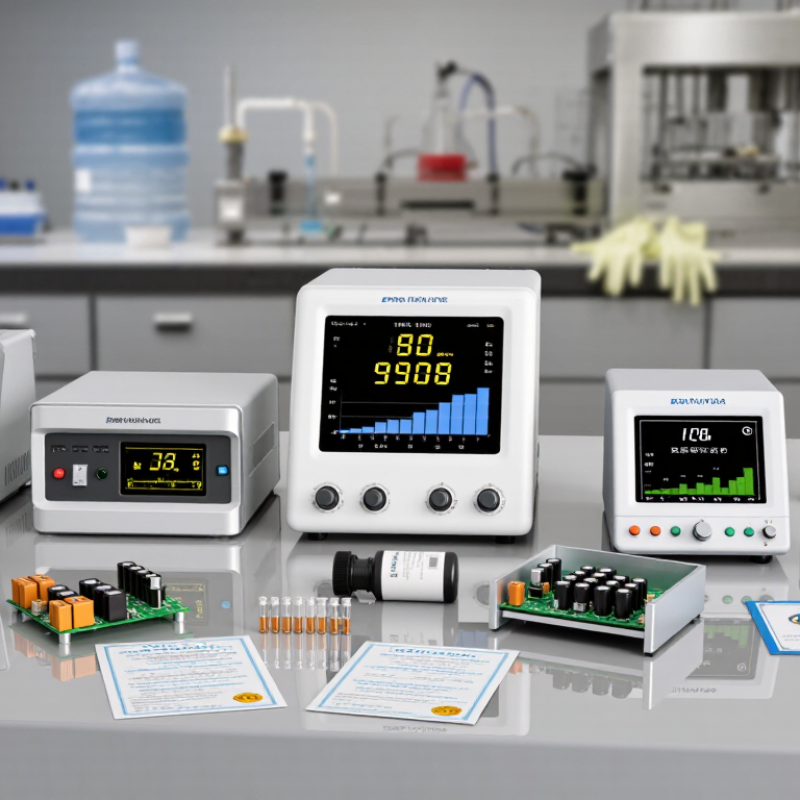
China Top Ion Tester Manufacturers for Global Buyers

Ion Tester Market Scope: Key Measurement Ranges, Accuracy, and Applications

China Top Ion Tester Manufacturers for Global Buyers

Ion tester selection starts with measurement scope, not catalogue price. Common instruments measure ion concentration, ion balance, and discharge time around sensitive production areas. For static-control audits, ANSI/ESD STM3.1 uses a 1,000-volt to 100-volt decay test. Many professional testers also target ion balance within ±35 volts. These figures help buyers compare specifications consistently.

MEASUREMENT RANGE Measurement ranges should match the workplace. Electronics assembly may need millisecond-level decay readings and balance checks near ±100 volts. Cleanrooms often require stable readings at low ion concentrations, where airflow can distort results.

Semiconductor equipment, medical-device packaging, and precision laboratories demand repeatability, data logging, and calibration certificates. A wide range is not automatically better. It may reduce resolution at the actual test point.

MarketsandMarkets’ 2024 analysis of the electrostatic discharge packaging market identifies electronics manufacturing as a leading application sector. Grand View Research’s 2024 industrial automation research also links factory monitoring growth with smarter, connected inspection equipment. These reports support demand for portable testers with USB export and traceable records.

In factory audits, technicians often forget probe positioning and grounding. I have seen this create impressive, but unreliable, readings. Buyers should request stated accuracy, operating humidity, calibration intervals, and test-method compatibility. Chinese manufacturers serving global buyers should document these details clearly. Claims without uncertainty data deserve careful review.

Technical Standards: IEC 61340-5-1, ISO 9001, and ISO/IEC 17025

China Top Ion Tester Manufacturers for Global Buyers

Technical Standards: IEC 61340-5-1, ISO 9001, and ISO/IEC 17025

Reliable ion tester manufacturers should design products around IEC 61340-5-1 requirements. This standard supports electrostatic control in sensitive work areas. Buyers should check measurement range, decay-time accuracy, ion balance, and sensor stability. A clear test method matters more than attractive specifications.

ISO 9001 indicates a controlled quality management process. It does not automatically prove measurement accuracy. Ask for calibration records, production inspection procedures, and traceable component controls. Small details matter. For example, unstable cables or poor sensor alignment can distort readings during routine testing.

ISO/IEC 17025 is especially important for calibration laboratories. It demonstrates technical competence and traceable measurement practices. Request calibration uncertainty, reference standards, environmental conditions, and the laboratory’s accreditation scope. The scope should cover the exact parameter being measured. A certificate alone is not enough.

In practical factory evaluations, repeatability often reveals more than one impressive sample report. Compare readings across several units and test distances. Record temperature and humidity during verification. Results may change in dry air. This is often overlooked. Some supplier documents also use unclear terminology, requiring careful technical review. Global buyers should examine manuals, calibration intervals, software records, and after-sales training before approval. A strong manufacturer welcomes these questions and provides evidence without hiding limitations.

Top Chinese Manufacturers: Product Types, Testing Functions, and Certifications

Chinese ion tester manufacturers supply several product types for global buyers. Common options include handheld ion meters, benchtop ion balance testers, static field meters, and complete test kits. Handheld models support quick checks near workstations, packaging lines, and clean production areas. Benchtop systems usually offer controlled measurements for ionizer performance and decay time.

Testing functions differ between models. Many instruments measure positive and negative ion balance, discharge time, voltage offset, and static field strength. Some record readings through software or export results for quality reports. In practical use, probe distance matters greatly. Humidity, airflow, grounding, and nearby metal surfaces can also change the result. The number may look precise.

It may not be reliable.

Experienced buyers should request calibration records, measurement uncertainty data, user manuals, and sample test reports. ISO 9001 can indicate a documented quality system, while CE and RoHS support certain European market requirements. These marks do not replace product verification. Buyers should confirm the applicable directives, test scope, and certificate validity. Traceable calibration to recognized national or international standards adds confidence. Factory audits, incoming inspection, and repeat testing under the same conditions remain valuable. A lower-cost tester may fit routine checks, but demanding laboratories often need better stability, software records, and service support. Even experienced teams can overlook probe positioning.

China Top Ion Tester Manufacturers for Global Buyers - Top Chinese Manufacturers: Product Types, Testing Functions, and Certifications

Manufacturer Product Category Typical Product Type Primary Testing Functions Typical Measurement Range or Capability Common Applications Relevant Standards and Certifications
Portable Ionizer Test Equipment Handheld ion balance and decay-time tester Measures ionizer offset voltage, positive and negative ion balance, and static charge decay time Typically measures millivolt-level balance and decay from a defined test voltage; exact range depends on the model Electronics assembly areas, cleanrooms, laboratories, and routine ESD audits ANSI/ESD STM3.1; IEC 61340-5-1; ISO 9001 manufacturing systems; CE and RoHS where applicable
Benchtop Ionizer Analyzer Systems Stationary charged-plate monitor and ionizer analyzer Automated measurement of ion balance, discharge time, test voltage, and test-cycle results Supports repeatable laboratory or production-line testing with programmable test conditions Ionizer qualification, incoming inspection, process validation, and quality laboratories ANSI/ESD STM3.1; IEC 61340-5-1; IEC 61340-2-1 where applicable; ISO 9001; applicable EMC and electrical-safety requirements
Charged-Plate Monitor Manufacturers Charged-plate monitor with field meter and control unit Evaluates ionizer neutralization performance, residual voltage, decay time, and alarm limits Designed for standardized plate charging and controlled discharge measurements ESD protected areas, semiconductor production, medical-device assembly, and precision manufacturing ANSI/ESD STM3.1; IEC 61340-5-1; ISO 9001; RoHS and CE requirements for applicable markets
Fixed Ion Monitoring Equipment Continuous ionizer performance monitor Real-time monitoring of ion balance, alarm thresholds, sensor status, and maintenance conditions Provides continuous or scheduled monitoring rather than a single manual measurement Automated production lines, critical workstations, cleanrooms, and ESD control systems IEC 61340-5-1; ANSI/ESD S20.20 program requirements; ISO 9001; applicable EMC, CE, and RoHS requirements
Cleanroom-Compatible Ion Testers Low-particle handheld or benchtop ion analyzer Measures ion balance and decay performance while supporting controlled-environment operation Uses low-outgassing materials or cleanroom-suitable construction when specified by the supplier Semiconductor, display, pharmaceutical, aerospace, and other controlled environments ANSI/ESD STM3.1; IEC 61340-5-1; ISO 14644 requirements for the facility where applicable; ISO 9001; CE and RoHS where applicable
Calibration and Verification Equipment Suppliers Ion tester calibration fixture and verification package Checks measurement accuracy, plate charging performance, sensor response, and repeatability Supports traceable verification when supplied with documented reference instruments and procedures Metrology departments, third-party laboratories, supplier audits, and annual ESD equipment verification ISO/IEC 17025 for accredited calibration laboratories; ANSI/ESD STM3.1; IEC 61340-5-1; ISO 9001 for manufacturing quality systems

Note: Certification and compliance status can vary by model, configuration, production batch, and destination market. Buyers should request the applicable test reports, declarations of conformity, calibration certificate, and current compliance documentation before purchase.

Supplier Evaluation: Accuracy, Calibration Traceability, MOQ, and Lead Time

When comparing China-based ion tester manufacturers, global buyers should start with measurement evidence, not a polished catalog. Ask for accuracy data across the intended range, including temperature conditions and repeatability. A claimed ±1% may hide important limits. Request a sample test report with the serial number, test points, and acceptance criteria. During factory audits, I also check probe stability after repeated immersion. Small drift can distort an entire batch.

Calibration traceability deserves equal attention. The supplier should identify the calibration laboratory, reference standards, calibration date, and measurement uncertainty. Certificates linked only to an internal stamp are weak evidence. Look for traceability to recognized national or international standards. Ask whether recalibration remains available after shipment. This is often overlooked. It should not be. A practical check is comparing two units against a fresh reference solution. Results should stay within the stated tolerance, not merely match the display.

MOQ and lead time affect risk as much as technical specifications. A flexible MOQ helps buyers validate performance before ordering hundreds of units. Confirm whether the quoted quantity includes probes, buffers, cables, and packaging. Lead time should separate stock, assembly, calibration, and export preparation. Get each stage in writing. One supplier may promise seven days, yet calibration adds another week. I have seen schedules fail because holidays and replacement parts were ignored. That weakness deserves a contingency plan, even when forecasts look stable. Ask for production updates and a clear remedy for missed dates.

Global Purchasing Checklist: CE, RoHS, EMC, Warranty, and 100–240 V Support

China Top Ion Tester Manufacturers for Global Buyers

Global buyers should treat compliance documents as purchasing evidence, not decoration. Ask for the CE Declaration of Conformity, applicable standards, and product model number. The model must match the tested instrument. CE marking alone does not prove performance. Request RoHS material information and EMC test reports before placing an order. EMC results should cover emissions and immunity, especially for laboratories with sensitive equipment.

Check the power label carefully. A reliable ion tester should support 100–240 V and 50/60 Hz for easier international deployment. Confirm the supplied plug, fuse rating, and adapter design. A universal input does not always mean a universal cable. Small details matter. I have seen buyers overlook this point, then delay installation because the local plug was missing.

Warranty terms need equal attention. Confirm coverage length, calibration support, repair procedures, and shipping responsibility. Ask whether replacement sensors, batteries, or cables remain available after the warranty period. Request a sample inspection report with serial number, test date, and measurement conditions. That record supports traceability during internal audits. Supplier experience is useful, but written evidence is stronger. Some documents may be incomplete or outdated, so allow time for independent verification. A low quotation can hide calibration costs, unclear exclusions, or weak after-sales response. That risk deserves honest review.

Global Purchasing Checklist for Ion Testers

Core evidence and specification points global buyers should verify before purchasing an ion tester.

How to read the chart: CE and RoHS normally require conformity documentation, EMC verification covers emissions and immunity, warranty review includes duration, coverage, and service terms, while 100–240 V support should confirm voltage range and operating frequency.

Article Source:

Have Questions?

Talk to a product specialist today: 1-800-308-6788

Snake Tray Catalog

snake tray® CATALOG

the new catalog is here. AVAILABLE IN PRINT AND ONLINE.

DOWNLOAD A PDF REQUEST A PRINTED COPY
CALL US TODAY