China Top 10 Heavy Duty Pallet Rack Manufacturers

Choosing among China’s top heavy duty pallet rack manufacturers requires more than comparing prices or product photos. A dependable supplier should explain load ratings, steel specifications, beam connections, and anchoring requirements in clear terms. Ask how designs are checked against your pallet dimensions, forklift type, aisle width, and expected storage conditions. Small details matter. A beam that fits the frame but misses your operating needs can create costly delays.

This guide introduces ten manufacturers and offers practical points for comparing their capabilities. Look for clear technical documents, consistent quality checks, responsive engineering support, and realistic information about lead times, installation, and replacement parts. Heavy-Duty Pallet Racks are not a one-size-fits-all purchase: warehouse layout, inventory turnover, and future expansion can change what works best. A polished catalog is useful, but it cannot confirm how a system will perform in your building. No rack is universal. Verify dimensions and capacity claims with the manufacturer, and have qualified professionals review the final layout and installation requirements. The comparison here is a starting point, not a final verdict; supplier rankings can shift depending on project needs, and available public information may not tell the whole story. That uncertainty is worth acknowledging. A careful shortlist, backed by specific questions and documented specifications, is more useful than choosing on name recognition alone.
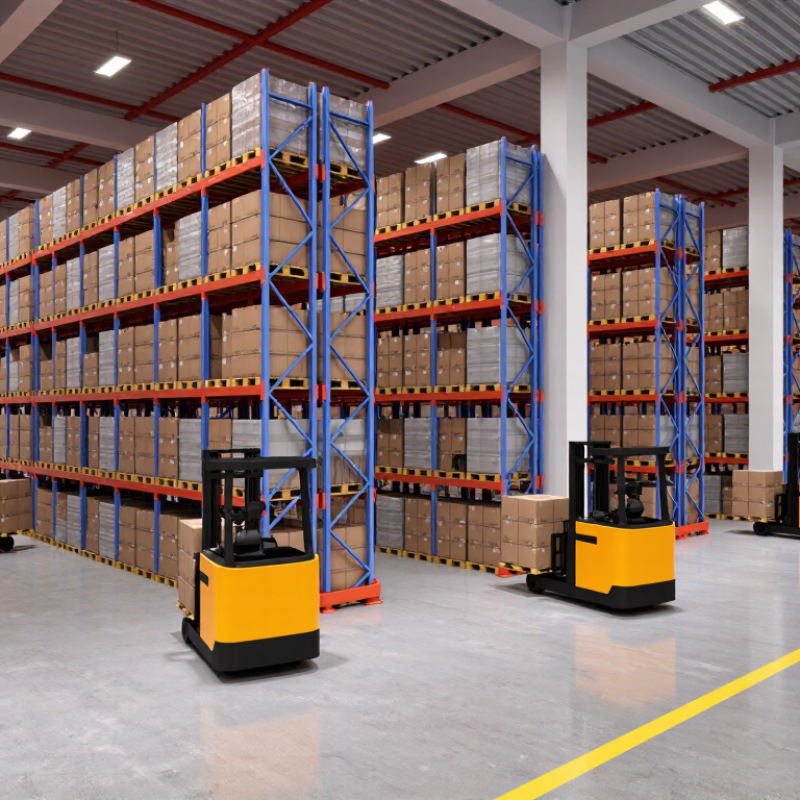
China Top 10 Heavy Duty Pallet Rack Manufacturers

Understanding Heavy-Duty Pallet Racks and Their Industrial Uses

Heavy-duty pallet racks store dense, palletized loads while keeping goods accessible to forklifts. They are common in distribution centers, cold stores, and manufacturing plants, where floor space and picking speed matter. Selective racks suit mixed stock with frequent access; drive-in systems trade some selectivity for higher storage density. Not just steel. Beam capacity depends on the rack configuration, pallet dimensions, load weight, and how evenly goods sit.

Demand for organized storage is growing alongside online retail. The U.S. Census Bureau reported 2024 U.S. retail e-commerce sales of about $1.19 trillion, or 16.1% of total retail sales. MHI’s 2024 Annual Industry Report found that 55% of surveyed supply chain leaders planned to increase technology and innovation investment. Racks are part of that picture, especially when paired with inventory systems and clear aisle planning. Yet automation cannot fix a poor layout.

On site, practical details matter: a forklift turning into an aisle, a pallet overhanging a beam, or a floor anchor loosening can affect safe operation. Installers should match rack design to documented loads, and operators should report visible damage promptly. A clean installation can still conceal a bad assumption. Capacity labels help, but they do not replace inspections or trained judgment.

How China’s Pallet Rack Manufacturers Are Evaluated

How China’s Pallet Rack Manufacturers Are Evaluated

Comparing Chinese heavy-duty pallet rack manufacturers takes more than checking steel thickness and quoted price. Buyers should review structural calculations, load-test records, weld inspection procedures, and material traceability. Ask how beam connectors are tested and how upright frames are checked for dimensional consistency. Details matter. A polished brochure is not proof of production quality.

The ANSI MH16.1 specification offers a useful reference for assessing industrial steel storage racks. Buyers can ask whether designs account for their pallet dimensions, forklift clearances, floor conditions, and seismic requirements. The MHI and Deloitte 2024 Annual Industry Report found that 55% of surveyed organizations planned to increase supply-chain technology investment over the next five years. That figure is not a rack-quality score, but it shows why adaptable warehouse equipment matters.

Factory visits can reveal practical differences: organized welding stations, clear inspection records, and finished samples with consistent coatings. Request recent project references and verify how suppliers handle damaged components or design changes. No checklist catches every issue. Even a detailed audit may miss uneven workmanship across production shifts, so sample inspections and written acceptance criteria remain valuable. Compare lead times, packaging, installation guidance, and replacement-part support alongside engineering evidence.

Profiles of China’s Top 10 Heavy-Duty Pallet Rack Manufacturers

China’s top heavy-duty pallet rack manufacturers differ in more than factory size. A useful profile looks at engineering depth, production control, and practical project support. Some facilities focus on roll-formed uprights, while others emphasize welded frames or made-to-order layouts. Details matter. Buyers should compare beam dimensions, steel specifications, connection design, and stated load ratings.

The strongest profiles also explain how products are checked. Ask whether load tests, weld inspections, and coating checks are documented, and request drawings for the proposed configuration. A rack’s capacity depends on its full setup, including beam levels, bay width, and floor conditions. Not every supplier excels. Clear answers about tolerances, replacement parts, and delivery planning can reveal more than a polished catalog.

Manufacturers may serve different needs, from standard warehouse storage to dense layouts for varied pallet sizes. Their profiles should show relevant project experience without treating one design as suitable for every site. Look for specific installation guidance and readable technical documents. One detail is easy to miss: changing a beam level can affect the approved configuration. Independent engineering review may be sensible for complex layouts, even when a supplier provides detailed calculations.

Comparing Product Designs, Load Capacity, and Customization

Comparing heavy-duty pallet rack manufacturers means looking beyond steel thickness. Selective racks offer direct access to each pallet, while drive-in designs trade access for denser storage. Measure the real operating space: aisle width, forklift turning radius, pallet overhang, and sprinkler clearance. Small mismatches matter. MHI’s 2024 Annual Industry Report found that 55% of surveyed companies planned to increase supply chain technology investment. That interest makes warehouse layout integration increasingly relevant, though it does not prove one rack design fits every facility.

Capacity needs careful checking. The Rack Manufacturers Institute’s ANSI MH16.1 design standard evaluates structural performance across the rack configuration; a single upright rating is not enough. Beam span, tier count, load distribution, bracing, and floor conditions all affect safe working capacity. Ask suppliers for configuration-specific calculations and clearly posted load limits. Customization may include beam levels for mixed pallet heights, guards at forklift impact points, or seismic design adjustments. These details can improve fit, but bespoke parts may complicate future replacement. A quote is not a structural review. Check drawings against actual pallet weights and dimensions before ordering. A few centimeters can change the fit.

China Top 10 Heavy Duty Pallet Rack Manufacturers - Comparing Product Designs, Load Capacity, and Customization

This brand-free comparison summarizes ten common heavy-duty pallet-racking system designs available from rack suppliers. It is not a ranked list of named manufacturers. Load capacity is project-specific and must be confirmed against the supplier’s engineered drawings and load tables.

No. Rack System Design Storage Density & Access Load Capacity Considerations Typical Customization Options Common Applications
1 Selective Pallet Rack Direct access to each pallet position; requires operating aisles. Beam, upright-frame, connection, and floor capacities are engineered for the specified loads and rack layout. Bay width and height, beam levels, frame depth, decking, row spacers, guards, and finishes. General warehouses with many SKUs and frequent pallet access.
2 Double-Deep Rack Stores pallets two positions deep; access to rear pallets requires a deep-reach truck. Capacity depends on the engineered rack configuration, load distribution, and equipment clearances. Row depth, beam elevations, aisle layout, and compatibility with the selected reach truck. Warehouses seeking more pallet positions while retaining access to multiple SKUs.
3 Drive-In Rack Forklifts enter storage lanes; typically operated last-in, first-out (LIFO). The design must account for pallet loads, lane depth, rail and upright forces, and forklift impact risks. Lane depth and height, guide rails, entry protection, and pallet support details. High-volume storage of relatively uniform products with limited SKU rotation.
4 Drive-Through Rack Forklifts can access lanes from both ends; can support first-in, first-out (FIFO) operation when managed accordingly. Loads and lane geometry must be checked for the specific operating method and equipment. Through-lane layout, rail levels, aisle dimensions, guides, and end-of-lane protection. Bulk storage where product rotation and access from both ends are useful.
5 Push-Back Rack Pallets sit on nested carts or inclined rails; loading and retrieval generally follow LIFO. Capacity is determined by the rack structure and the designed cart, rail, and pallet loading conditions. Lane depth, cart arrangement, pallet dimensions, and aisle-facing protection. Medium- to high-density storage with several pallets per SKU.
6 Pallet Flow Rack Pallets travel on gravity rollers from the loading side to the picking side; commonly supports FIFO. Roller lanes and rack structure must be selected for pallet weight, dimensions, condition, and flow characteristics. Lane length, roller type, speed controllers, separators, and loading and unloading arrangements. High-throughput operations and products that benefit from controlled stock rotation.
7 Radio Shuttle Rack A powered shuttle moves pallets within deep storage lanes; forklifts typically remain at the lane entrance. Rack, shuttle, rails, and pallet loads require coordinated engineering and operational limits. Lane dimensions, shuttle controls, charging arrangements, pallet specifications, and operating logic. High-density storage of larger quantities of the same SKU.
8 Mobile Pallet Rack Rack rows move on powered bases to open an access aisle where needed. Design must consider rack loads, moving-base components, floor condition, seismic requirements, and safety controls. Base length, aisle controls, sensors, emergency stops, access modes, and floor-rail or rail-less configuration. Facilities where floor space is limited and access aisles can be shared.
9 Very Narrow Aisle (VNA) Rack Uses narrow operating aisles with guided or specialized trucks; pallet positions can remain individually accessible. Rack dimensions, floor tolerances, truck guidance, and clearances must be coordinated in the design. Aisle width, guidance system, beam levels, building height, and end-of-aisle safety measures. Tall warehouses seeking efficient use of floor area while retaining selective access.
10 Structural Pallet Rack Uses structural-steel components and can be configured for selective or higher-density layouts. Capacity is calculated from the selected steel sections, connections, bracing, layout, and applied loads. Member sizes, connections, coatings, bracing, and integration with building or conveyor systems. Heavy-duty applications or installations requiring project-specific structural configurations.

Important: Do not treat generic comparisons as rated capacities. Obtain project-specific calculations that state the design loads, beam-level and frame capacities, pallet assumptions, anchorage requirements, and applicable local building and seismic criteria. Relevant design and safety references may include ANSI MH16.1/RMI or applicable EN standards, depending on the project location and scope.

Key Factors for Selecting a Pallet Rack Manufacturer in China

When comparing China’s heavy-duty pallet rack manufacturers, begin with your warehouse conditions, not a catalog image. Record pallet dimensions, maximum loaded weight, beam heights, aisle widths, and forklift type. Ask whether the quoted capacity applies to each beam level or the whole bay. These figures are not interchangeable. A clear load plan helps prevent costly redesigns after delivery.

Check how the manufacturer verifies its engineering and production quality. Request drawings, load tables, material specifications, and inspection records for welds and coatings. Ask to see how beam connectors lock into upright frames, and whether protective guards are available for busy forklift lanes. Details matter. A low price alone tells you little about steel consistency or fabrication control. If possible, inspect a sample component or arrange a factory visit; paperwork can look reassuring, but it cannot show every shop-floor detail.


Also compare communication, delivery planning, installation guidance, and spare-part support. Confirm which site measurements and floor information the supplier needs before finalizing the design. Ask how changes are handled when actual building dimensions differ from the original plan. Ask directly. Some buyers focus heavily on production time and underestimate packaging or unloading needs. I would not treat a promised delivery date as dependable until responsibilities and milestones are written clearly. A responsive technical contact can make small uncertainties easier to resolve.

Have Questions?

Talk to a product specialist today: 1-800-308-6788

Snake Tray Catalog

snake tray® CATALOG

the new catalog is here. AVAILABLE IN PRINT AND ONLINE.

DOWNLOAD A PDF REQUEST A PRINTED COPY
CALL US TODAY