China Top 10 POY Spinning and Winding Machine Manufacturers

Polyester remains central to global textile production, and POY is a key intermediate yarn in that supply chain. Textile Exchange’s Materials Market Report 2024 estimates that global fiber production reached 124 million tonnes in 2023, with polyester accounting for about 57 percent. China is a major manufacturing base: the China Chemical Fiber Industry Association reported roughly 71.27 million tonnes of chemical fiber output in 2023. These figures show the scale of demand behind POY Spinning And Winding equipment.

For mills, machine choice affects more than production speed. Stable yarn tension, consistent winding packages, and reliable control systems can influence downstream texturing and fabric quality. A small defect on a package may become a costly problem later. It happens. Yet headline output figures do not reveal how each machine performs under a factory’s actual yarn specifications, energy costs, or maintenance conditions. Buyers should examine production records, component availability, technical support, and the manufacturer’s experience with comparable lines.

This guide introduces ten China-based POY spinning and winding machine manufacturers. It offers a practical starting point, not a guarantee that every supplier fits every project. Company capabilities and product ranges can change, so readers should verify current specifications directly. A closer look is worthwhile. Compare operating data, inspect reference installations where possible, and ask how suppliers handle commissioning and spare parts. Those details can matter as much as catalogue speed.
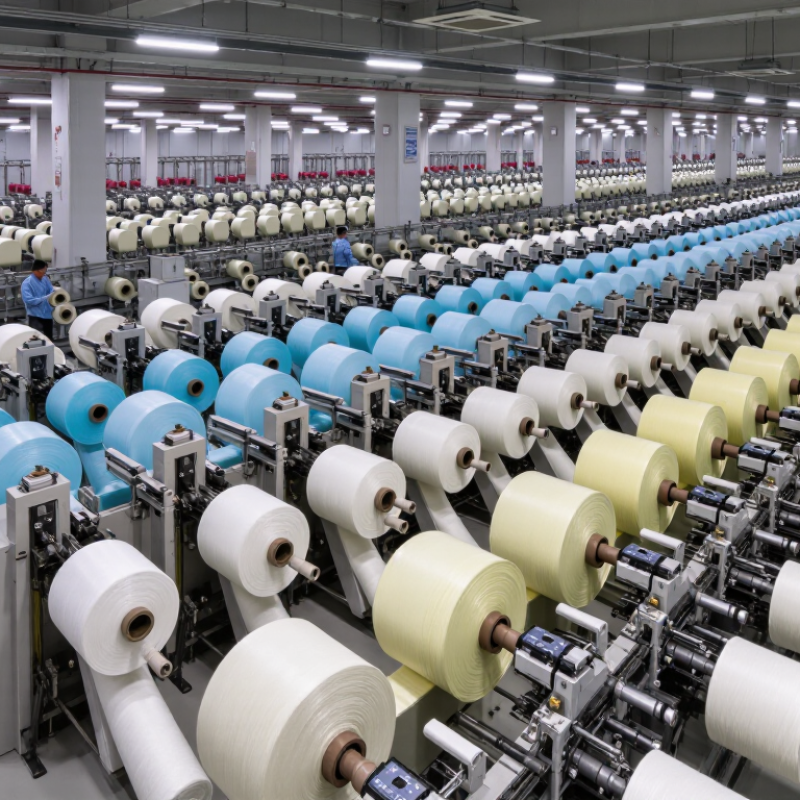
China Top 10 POY Spinning and Winding Machine Manufacturers

POY Yarn and Its Role in Polyester Production

POY, or partially oriented yarn, is an intermediate filament made by melt-spinning polyester polymer. It is wound onto packages before further drawing and texturing, which give the yarn properties suited to fabric production. The process is easy to describe, but small changes in winding tension or cooling can affect package consistency.

The market behind this step is substantial. Textile Exchange’s Materials Market Report 2024 estimates that global fiber production reached 124 million tonnes in 2023, with polyester accounting for 57 percent. That scale makes reliable POY production important to textile supply chains. Big numbers, real consequences. Even modest variation in filament strength or package shape can cause interruptions during downstream processing.

In a spinning and winding line, operators monitor factors such as yarn speed, tension, and winding density. Consistent packages help texturing equipment run with fewer stops and reduce avoidable waste. Still, POY quality does not depend on machinery alone; polymer quality, temperature control, and operating practices also matter. A machine may hold settings precisely, yet uneven inputs can undermine the result. That is worth remembering when comparing production performance.
How POY Spinning and Winding Machines Work

A POY spinning and winding machine turns molten polymer into partially oriented yarn. Polymer chips melt inside an extruder, and a metering pump pushes the melt through tiny spinneret holes. Fine filaments emerge in a steady curtain. Quench air cools and solidifies them, while a finish applicator adds a small amount of lubricant to reduce friction. Godet rollers guide the filaments at controlled speeds, creating the initial orientation without fully drawing the yarn.

The winding section gathers each yarn end onto a tube. Its traverse guide lays the yarn in even layers, while tension controls help form a stable package. Sensors track speed and tension, and operators watch for broken filaments, uneven layers, or loose edges. Small changes matter. A slight tension shift can affect package shape and later processing. The diagram looks tidy; production rarely does. Airflow, temperature, and minor filament breaks can complicate a run, so settings need regular checks rather than blind trust. POY packages are commonly sent onward for drawing and texturing, where the yarn gains additional stretch and structure.

Key Components and Technical Specifications

A POY line is only as consistent as its melt delivery, cooling, and winding control. The Textile Exchange Materials Market Report 2024 estimates that polyester made up 57% of global fiber production in 2023, within a 124-million-tonne fiber market. That scale makes stable output important, but the report does not prescribe machine settings. Each plant must match specifications to its polymer, filament count, and target denier.

Inspect the extruder, screen changer, and spin pack for melt stability and manageable pressure drop. A metering pump should deliver repeatable throughput across spinning positions. Then check quench-air uniformity, godet temperature and speed control, and finish-oil application. Small variations matter. At the winder, compare rated speed with actual production conditions, and review tension sensing, traverse accuracy, package density, and doffing time. Ask for trial data on denier variation, broken filaments, and package build—not just the headline speed. Exact limits vary by process, so published figures need context. I would also check how quickly operators can clean filters and replace worn parts; this practical detail is easy to overlook. A technically impressive machine can still produce uneven packages when airflow or tension drifts.

How to Evaluate Chinese POY Machine Manufacturers

China Top 10 POY Spinning and Winding Machine Manufacturers

How to Evaluate Chinese POY Machine Manufacturers

Evaluating a POY machine manufacturer takes more than comparing quoted speeds. Ask for acceptance-test records using your intended polymer, filament count, and denier. Check output stability, end breaks, winding tension, package density, and energy use per kilogram. Watch a machine run: listen for uneven vibration and inspect package edges for bulging. Small details matter. Request data from several shifts, not one polished demonstration. ITMF’s International Textile Machinery Shipment Statistics 2023 reported about 1.3 million draw-texturing spindles shipped worldwide, up 5% year over year. This downstream figure signals active filament investment, but it does not prove any supplier’s POY machine quality.

Review the engineering behind the sales figures. Ask how the supplier controls yarn tension, traverse movement, and package changeovers at your target speed. Confirm which components are made in-house, what spare parts are stocked, and how quickly technicians can respond. Compare power consumption under equivalent production conditions; figures without matching yarn specifications are weak evidence. Speak with operating customers, ideally at plants running similar polymers and package sizes. One uncomfortable question is whether the quoted output can be sustained after installation. Brochures rarely answer it. Your evaluation may still miss issues that appear only after months of production, so record assumptions and define trial conditions in writing.

Tips: Request a factory acceptance test and a short production trial. Keep the yarn specification, speed, defect rate, and energy readings in the same report. If a supplier resists comparable testing, pause and ask why.

Profiles of China’s Top 10 POY Machine Manufacturers

A useful profile of China’s ten leading POY spinning and winding machine manufacturers should look beyond production capacity. Compare each company’s engineering focus, machine configuration, and experience with different polymer throughputs. Some suppliers emphasize compact spinning positions; others offer integrated winding systems with automated package handling. Details matter.

For each profile, examine practical features: control of melt temperature, spinneret consistency, winding speed, and package formation. These factors influence filament uniformity and reduce avoidable interruptions. Ask how equipment handles a specified yarn count, operating schedule, and plant layout. Request measurable test data, not broad performance claims. A factory visit or detailed commissioning record can reveal how maintenance access, spare-part supply, and operator training work in real conditions.

The profiles should also distinguish established capabilities from planned upgrades. Product ranges and delivery terms can change, so buyers should confirm current specifications directly and compare like-for-like configurations. A high-speed rating alone tells little about stable production over a full shift. Nor does an attractive machine layout guarantee easy servicing. Some details may remain unclear in public materials; noting that gap is more reliable than filling it with assumptions.

Have Questions?

Talk to a product specialist today: 1-800-308-6788

Snake Tray Catalog

snake tray® CATALOG

the new catalog is here. AVAILABLE IN PRINT AND ONLINE.

DOWNLOAD A PDF REQUEST A PRINTED COPY
CALL US TODAY