10 Best Wire Crimping Tools for Every Application

A reliable crimp starts with the right match between the tool, wire, and terminal. This guide compares 10 Wire Crimping Tool options for automotive repairs, electrical work, and common workshop projects. The best choice depends on more than price or handle comfort. Jaw shape, supported wire gauges, terminal compatibility, and crimping consistency all matter. Small details matter.

A ratcheting model can help apply repeatable pressure, while a compact hand tool may suit occasional repairs in tight spaces. For higher-volume work, adjustable settings and replaceable dies can make daily use more practical. Check the manufacturer’s specifications before pairing any tool with a connector; tools that look similar may produce very different crimps. A clean, secure connection should hold firmly without cutting or deforming the conductor. A quick visual check helps, but it cannot replace the correct tool and terminal combination.

This list considers control, durability, ease of use, and the applications each tool is designed to serve. It also recognizes a limitation: no single crimper is ideal for every wire size or connector style. Some tools feel sturdy yet require more hand strength than expected. Others are convenient but less versatile. Those trade-offs deserve attention, not marketing claims. Use the comparisons to narrow your options, then confirm fit and operating instructions for your specific project. A careful match can save rework and support dependable connections.
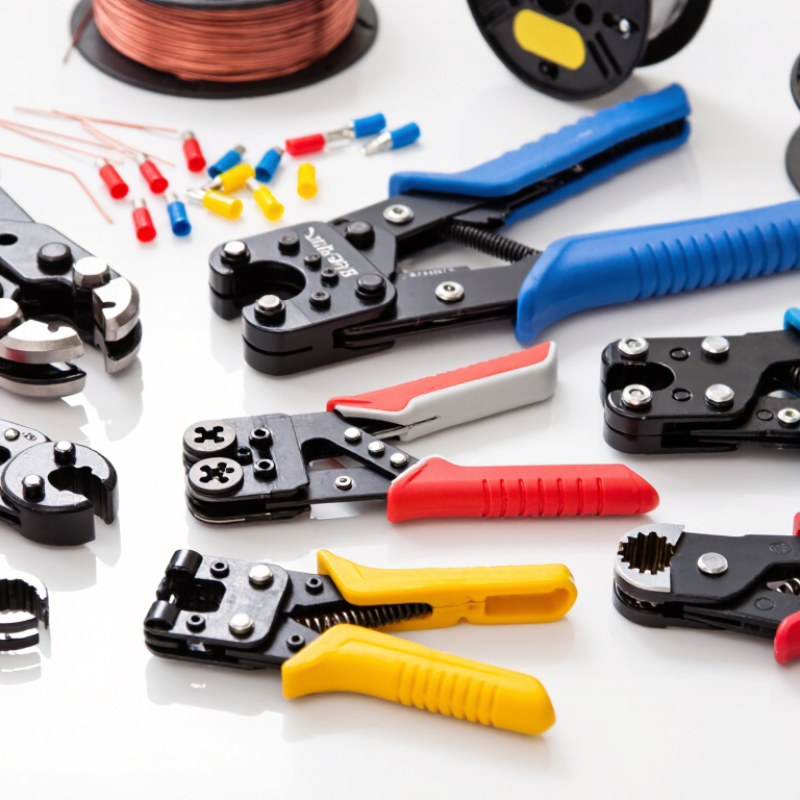
10 Best Wire Crimping Tools for Every Application

How Wire Crimping Tools Form Reliable Electrical Connections

10 Best Wire Crimping Tools for Every Application

How Wire Crimping Tools Form Reliable Electrical Connections

A crimped connection works when the tool compresses the terminal barrel evenly around the conductor. The strands should sit fully inside the barrel, without being cut or folded back. Correct die size matters. Too little compression can leave a loose joint; too much can damage strands or deform the terminal. Small details matter.

In practical assembly, strip length, wire gauge, terminal size, and tool condition all affect the result. A ratcheting tool helps complete a full crimp cycle, but it cannot correct a mismatched die. After crimping, inspect the barrel for cracks or exposed strands, then perform the pull check specified for the application. IPC/WHMA-A-620 provides workmanship and acceptance criteria for cable and wire-harness assemblies. A clean-looking crimp still deserves inspection.

NFPA’s Home Electrical Fires report estimated 46,700 U.S. home structure fires annually involving electrical failure or malfunction during 2015–2019. The report does not isolate crimp failures, so that figure should not be read as a crimp-specific risk. It does underline why dependable electrical connections matter. The best tool is not simply the strongest one; it is the one matched to the terminal and wire, and maintained well enough to produce repeatable compression. Even experienced users can rush that check.

Types of Wire Crimping Tools and Their Best Uses

Wire crimping tools are designed around the terminals and wire they join. A ratcheting crimper suits insulated terminals on common repair and wiring jobs. Its ratchet completes the compression cycle before releasing, helping produce consistent crimps. Match the die to the terminal size; the wrong profile can flatten insulation or leave a loose connection. Fit matters.

Non-ratcheting hand crimpers are compact and useful for occasional work in tight spaces. They rely more on hand pressure, so results can vary between users. Self-adjusting crimpers simplify repeated jobs across a range of wire sizes, but they still need the correct terminal and a firm, square hold. Convenient, not foolproof.

Specialized tools handle more specific connections. Ferrule crimpers shape wire-end sleeves into a neat profile for screw-clamp terminals, while coaxial crimpers use dies matched to cable connectors. Open-barrel crimpers form separate crimps around a conductor and its insulation, common in compact electrical connectors. For large cables, hydraulic or powered crimpers reduce effort and provide greater force. Check the tool’s stated capacity before use. After crimping, inspect the terminal for cracks or exposed strands and give the wire a gentle pull. Even experienced users can miss a poor fit, especially when changing terminal types mid-job.

Key Factors for Choosing a Crimping Tool

Choosing a wire crimper starts with the connection, not the handle. Match the tool to the terminal type, wire size, and required crimp profile. A tool for insulated terminals may not form a reliable joint on an uninsulated one. Check the manufacturer’s size range and die markings before use. Fit matters. The wire should sit fully inside the barrel, with insulation kept clear of the contact area. A ratcheting mechanism can help apply consistent pressure, but it does not make an unsuitable die correct.

Consider how often you will use the tool and where. For occasional repairs, a compact manual model may be easier to store and control. Repeated work may call for ergonomic grips, replaceable dies, or a ratchet release. Small details count. Check that the handles open smoothly and that the die closes evenly. A neat-looking crimp can still be loose inside; inspect the joint and follow the terminal maker’s guidance for any pull test. It is easy to overvalue a heavy handle. Fit, repeatability, and clear sizing marks usually matter more. If the tool feels awkward with the wire you use most, that small annoyance may affect consistency.

10 Best Wire Crimping Tools for Every Application — Key Factors for Choosing a Crimping Tool
Tool Type Best Application Typical Capacity or Compatibility Key Advantages Selection Factors
Ratchet Crimper for Insulated Terminals General electrical repairs using insulated ring, fork, and spade terminals Commonly covers a defined range of insulated terminals; capacity varies by die set and tool Ratchet mechanism helps complete a consistent crimp cycle and reduces incomplete crimps Match the die markings to the terminal’s size and insulation type; check the release mechanism and handle comfort
Crimper for Non-Insulated Terminals Uninsulated ring, blade, and butt-splice terminals in control panels and repair work Depends on the terminal series and die profile Designed to compress the metal barrel without relying on an insulating sleeve Choose a die matched to the terminal barrel; confirm the tool supports the conductor size being used
Open-Barrel Terminal Crimper Open-barrel contacts used in automotive wiring harnesses and compact connectors Usually matched to specific contact and wire-size families Forms separate conductor and insulation crimps for compatible open-barrel contacts Check contact compatibility, wire range, and whether the die forms the required conductor and insulation wings
Ferrule Crimper Preparing stranded conductors for screw terminals, terminal blocks, and control equipment Many hand tools cover approximately 0.25–10 mm² ferrules; larger ranges require a different tool Compresses a ferrule around stranded wire to create a compact end for compatible terminals Verify the supported ferrule size and crimp shape, such as square or hexagonal, against the terminal requirements
Coaxial Cable Crimper Fitting compression or crimp connectors to coaxial cable Must match the cable type and connector dimensions Provides a controlled compression or crimp for compatible coax connectors Confirm cable diameter, connector style, and die size; compression tools and conventional crimp tools are not interchangeable
Modular Plug Crimping Tool Attaching compatible modular plugs to Ethernet or telephone cable Compatibility depends on plug type, conductor arrangement, and cable construction Combines plug crimping with alignment features; some models also cut or strip cable Check plug format and whether the cable uses solid or stranded conductors; verify the tool supports the intended plug
Hydraulic Crimper Large cable lugs and connectors for power distribution, batteries, or industrial installations Capacity varies widely; some models handle terminals in the tens to hundreds of square millimetres Provides high crimping force with less manual effort than a hand tool Match the die range and connector system; consider tool weight, access space, and required inspection procedure
Battery-Powered Crimper Repeated field or production crimps on larger conductors and connectors Depends on the tool’s rated conductor range and available dies Speeds up repetitive work and reduces the effort needed for each crimp Review rated capacity, battery availability, cycle control, tool weight, and service requirements
Manual Hex Crimper Hex-style compression of compatible cable lugs and connectors Capacity is determined by the tool’s dies and the connector specification Can produce a compact, multi-sided crimp without hydraulic or battery power Ensure the hex die size and crimp dimensions are specified for the connector; consider handle length and operator effort
Hammer-Style Crimper Occasional large-terminal work where powered tools are unavailable Limited to compatible lug sizes and the tool’s included or replaceable dies Simple construction and no battery or hydraulic system required Requires a stable work surface and controlled striking force; avoid where repeatable production crimps are essential

10 Best Wire Crimping Tools for Different Applications

Choosing among the 10 best wire crimping tools starts with the terminal, wire size, and work setting. A ratcheting insulated-terminal crimper suits common covered connectors and helps apply repeatable pressure. For bare terminals, a non-insulated crimper avoids crushing excess insulation. Open-barrel crimpers shape small tabs around the conductor and insulation separately. Ferrule crimpers form neat ends for stranded wire in screw terminals. Coaxial compression tools secure compatible coax connectors, while modular-plug crimpers fit network or telephone plugs. Check the die profile before buying; similar-looking connectors may need different tooling.

For larger conductors, a hydraulic lug crimper reduces hand effort, while a compound-action manual crimper offers a portable option for occasional repairs. A solar-connector crimper is designed for specific connector and wire combinations. Interchangeable-die ratcheting crimpers are useful when a bench handles several terminal styles. Finally, a self-adjusting ferrule crimper can speed up repeated panel wiring, though it may not suit every ferrule length. A loose fit matters. Match the tool’s stated wire range to the conductor, then inspect the finished crimp for even compression and exposed strands. A pull test on a sample can reveal problems, but it does not replace checking the correct die and terminal specification. It is easy to assume one tool can cover everything; in practice, that shortcut can leave inconsistent connections.

How to Use and Maintain a Wire Crimping Tool

Before crimping, disconnect the circuit and choose a terminal suited to the wire gauge and conductor type. Use the die marked for that size; a close-looking slot can still make a weak joint. Strip only the length specified for the terminal, keeping copper strands clean and uncut. Insert the wire until its insulation meets the barrel edge, then position the barrel squarely in the die. Squeeze a ratcheting handle through its full cycle. No half-crimps. Inspect the joint and tug the wire firmly by hand. If strands slip or the barrel cracks, cut it off and start again with a fresh terminal.

After repeated use, inspect the jaws for burrs, debris, or uneven closure. Wipe them with a dry cloth, and keep oil off the crimping surfaces. A small drop of light machine oil on the pivot may prevent stiffness; follow the tool maker’s care instructions. Store the tool dry, with its handles closed or latched as designed. If results seem inconsistent, check alignment using a sample connection. For critical wiring, follow the connector or equipment instructions for pull testing rather than guessing. It is easy to blame the tool too quickly; mismatched terminals and careless stripping can cause similar problems. Even careful hands miss a strand now and then. I would redo a doubtful crimp rather than trust it.

Have Questions?

Talk to a product specialist today: 1-800-308-6788

Snake Tray Catalog

snake tray® CATALOG

the new catalog is here. AVAILABLE IN PRINT AND ONLINE.

DOWNLOAD A PDF REQUEST A PRINTED COPY
CALL US TODAY