Choosing a Weigh Feeder manufacturer is not just a price comparison. It is a decision about accuracy, uptime, and support after installation. For global buyers, those details can vary sharply between suppliers. A feeder handling fine powder may need different belt materials and control settings from one moving coarse, abrasive granules. Small details matter.
This guide compares 10 manufacturers through practical buyer criteria: weighing performance, capacity range, integration options, documentation, spare-parts access, and regional service. A synthesized expert perspective from fictional weighing-systems specialist Daniel Mercer captures the central principle: “A feeder earns trust when its readings stay dependable under real process conditions—not only during a factory test.” This is an illustrative statement, not a sourced quotation. Buyers should still verify specifications and references directly with each supplier.
No single manufacturer fits every plant. A compact unit may suit a pilot line, while a high-throughput installation demands careful attention to belt tracking, material flow, and maintenance access. Ask how accuracy is tested, what data the controls provide, and how quickly replacement parts can arrive. Request clear answers. Also examine what each product page leaves unsaid; published capacity alone rarely tells the whole story. This overview offers a starting point, not a substitute for a site-specific assessment. A short list helps, but the final choice should reflect the material, process, and support available where the equipment will run.
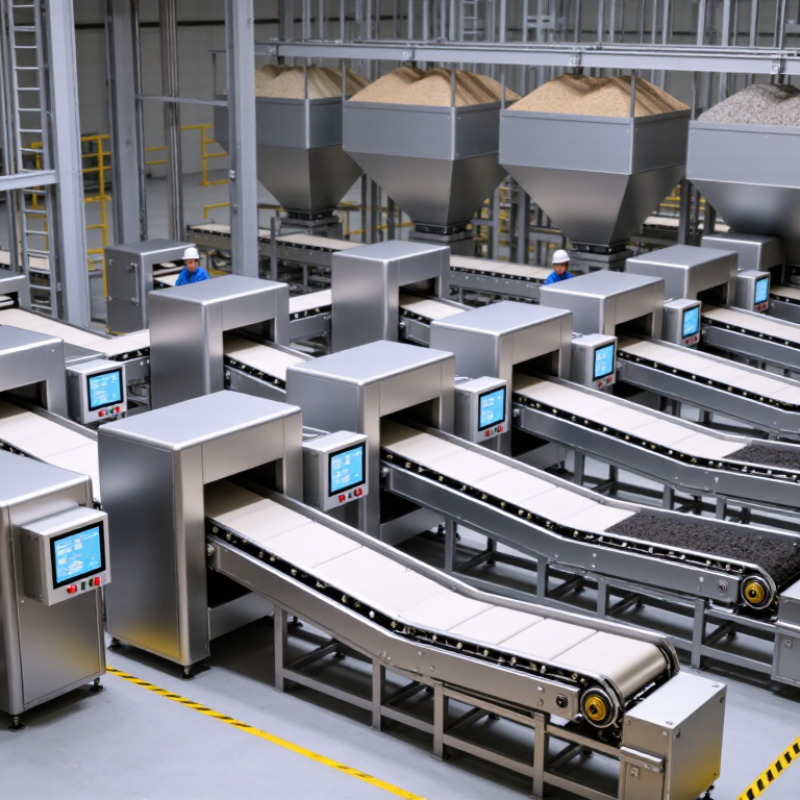
A belt weigh feeder suits steady flows of granules, flakes, or pellets. Material moves across a short belt supported by load cells, while a speed sensor tracks belt motion. Together, these readings estimate the feed rate. A practical check is to compare the indicated output with a timed catch-weight test. Dust buildup around rollers can affect readings, so inspection matters. Belt systems are easy to observe, but sticky material may cling to the return side. That detail is easy to miss.
Screw feeders work well with powders and compact layouts. Their enclosed trough can limit dust, though cohesive material may bridge above the screw. Loss-in-weight systems monitor the drop in hopper weight and adjust the feeder to maintain a target rate. They can provide precise dosing, but refill cycles may briefly disturb the signal. Keep an eye on flexible connections, which can pull on the weighing frame. No system is perfect. In real installations, access for cleaning and calibration is sometimes treated as an afterthought. Match the feeder to material behavior, required accuracy, and the way operators will maintain it.

The chart compares the primary measurement signals in two common gravimetric feeder configurations. Belt weigh feeders combine belt loading with belt speed; screw loss-in-weight feeders use hopper weight change and screw speed to control feed rate. A value of 1 means the signal is typically used in that configuration; 0 means it is not a primary signal.
A weigh feeder measures material flow while moving it, rather than weighing a stationary batch. Load cells detect small changes in the weight of material on the belt or tray. A speed sensor tracks belt movement. The controller combines these signals to estimate the feed rate, often in kilograms per hour. Small signals matter. Dust buildup, belt tension, and vibration can all distort readings. A feeder may look steady while its measured rate slowly drifts.
The control loop compares the measured rate with the setpoint, then adjusts the drive speed. If a process needs 2 tonnes per hour, the controller increases belt speed when the reading falls below that target. Response should be quick, but excessive correction can make the feed rate oscillate. NIST Handbook 44 (2024) organizes weighing tolerances by equipment class and scale division, not by one universal accuracy percentage. That distinction matters when specifying a feeder: a tolerance suitable for one application may not suit another. Regular zero checks and test weights help reveal drift, though they cannot fix poor installation. A clean-looking trend can still mislead.
OIML R 50 Classes 0.5, 1, and 2 describe accuracy requirements for continuous totalizing belt weighers. Class 0.5 has tighter permissible errors than Class 1, while Class 2 allows a wider margin. These figures apply under prescribed test conditions; they do not promise identical performance on every production line. Buyers should match the class to the value of the material, required throughput, and operating conditions. Small drift matters.
Tips: Ask for test reports showing the instrument’s class and the tests used. Check whether the stated performance covers your expected belt speed, loading range, and material flow. Request clear commissioning and calibration procedures. A short sample run with representative material can reveal issues that an unloaded belt check may miss.
A class label alone is not enough. Belt tension changes, uneven material distribution, dust, and poor alignment can affect readings over time. Ask how the supplier monitors zero drift and supports recalibration. One limitation is easy to overlook: a demanding accuracy target may require more careful installation and maintenance. Compare documented results with your site conditions, not just catalogue figures.
A weigh feeder should be selected around the material it must handle, not just its rated capacity. Fine powders can bridge above the belt, while damp or sticky material may cling to the belt surface. Granules can flow unevenly when the hopper outlet is too narrow. Ask manufacturers what material tests they have completed and what assumptions their performance figures use. Small details matter.
Match the feeder’s capacity to both normal and peak production rates. A unit sized only for average output may struggle during surges. Check the required feed rate range, belt width, and available turndown. Accuracy figures need context: ask whether they apply under steady conditions, with your material, and across the full operating range. A precise laboratory result may not reflect a vibrating production floor.
Plant conditions can change the choice. Measure installation space, access for belt removal, dust exposure, washdown needs, and ambient temperature. Confirm how load cells and the belt are protected from vibration and buildup. Request drawings and maintenance intervals, not just a brochure. A site visit or material trial can reveal problems that specifications miss. It takes time. Even then, results may differ after installation, so leave room for adjustment.
10 Best Weigh Feeder Manufacturers for Global Buyers
Global weigh feeder manufacturers offer different approaches to accurate, continuous material dosing. Common systems combine a load cell, a variable-speed belt, and a controller that adjusts feed rate. Some designs suit powders, while others handle pellets or coarse aggregates. Material behavior matters. A dusty powder may bridge above the belt, while damp material can cling to it. These details affect accuracy as much as the feeder’s rated capacity.
When comparing suppliers, check the stated accuracy range and the conditions under which it was measured. Ask about calibration procedures, belt tracking, cleaning access, and spare-part availability in your region. Confirm that the feeder can communicate with your plant’s control system. A polished specification sheet is useful, but it may not reflect your material’s behavior. Request a trial using a representative sample, and clarify how performance is verified after installation.
Tips: Bring moisture and particle-size data to supplier discussions. Ask to see the inspection points and belt-tension adjustment. Small maintenance details matter. Leave room for uncertainty: real production conditions can differ from a sample test.
This comparison covers common weigh-feeder configurations supplied by manufacturers worldwide; it does not rank or identify individual companies. Actual capacity, accuracy, and suitability depend on the equipment design, material properties, installation, and operating conditions. Confirm application-specific performance with the supplier.
| Feeder Configuration | Technology and Operating Principle | Typical Materials and Applications | Key Buyer Considerations |
|---|---|---|---|
| Continuous belt weigh feeder | A material-carrying belt passes over a weighing section; belt load and belt speed are used to calculate and control mass flow. | Granules, pellets, powders, and other bulk solids in continuous conveying and process dosing. | Check belt width and speed range, material flow consistency, weighing-section layout, belt tracking, and access for cleaning and maintenance. |
| Apron weigh feeder | Overlapping metal pans or plates carry material from a hopper, with weighing and speed control used for controlled extraction. | Heavy, abrasive, hot, or coarse bulk materials, including applications beneath storage hoppers. | Assess material lump size, impact loading, pan and chain wear, hopper interface, drive capacity, and required maintenance access. |
| Screw weigh feeder | A rotating screw moves material through a trough or tube; a gravimetric design measures weight and adjusts screw speed to regulate feed rate. | Powders and small, free-flowing solids used in batching or continuous process feeding. | Review material flowability, screw geometry, flight wear, risk of bridging or buildup, sealing needs, and whether the application needs gravimetric rather than volumetric control. |
| Twin-screw gravimetric feeder | Two rotating screws provide positive material movement, while weight measurement and speed control regulate the discharge rate. | Materials that are cohesive, difficult to feed, or prone to bridging; also used for some mixed or aerated powders. | Confirm screw design for the specific material, required cleanout method, sealing and dust-control arrangements, and access to wear parts. |
| Loss-in-weight feeder | A hopper and feeding device are mounted on a weighing system; the rate of weight loss is measured and feeder speed is adjusted to meet the setpoint. | Accurate continuous dosing of powders, pellets, flakes, and other ingredients in process lines. | Consider refill strategy, refill-related flow changes, hopper capacity, vibration isolation, material refill behavior, and integration with the control system. |
| Vibratory gravimetric feeder | Controlled vibration conveys material along a tray; a weighing system monitors output and regulates vibration to adjust feed rate. | Free-flowing granules, fragile products, and materials for which screw or belt contact may be undesirable. | Check material response to vibration, required feed-rate turndown, mounting and isolation, noise limits, and the effects of nearby equipment vibration. |
| Compact weigh-belt feeder | A short, compact belt section combines belt weighing and speed control in a space-efficient feeder assembly. | Light or granular materials in packaging, blending, and process-dosing systems with limited installation space. | Verify that the belt and weighing arrangement suit the material load, available headroom, cleaning frequency, and upstream material presentation. |
| Heavy-duty belt weigh feeder | A reinforced belt and robust drive transport bulk solids while a weighing section and speed control regulate continuous flow. | Higher-load industrial applications involving bulk solids such as minerals, aggregates, or process materials. | Evaluate impact and abrasion, belt support and tensioning, loading conditions, environmental protection, and service access for the drive and belt. |
| Sanitary gravimetric feeder | A gravimetric feeding system designed with product-contact surfaces and construction features suited to hygienic cleaning requirements. | Food, pharmaceutical, and other processes where product-contact hygiene and controlled dosing are important. | Specify the required cleaning method, surface finish, material compatibility, access for inspection, and applicable site or industry hygiene requirements. |
| Micro-ingredient weigh feeder | A small-capacity gravimetric system measures and controls the delivery of low-rate ingredients, often using a compact screw or similar metering device. | Minor ingredients, additives, colorants, and other low-throughput dosing tasks in batch or continuous processes. | Check minimum and maximum feed rates, resolution and repeatability requirements, ingredient containment, refill method, and calibration procedure. |
Fill out the form below and our team will get back to you ASAP.
Snake Tray® is Green and Proudly Powered by the Sun! Snake Tray is committed to designing and manufacturing products that have many green benefits. Our products are made of recycled goods, minimize material waste, are energy efficient, use less non-renewable resources and nest together read more…
Snake Tray® 291 Skip Lane, Bay Shore NY 11706 | PHONE: 631-674-0004 | FAX: 631-674-0010 | www.bakoselectric.com | LEGAL | MADE IN USA
© 2025 SnakeTray. All rights reserved
Fill out the form below to download your document.