What Is the Best Ultrafiltration Membrane Supplier in China?
Choosing the best Ultrafiltration Membrane Supplier China requires more than comparing catalogue prices. Membrane performance changes with feedwater quality, temperature, pressure, and cleaning frequency. A supplier serving municipal wastewater may not suit dairy effluent or pharmaceutical water.
MarketsandMarkets’ Membrane Filtration Market report identifies water and wastewater treatment as major demand areas. Grand View Research also reports continuing growth in membrane-based water purification. Meanwhile, the World Health Organization and UNICEF reported that 2.2 billion people lacked safely managed drinking water in 2022. These figures explain the expanding market. They do not prove that every supplier deserves trust.
A practical evaluation should examine pore size, molecular weight cut-off, flux stability, transmembrane pressure, fouling resistance, and documented pilot results. Ask for operating data from comparable projects. Check hollow-fiber strength, module integrity testing, replacement schedules, and technical support after delivery. ISO certification helps, but it cannot replace field evidence.
Professor Menachem Elimelech, a leading membrane scientist, has described membrane technology as “an energy-efficient technology for water purification.” His observation highlights an important point: efficiency depends on the complete process, not the membrane alone. A dependable Ultrafiltration Membrane Supplier China should therefore provide process guidance, cleaning protocols, and realistic performance guarantees.
No supplier wins every application. That is the uncomfortable part. A low quotation may hide higher energy use, faster fouling, or weak after-sales service. The best choice is usually the manufacturer that can explain limitations clearly, share verifiable project data, and support stable operation beyond the first installation.
What Is an Ultrafiltration Membrane?
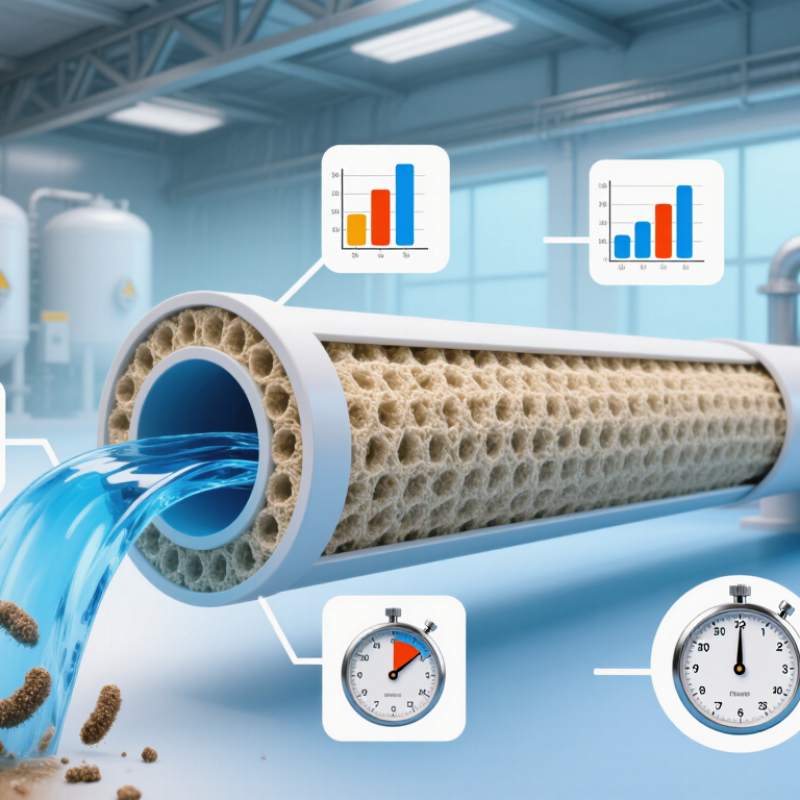
An ultrafiltration membrane is a pressure-driven barrier that separates fine particles from water. Its pores are typically measured in nanometers, though the exact range depends on membrane design. Many systems use hollow fibers, bundled inside a compact module. Water passes through the fiber walls, while suspended solids, colloids, and many microorganisms are retained.
Think of it as a very fine sieve. Not a perfect one. Dissolved salts and most small molecules can pass through, so ultrafiltration does not usually make water demineralized. Performance depends on feed-water quality, operating pressure, temperature, and membrane condition. In a working system, operators monitor pressure differences and filtrate clarity. A gradual pressure rise can signal fouling, but it does not identify the cause by itself.
Cleaning matters. Backwashing can dislodge accumulated material, while chemical cleaning may be needed when fouling persists. The right procedure depends on membrane material and supplier guidance; guessing can shorten service life. When assessing a supplier in China, ask for clear specifications, test data, and guidance for your actual water source. Requesting a sample or pilot trial is sensible. A brochure alone is not enough.
How to Evaluate Ultrafiltration Membrane Suppliers in China
What Is the Best Ultrafiltration Membrane Supplier in China?
How to Evaluate Ultrafiltration Membrane Suppliers in China
A supplier’s brochure is a starting point, not proof of performance. Compare membrane material, pore-size range, operating pressure, and chemical-cleaning limits against your actual feedwater. Ask for test conditions behind rejection and flux figures. A flux value without temperature, pressure, and water-quality details tells little. Details matter.
Check quality records and traceability. Can the supplier link each membrane module to production and inspection records? Request independent test reports, warranty terms, and documented procedures for handling defects. ISO certification can indicate a quality system, but it does not guarantee that a membrane will suit your plant. That distinction is easy to miss.
Insist on a pilot using representative water, not a convenient sample. Record permeate flow, turbidity, pressure drop, and cleaning frequency over time. The WHO/UNICEF Joint Monitoring Programme reported that 2.2 billion people lacked safely managed drinking water in 2022; the scale of the need makes dependable treatment evidence essential. Compare several suppliers using identical test conditions. The best fit may cost more upfront, or it may not. I would still want operating data from a full season before making a confident choice.
Key Products and Technologies Offered by Chinese Suppliers
Chinese ultrafiltration membrane suppliers offer products for municipal water treatment, food processing, and industrial reuse. Common options include hollow-fiber modules made from PVDF or PES, with pore sizes typically suited to retaining suspended solids, bacteria, and many colloids. Exact performance depends on feedwater and operating conditions.
Look closely at the technology behind the module. Some suppliers use outside-in filtration, which can handle higher solids loads; others offer inside-out designs for particular system layouts.
Automated backwashing, air scouring, and chemical cleaning help control fouling. Useful details include membrane area, recommended flux, operating pressure, and cleaning limits—not just headline rejection figures.
Small details matter. A capable supplier should provide test data, installation guidance, and clear maintenance instructions. Ask how samples were tested, and whether results reflect water similar to yours. Pilot trials can reveal fiber breakage, uneven flow, or cleaning needs that a brochure may not show.
That takes time. It can also prevent a costly mismatch.
No membrane is maintenance-free. Higher flux may increase output, but it can also raise fouling risk.
Compare warranties, spare-module availability, and technical support alongside price. Some specifications remain confusing, even in otherwise useful documentation; request written clarification before choosing.
How to Choose the Best Supplier for Your Application
What Is the Best Ultrafiltration Membrane Supplier in China?
How to Choose the Best Supplier for Your Application
The best supplier is the one whose membrane fits your water, process, and maintenance capacity—not simply the lowest quotation. Start with feed-water tests: turbidity, suspended solids, temperature, and cleaning chemicals can all affect performance. The US EPA’s Membrane Filtration Guidance Manual describes ultrafiltration membranes with pore sizes commonly around 0.01–0.1 micrometers. That range is useful, but it does not guarantee identical rejection or operating results. Ask suppliers for pilot data using water similar to yours. Real feed water matters.
Check the evidence behind every performance claim. Request flux and pressure data, recovery rates, cleaning intervals, and expected membrane life, with test conditions clearly stated. Ask for references from installations using comparable water and operating hours. A supplier should explain how it handles membrane integrity testing, spare parts, and technical support after delivery. Small details count. Can it provide a clear troubleshooting procedure? Are replacement modules available on a practical schedule? A neat datasheet is not enough.
Compare total operating cost, not just membrane price. Energy use, chemical cleaning, downtime, and replacement frequency can change the economics substantially. The International Water Association’s guidance on membrane systems emphasizes that pretreatment and operational control influence reliable performance. Request a written scope covering commissioning, operator training, and warranty limits. Then verify key claims through a site visit or supervised pilot. I would still leave room for uncertainty: short trials rarely reveal every seasonal change. Choose a supplier willing to discuss those limits plainly.