Choosing the best Semi-Rigid Borescope manufacturer in China takes more than comparing prices or camera resolution. Industrial endoscopes help technicians inspect engines, pipes, castings, and other hard-to-reach spaces without dismantling equipment. Grand View Research’s Industrial Endoscope Market Size, Share & Trends Analysis report tracks demand across sectors including automotive, aerospace, and energy. Its market outlook is useful context, but broad market growth cannot prove that a particular probe will survive daily use. Fit matters.
For buyers, practical evidence matters more: insertion-tube durability, image quality in dim cavities, articulation control, working length, and dependable after-sales support. Ask manufacturers for test records, product specifications, and examples of comparable inspection applications. A clear demonstration can reveal whether the probe negotiates a tight bend or loses focus against a scratched metal surface. Small details count. Check what the warranty covers, how replacement parts are supplied, and whether technical support can explain calibration and handling. These questions help distinguish a capable production partner from a polished catalog.
This comparison should also be cautious. Published market reports often define product categories differently, so their estimates are not a direct scorecard for individual suppliers. And a successful sample test is not proof of long-term reliability. The strongest shortlist combines documented quality controls, transparent specifications, and hands-on evaluation. No single feature decides it. Manufacturers that answer technical questions clearly—and acknowledge product limits—are easier to assess with confidence.
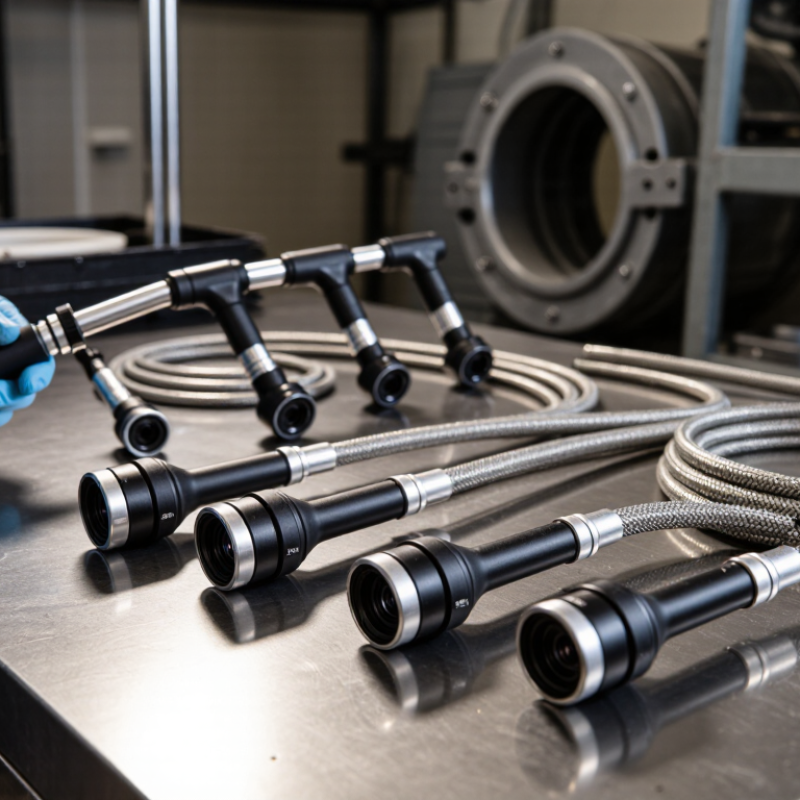
A semi-rigid borescope is an inspection instrument with a probe that bends but retains much of its shape. A camera or optical lens sits at the tip, while the probe carries light into hidden spaces. Unlike a rigid scope, it can follow gentle curves; unlike a fully flexible model, it can often be guided with one hand. Inspectors use it to view internal surfaces in machinery, pipes, and cast components without dismantling them. Not every cavity is a fit. Tight bends can resist the probe, and a clear image still depends on lighting, lens angle, and working distance.
Grand View Research’s 2024 non-destructive testing market report estimated the global market at USD 21.8 billion in 2023, with projected growth through 2030. That figure describes the wider inspection sector, not borescope performance. For buyers, it signals growing inspection demand, but does not replace hands-on evaluation. Check probe diameter, usable length, bend radius, image resolution, illumination, and whether the tip can be steered. A stiff probe may reach a narrow opening yet struggle around an elbow. That trade-off is easy to underestimate.
Tips: Test the probe in a sample passage with similar bends and surface conditions. Record whether the image stays clear at the distance you actually need. A specification sheet cannot show every awkward turn.
How Semi-Rigid Borescopes Work and Where They Are Used
A semi-rigid borescope uses a flexible probe that can be bent and will largely hold its shape inside a confined space. A small camera and built-in lighting send live images to a display. The inspector guides the probe through an access opening, rather than dismantling the entire assembly. Handy, but not magic. Probe diameter, working length, lighting, and focus all affect what the camera can reveal. A narrow probe may reach a tight passage, yet its image can be less detailed.
Technicians use these instruments to inspect engine cylinders, turbine interiors, pipes, castings, and HVAC ducts for wear, corrosion, cracks, or foreign material. A clean image helps, but it does not confirm every defect; findings may need follow-up testing or expert review. MarketsandMarkets’ Non-Destructive Testing Market report projected growth from USD 11.5 billion in 2023 to USD 17.7 billion by 2028. This broad market forecast is not specific to borescopes, but it reflects wider investment in inspection methods. For buyers comparing Chinese manufacturers, request sample images and check probe dimensions, illumination, and stated resolution against the actual inspection task. A specification sheet alone can be misleading.
What Makes a Chinese Borescope Manufacturer Stand Out?
Best Semi Rigid Borescope Manufacturer in China?
What Makes a Chinese Borescope Manufacturer Stand Out?
A reliable Chinese borescope manufacturer stands out through practical engineering, not bold claims. Semi-rigid probes must balance flexibility with enough stiffness to reach narrow, curved spaces. Ask how the probe handles repeated bending and whether its insertion tube resists abrasion. Clear images matter, but consistent lighting and dependable focus matter just as much. Request sample images captured inside a pipe or engine cavity, not only studio demonstrations.
Experience shows that small details affect daily use. A comfortable grip, responsive controls, and a screen readable under workshop lighting can save time. Look for documented quality checks, such as image testing and probe inspection before shipment. Ask about replacement parts and technical support, too. These details are easy to overlook.
No manufacturer is perfect. Specifications can look strong on paper, while real handling feels different. A careful buyer should compare samples and ask direct questions. Even a good supplier may need feedback to refine a design. That honest exchange can reveal more than a polished catalog.
How to Compare Manufacturers, Products, and Quality Standards
Comparing semi-rigid borescope manufacturers requires more than checking screen resolution or advertised probe length. Grand View Research estimated the global industrial endoscope market at about US$1.2 billion in 2023 and projected continued growth through 2030. This broad category includes many inspection tools, so it cannot confirm demand or performance for semi-rigid models alone. Treat market figures as context, not proof of quality.
Ask for the usable probe diameter, working length, minimum bend radius, field of view, and depth of field. Then test the scope in a representative passage: a 6 mm probe may fit an opening but still struggle around a tight elbow. Check image consistency at the center and edges, and confirm that recorded files retain useful detail. Small differences matter.
Review quality evidence, not just certificates. ISO 9001 describes a quality management system, but does not certify every borescope’s image quality or durability. Request inspection records, materials information, warranty terms, and documented checks for the probe, articulation, and lighting. An impressive catalog is not proof. I would also compare sample images from the same test target, though lighting and operator skill can skew results. That limitation is easy to overlook.
How to Choose the Right Supplier for Your Inspection Needs
Best Semi Rigid Borescope Manufacturer in China? How to Choose the Right Supplier for Your Inspection Needs
Choose a supplier around the inspection, not the sales brochure. Match probe diameter and working length to the narrowest passage and deepest point you need to reach. Check articulation, lighting, image quality, and whether the semi-rigid shaft holds position around bends. Ask for a live demonstration using a part with similar geometry. Small details matter.
The MarketsandMarkets 2023 report estimated the global non-destructive testing market at USD 15.1 billion and projected USD 21.9 billion by 2028. That growth points to rising inspection needs, but it does not prove a supplier’s equipment suits your job. Request written specifications, sample inspection images, warranty terms, and details on repair turnaround and spare probes. Ask for proof. Verify operating temperature and water-resistance claims against test documentation, not verbal assurances.
Tips: Share your actual inspection conditions before requesting a quote: target material, access angle, expected debris, and shift length. Compare two or three suppliers using the same checklist. If a demo looks perfect, repeat it on a less convenient route; real parts are rarely so cooperative. A low price can be tempting, but downtime and unavailable service may cost more.
Choosing a Semi-Rigid Borescope Supplier: Evaluation Priorities
Use these suggested weights to compare suppliers against your inspection requirements. They are an example decision framework, not survey results or market statistics.
Prioritize probe diameter and working length, image quality, and probe flexibility or shape retention according to the access and inspection conditions of your application. Confirm specifications, protection ratings, compatibility, and service terms with each supplier.