In the rapidly evolving world of robotics, selecting the right power source is crucial. Experts agree that the choice of a robot lithium battery can significantly influence performance and efficiency. Dr. Emily Chang, a leading authority in robotic energy systems, states, “The right lithium battery not only enhances longevity but also maximizes operational capabilities.”
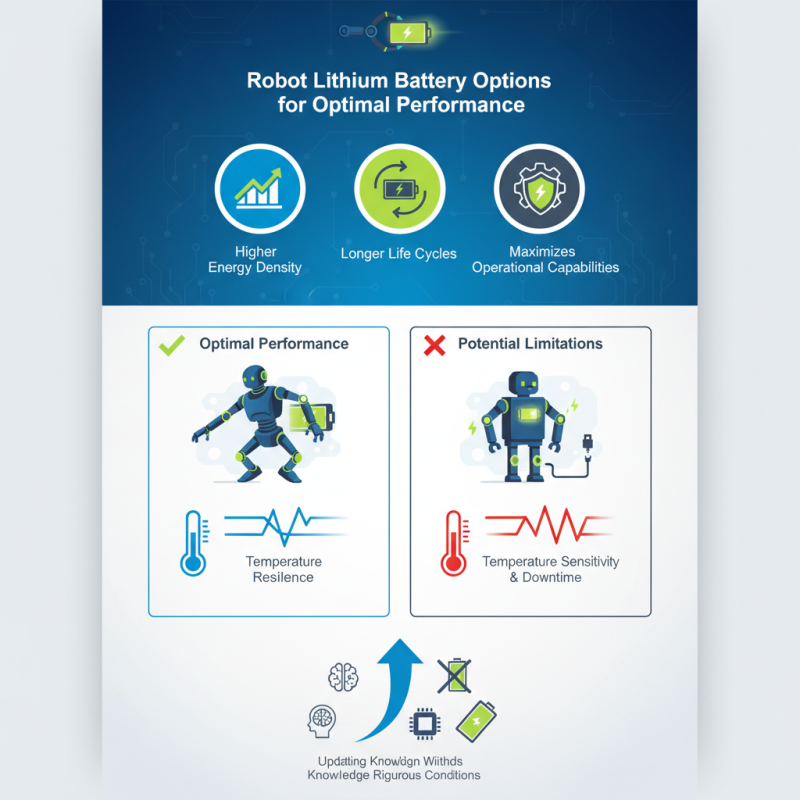
Robot lithium batteries are at the forefront of powering various robotic applications. They offer higher energy density and longer life cycles compared to traditional batteries. However, not all options are equal. Some batteries may drain faster or not hold a charge effectively. Issues such as temperature sensitivity can also affect performance, leading to unexpected downtime.
Although advancements have been made, there are still gaps to fill in battery technology. Users must ensure they are updating knowledge about the latest options. With new developments, some batteries may not withstand rigorous conditions. The choice of a robot lithium battery should be approached with careful consideration, aiming for optimal performance while recognizing potential limitations.
When choosing lithium batteries for robots, performance is key. Various types of lithium batteries exist. Lithium-ion and lithium-polymer are popular choices. Each type has distinct features impacting performance and efficiency.
Lithium-ion batteries offer high energy density. They are relatively lightweight, making them suitable for mobile robots. However, they may take longer to charge. On the other hand, lithium-polymer batteries provide better flexibility in shape and size. They can fit into tighter spaces but are often more fragile.
Some users find that the battery life diminishes over time. This can be frustrating when relying on robots for crucial tasks. Additionally, thermal management is vital. Poor heat dissipation can lead to inefficient performance. Regular evaluations of battery health can prevent unexpected failures. Choosing the right battery depends on the specific needs of the robot you are building or using.

When selecting lithium batteries for robotics, key specifications matter. Capacity is vital. It dictates how long a robot can operate without recharging. A larger capacity means longer runtime. However, high capacity also comes with weight implications. It’s crucial to find a balance.
Next is the discharge rate. This specification affects how quickly the battery can deliver energy. In robotics, bursts of power may be necessary. Yet, a battery that discharges too rapidly can lead to efficiency losses. Understanding the power needs of your robot helps in making the right choice.
Voltage is another critical aspect. It influences the overall performance of the robot's motors and electronics. A mismatch in voltage can lead to underperformance or damage. Moreover, the battery's lifespan should not be overlooked. Lithium batteries have a finite cycle life. Regular use may shorten their duration. Reflection on these specs can prevent costly mistakes down the line.
When it comes to robot lithium batteries, lifespan and efficiency are critical factors. Lifespan can vary significantly among different types. Some batteries may last for hundreds of cycles, while others might fail after just a few dozen. This disparity can impact overall robot performance and operational costs. Higher efficiency often translates into longer usage times and reduced downtime.
Efficiency is not just about how long a battery can last. It involves how well it stores and delivers energy. Some batteries perform well under heavy loads but struggle in lighter applications. Understanding the specific needs of the robot is crucial. Not every battery will suit every task.
It's also important to consider charging times. Some lithium batteries charge quickly but may overheat. Others may take longer but offer stability. Users should reflect on their needs. Balancing lifespan, efficiency, and charging characteristics is no simple task. Careful consideration of these factors can optimize robot performance.
| Battery Type | Capacity (Ah) | Voltage (V) | Lifespan (Cycles) | Efficiency (%) |
|---|---|---|---|---|
| Lithium Iron Phosphate (LiFePO4) | 40 | 12 | 3000 | 90 |
| Lithium Nickel Manganese Cobalt Oxide (NMC) | 50 | 24 | 2000 | 95 |
| Lithium Polymer (LiPo) | 60 | 11.1 | 500 | 85 |
| Lithium Cobalt Oxide (LCO) | 30 | 3.7 | 1000 | 80 |
| Lithium Titanate (LTO) | 20 | 2.3 | 7000 | 95 |
When exploring lithium battery options for robots, several leading brands stand out. These manufacturers have dedicated research and development teams focusing on performance, longevity, and safety in robotics applications. According to industry reports, the demand for high-capacity lithium batteries in robotics has surged by over 30% from 2022 to 2023. This growth reflects the increasing reliance on automated solutions across various sectors.
Some brands prioritize lightweight designs, which significantly enhance robotic mobility. For instance, many lithium batteries now weigh up to 20% less than their predecessors. This weight reduction allows robots to operate more efficiently in confined spaces. However, balancing weight with energy density is a challenge. Some batteries may not provide long-lasting energy, leading to frequent recharges during operation.
Another trend is the integration of smart technology in battery systems. Monitoring health, temperature, and charge levels can be beneficial. Yet, not all products currently feature this technology. Many basic lithium batteries may lack essential safety features and could overheat during intense use. This discrepancy calls for careful selection and testing of battery options for optimal performance in various robotic applications.
As robotics continue to evolve, lithium battery technology plays a pivotal role. Reports suggest that the global market for lithium-ion batteries in robotics is expected to exceed $36 billion by 2025. This surge stems from growing demands for efficiency and longer operational endurance in robots.
Current trends indicate a shift towards higher energy density and faster charging capabilities. Advanced lithium battery chemistry is paving the way for smaller, lighter solutions. Research highlights that newer formulations can increase energy density by as much as 30%. However, challenges remain, particularly concerning safety and lifecycle management. The need for recycling solutions is more critical than ever, as the demand for production rises.
Furthermore, artificial intelligence integration is driving battery innovation. Smart battery systems are emerging that can communicate data, optimize energy usage, and enhance performance. This technology is essential for maximizing robotic efficiency. Yet, the industry wrestles with reliability concerns and the potential environmental impact of battery disposal. Stakeholders must address these issues to truly harness the potential of lithium battery systems in robotics.
Fill out the form below and our team will get back to you ASAP.
Snake Tray® is Green and Proudly Powered by the Sun! Snake Tray is committed to designing and manufacturing products that have many green benefits. Our products are made of recycled goods, minimize material waste, are energy efficient, use less non-renewable resources and nest together read more…
Snake Tray® 291 Skip Lane, Bay Shore NY 11706 | PHONE: 631-674-0004 | FAX: 631-674-0010 | www.bakoselectric.com | LEGAL | MADE IN USA
© 2025 SnakeTray. All rights reserved
Fill out the form below to download your document.