China has become an important sourcing destination for Industrial Printing Systems, but choosing a manufacturer requires more than comparing catalog prices. A reliable supplier should demonstrate engineering depth, stable production, and practical experience with demanding print environments. Sample quality matters. So does service.
Frank Romano, professor emeritus at Rochester Institute of Technology and a respected printing-industry analyst, has said, “Print is not dead; it is evolving.” His observation reflects today’s market. Chinese manufacturers are developing systems for packaging, labels, textiles, electronics, signage, and specialty materials. Their strongest solutions combine digital control with mechanical precision. They also support shorter production runs, faster changeovers, and customized workflows.
A serious comparison should examine printhead technology, ink compatibility, resolution, curing systems, substrate handling, and production speed. Ask for test samples using your actual materials. A machine that performs well on coated paper may struggle with metal sheets, flexible films, or textured boards. Request uptime records and maintenance schedules. Inspect the factory when possible. Speak with existing customers, not only sales representatives.
The “best” manufacturer depends on your application, budget, output volume, and service expectations. There is no universal winner. Even strong equipment may disappoint without operator training, spare parts, and responsive technical support. That part is often underestimated.
This guide evaluates leading Chinese Industrial Printing Systems manufacturers through measurable criteria, including product capability, customization, quality control, after-sales support, and long-term operating value. The findings may not fit every buyer perfectly. That limitation deserves honesty.
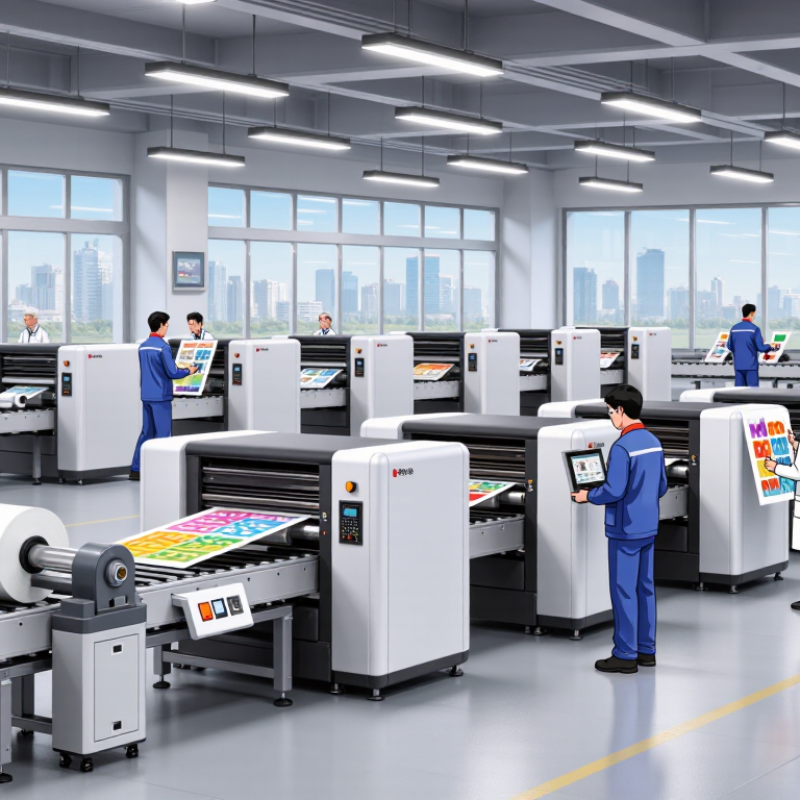
A credible industrial printing system manufacturer in China does more than assemble printheads, controllers, and steel frames. It engineers a complete production tool for demanding environments. Factory audits often reveal the difference: cable routing, ink filtration, thermal control, and software diagnostics show real manufacturing discipline. Small details matter.
Smithers’ report, The Future of Digital Print for Packaging to 2028, values the digital packaging print market at about $22 billion in 2023. It forecasts growth to approximately $36.2 billion by 2028. This expansion increases pressure on manufacturers to deliver stable throughput, not attractive samples alone. A serious supplier should provide application testing, measured drop accuracy, curing data, and documented uptime under continuous operation. Samples can mislead. Production evidence is stronger.
Independent technical reports from PMMI also highlight automation, traceability, and shorter changeovers as major packaging priorities. Chinese manufacturers serving this market need practical integration skills. Their systems should connect with conveyors, inspection devices, databases, and factory-control software. Service capability matters equally. Spare-part identification, remote diagnostics, response times, and technician training should be written into the project scope. I have seen specifications that looked impressive but omitted cleaning intervals and waste handling. That is a costly weakness. A reliable manufacturer accepts those uncomfortable questions and improves the design before installation.

China Best Industrial Printing Systems Manufacturers?
Industrial printing systems differ by substrate, speed, and production risk. Digital inkjet systems suit variable graphics on packaging, ceramics, textiles, and coated panels. Screen printing remains useful for thick ink layers, functional coatings, and durable graphics. Flexographic systems support high-volume labels and flexible packaging, while pad printing handles curved components and recessed surfaces. Laser-based marking systems provide permanent identification on metal, plastic, and finished parts.
MarketsandMarkets reported that the global industrial printing market could grow from about USD 20.8 billion in 2023 to USD 27.7 billion by 2028. Smithers also identifies digital printing for industrial and decorative applications as a continuing growth area through 2028. These figures matter, but equipment selection needs more than market optimism. A production engineer should test ink adhesion, curing time, colour consistency, and maintenance access on the real substrate. Small details matter.
For Chinese manufacturers, practical capability often appears in system integration. A reliable machine should connect with inspection cameras, drying units, conveyors, and factory software. Inkjet systems may reduce setup waste, yet nozzle maintenance can interrupt production. Screen printing delivers strong coverage, but setup changes take longer. That trade-off is easy to underestimate. Buyers should request repeatability data, energy consumption figures, and sample runs under production conditions. Independent testing is still wiser than trusting a polished specification sheet.
The chart shows representative operating-speed ranges commonly associated with major industrial printing technologies. Flexographic and gravure systems are widely used for high-volume packaging, digital inkjet supports variable-data and short-run production, while screen and pad printing are suited to specialty, industrial, and uneven-surface applications. Actual performance depends on the substrate, ink, print width, image quality, and production configuration.
China’s industrial printing sector is increasingly divided by technology, not factory size. Smithers’ The Future of Digital Print to 2029 reports continued annual growth for digital printing, driven by shorter runs and variable packaging. Chinese manufacturers are responding with high-speed inkjet systems, UV curing units, and hybrid presses. These machines suit labels, cartons, flexible materials, and industrial components.
Inkjet equipment offers fast changeovers and reduced plate preparation. Flexographic presses remain practical for long packaging runs and stable color output. Gravure systems still support high-volume production, although cylinder costs require careful planning. Offset presses serve commercial and folding-carton work. Hybrid platforms combine analog productivity with digital personalization. According to Grand View Research, the industrial inkjet printer market is projected to grow at roughly 7% annually through 2030.
Technology claims need verification. A factory visit should include live samples on the buyer’s actual substrate. Inspect nozzle alignment, drying consistency, registration accuracy, ink adhesion, and waste rates. Ask for documented uptime, not impressive peak speed. Service response matters, especially when production runs continuously. Some technical sheets remain optimistic. That deserves skepticism. Chinese suppliers can offer strong value, but performance varies between models and applications. The best selection depends on tested output, operator training, spare-parts access, and transparent data.
China Best Industrial Printing Systems Manufacturers?
When evaluating industrial printing systems, inspect quality beyond a clean sample. Request test prints using your actual substrate, ink, speed, and artwork. Examine small text, solid color areas, fine lines, and repeated images. Uneven density or visible banding may reveal calibration problems. Ask how often operators clean printheads and replace critical components.
Capacity should match your real production schedule, not an impressive brochure number. Compare rated speed with output during long runs. Request data from an eight-hour shift, including setup time, maintenance stops, and material changes. A system producing 1,000 sheets per hour may deliver much less in practice. That difference matters.
Customization requires technical discipline. Discuss substrate thickness, drying methods, software connections, safety controls, and future upgrades. Ask for drawings, interface details, acceptance criteria, and service response times. Reliable manufacturers should explain limitations clearly. Vague answers deserve caution. A factory visit can reveal assembly standards, spare-parts storage, and testing records. Still, one visit cannot prove everything. No scorecard is perfect. Include operator training, warranty terms, documentation quality, and local technical support in your evaluation. A lower purchase price can become expensive when downtime, rejected prints, and delayed parts enter the calculation. Test carefully.
| Evaluation Dimension | Key Performance Indicator | Practical Benchmark or Requirement | Recommended Verification Method | Suggested Weight |
|---|---|---|---|---|
| Print Quality | Resolution and dot control | At least 600 dpi for detailed industrial graphics; higher resolution may be required for small text, barcodes, and variable data. | Review technical specifications and inspect printed samples at normal viewing distance and under magnification. | 15% |
| Print Quality | Color consistency | Stable color output throughout a production run, supported by standardized color-management procedures and documented calibration records. | Request repeat samples from the same artwork and compare color variation using spectrophotometer measurements where applicable. | 10% |
| Print Quality | Registration accuracy | Consistent alignment between colors, layers, or finishing marks; the acceptable tolerance should be defined according to the product design. | Conduct a production trial using the buyer's artwork, substrate, and operating speed. | 10% |
| Production Capacity | Rated production speed | The quoted speed should be stated for a specific substrate, print mode, resolution, and coverage level rather than as a maximum theoretical speed. | Compare guaranteed output during a continuous trial with the required daily or monthly production volume. | 12% |
| Production Capacity | Continuous operating capability | The system should support the planned operating schedule with documented limits for duty cycle, maintenance intervals, and cooling requirements. | Review duty-cycle documentation, maintenance logs from reference installations, and long-duration acceptance-test results. | 8% |
| Reliability | Uptime and fault recovery | A mature industrial system should provide recorded availability data, clear alarm codes, and a documented recovery procedure for common faults. | Ask for anonymized service records, mean-time-to-repair information, and a live demonstration of fault diagnosis. | 12% |
| Substrate Compatibility | Supported materials and thicknesses | Compatibility should be confirmed for the actual materials, coatings, thicknesses, roll widths, sheet sizes, and surface treatments used in production. | Test the buyer's production materials instead of relying only on a general material list. | 10% |
| Customization | Mechanical and software integration | The supplier should be able to define interfaces for conveyors, feeders, dryers, inspection units, ERP/MES systems, and automated workflow software. | Review system architecture, interface specifications, communication protocols, and responsibility boundaries in the contract. | 8% |
| Customization | Variable-data and workflow capability | The system should support the required file formats, barcode or QR-code generation, job queuing, data security, and batch traceability. | Run a test job containing variable text, serialized codes, images, and the customer's production-management workflow. | 5% |
| Ink, Consumables, and Process Control | Ink or toner suitability | Consumables should be matched to the substrate, curing or drying process, adhesion requirements, chemical resistance, and end-use regulations. | Request technical data sheets, safety documentation, adhesion tests, rub tests, and resistance-test results relevant to the application. | 6% |
| Quality Management | Manufacturing and inspection controls | The manufacturer should operate documented quality procedures covering incoming parts, assembly, calibration, final inspection, and nonconformance control. | Review relevant quality certificates, inspection plans, calibration records, and factory acceptance-test templates. | 5% |
| Service and Support | Installation, training, and spare parts | The offer should define installation scope, operator training, remote-support arrangements, response times, critical spare-parts availability, and warranty coverage. | Check the service-level agreement, spare-parts list, escalation process, training agenda, and support coverage in the destination country. | 7% |
| Compliance and Safety | Machine safety and documentation | The system should include appropriate guarding, emergency stops, electrical documentation, risk-assessment records, and compliance documentation for the destination market. | Inspect the machine design, manuals, declarations or certificates required by the importing country, and site-safety requirements. | 5% |
| Total Cost of Ownership | Operating and lifecycle cost | Evaluation should include equipment price, installation, utilities, consumables, maintenance, software, spare parts, labor, waste, and expected service life. | Request a five-year cost model based on the buyer's actual production volume, operating schedule, and material costs. | 7% |
Selecting an industrial printing system requires more than comparing machine prices. Reliable manufacturers should follow recognized quality, electrical safety, and electromagnetic compatibility standards. Ask for current certificates, factory inspection records, and documented testing procedures. Standards should match your market, not merely appear in a sales brochure.
Export experience reveals practical competence. Manufacturers familiar with overseas shipments usually understand voltage differences, humidity control, wooden-crate packaging, customs documents, and installation requirements. Request references from similar industries and verify machine performance under comparable materials. A factory may print impressive samples, yet production stability can still be uncertain. That deserves careful questioning.
Tips: Confirm response times, spare-parts availability, remote diagnosis, and technician training before signing. Ask for acceptance criteria in writing, including speed, resolution, waste rate, and uptime. A clear service agreement is valuable. Still, no supplier is perfect. Check how the team handles faults after payment, not only how confidently it presents the equipment. Review software updates, maintenance schedules, warranty limits, and local service options. A dependable manufacturer explains limitations openly and provides traceable technical documents.
Fill out the form below and our team will get back to you ASAP.
Snake Tray® is Green and Proudly Powered by the Sun! Snake Tray is committed to designing and manufacturing products that have many green benefits. Our products are made of recycled goods, minimize material waste, are energy efficient, use less non-renewable resources and nest together read more…
Snake Tray® 291 Skip Lane, Bay Shore NY 11706 | PHONE: 631-674-0004 | FAX: 631-674-0010 | www.bakoselectric.com | LEGAL | MADE IN USA
© 2025 SnakeTray. All rights reserved
Fill out the form below to download your document.