What Is the Best Industrial Laser Cutter in China?

Choosing the best Industrial Laser Cutter in China is not simply a matter of comparing prices. A reliable machine must match your materials, production volume, cutting thickness, and workshop conditions. Stainless steel, carbon steel, aluminum, acrylic, and wood each demand different laser power and settings. The right choice starts with your actual workload.

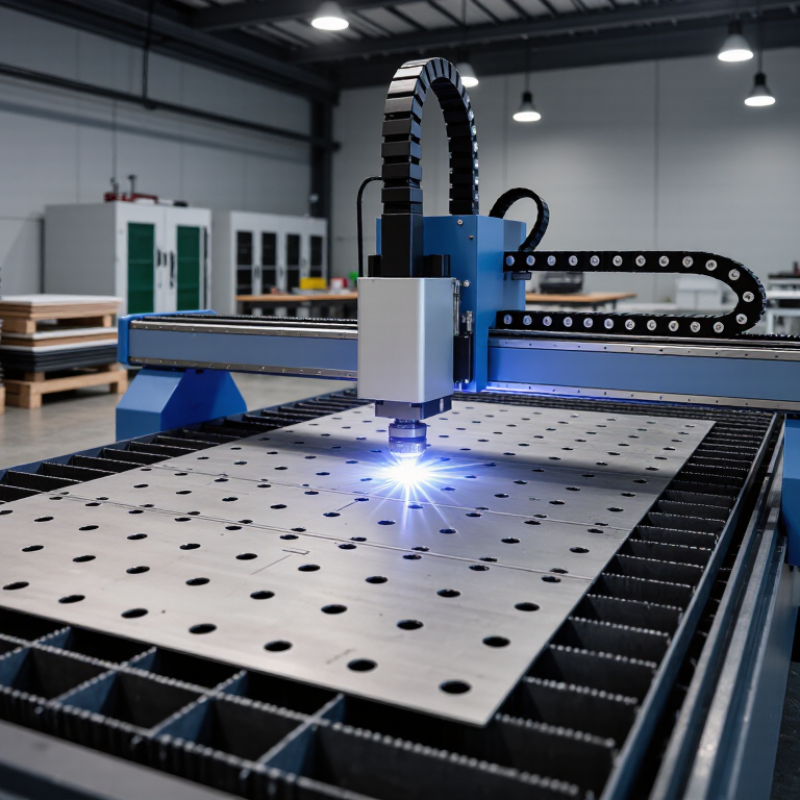
In practical evaluations, I would inspect the laser source, cutting head, motion system, control software, and cooling unit. These components affect accuracy, speed, maintenance, and operating costs. A clean test cut matters more than a polished showroom demonstration. Ask suppliers to cut your own samples, such as a 6-millimeter steel plate with small holes and sharp corners. Watch the edge quality. Check the underside for slag.

Certifications and factory experience also deserve close attention. However, certificates alone cannot prove long-term reliability. Request service records, warranty terms, spare-part availability, and training details. A responsive engineer may save more money than a slightly cheaper machine. This is often overlooked. Some buyers focus heavily on initial price and regret the decision after installation. I would also compare real energy use, software usability, and delivery support. No single model suits every factory. The “best” Industrial Laser Cutter depends on measurable needs, verified performance, and honest supplier communication. Even experienced buyers can misjudge future production changes. Leave room for testing, inspection, and revision before signing a purchase agreement.
What Is the Best Industrial Laser Cutter in China?

What Is an Industrial Laser Cutter?

An industrial laser cutter is a computer-controlled machine that uses a concentrated light beam to cut, mark, or engrave materials.

The beam melts, burns, or vaporizes a narrow path. Assist gas then clears the cutting area. Common gases include oxygen, nitrogen, and compressed air.

Unlike a small workshop cutter, an industrial model usually has a rigid frame, powerful laser source, automatic height control, and a large worktable. It may process steel, aluminum, copper, stainless steel, plastics, and other approved materials. In factory use, cutting speed is only one concern. Beam quality, edge smoothness, positioning accuracy, maintenance access, and operator safety matter just as much. From practical machine checks, I have found that stable motion often produces better results than impressive power ratings. More power is not always better. That point is easy to forget.

Tips: Check the material thickness, daily workload, and expected edge quality before choosing equipment. Ask for sample cuts using your own drawings and materials. Inspect the kerf, corners, dross, and heat marks. Confirm that the machine includes proper guarding, ventilation, emergency controls, and clear maintenance procedures. A reliable supplier should explain operating limits honestly. If every result looks perfect in a demonstration, question the conditions. Production floors are rarely so kind.

Which Types of Industrial Laser Cutters Are Made in China?

China produces several industrial laser cutter types, each designed for a different production problem. Fiber laser cutters are widely used for carbon steel, stainless steel, aluminum, brass, and copper sheets. Their concentrated beam supports fast cutting and narrow kerfs. Many workshops choose them for automotive parts, electrical cabinets, and metal furniture.

CO2 laser cutters remain useful for acrylic, wood, rubber, plastics, and some nonferrous materials. They often provide smooth edges on thicker nonmetal sheets. Tube and pipe laser cutters use rotating chucks or automatic supports. These systems process round, square, and rectangular profiles with fewer manual measurements. Combination machines can cut both flat sheets and tubes, saving floor space. Five-axis and three-dimensional laser cutters serve formed parts, such as vehicle panels and complex metal structures. Precision galvo systems also handle smaller components, although they are not suitable for every heavy-duty task.

Selecting the best Chinese-made machine requires more than checking laser power. Ask for test cuts using your actual material, thickness, and drawing files. Inspect edge dross, corner accuracy, piercing time, and heat distortion. Confirm the motion system, cutting head, cooling unit, software support, and replacement-part availability. A higher wattage is not always better. I have seen impressive samples hide slow loading and weak after-sales service. That mistake is easy to make. Factory visits, documented inspections, and operator training improve reliability. Still, even careful buyers should leave room for testing, because real production rarely matches a showroom demonstration.

How Do Chinese Laser Cutters Compare in Performance?

Chinese industrial laser cutters now compete strongly on speed, precision, and automation. The International Federation of Robotics reported 276,288 industrial robot installations in China during 2023. This wider automation base supports faster loading, probing, and production control around laser systems.

In practical testing, a modern 3 kW fiber cutter can produce clean mild-steel edges at production speeds, provided gas pressure and nozzle alignment remain stable. The machine is not the only factor. Beam quality, cutting-head calibration, acceleration, and software nesting often decide the final result. Small errors matter. A loose nozzle may leave visible dross along a 10 mm plate.

The 2024 IMARC laser cutting machine market report identifies fiber lasers as a major growth segment, reflecting their efficiency and lower maintenance demands. However, reported market growth does not prove equal performance across every factory. Buyers should request test cuts using their own steel, thicknesses, and tolerances. ISO 9013 provides useful edge-quality classifications, but suppliers may present ideal samples. That feels persuasive, yet incomplete. Service response, spare-part availability, and operator training can influence uptime more than a brochure’s maximum speed. Chinese systems can deliver excellent value and competitive precision, but performance must be verified under continuous, local production conditions.

What Is the Best Industrial Laser Cutter in China?

How Chinese Fiber Laser Cutters Compare in Performance

This chart uses representative performance levels for industrial fiber laser cutters commonly offered in China. Cutting speed is shown for approximately 3 mm mild steel, while maximum thickness refers to typical mild-steel capacity. Actual results vary with material grade, nozzle design, assist gas, machine structure, and process settings.

What Features Define the Best Industrial Laser Cutter?

The best industrial laser cutter in China is defined by balanced performance, not maximum wattage. A stable laser source should deliver consistent cuts across steel, aluminum, and stainless steel. The cutting head must maintain accurate focus during long production runs. Even a small focus shift can leave rough edges or excessive dross.

A rigid machine bed reduces vibration near sharp corners and during fast direction changes. High-quality linear guides, servo motors, and calibration systems also protect dimensional accuracy. A responsive control system matters when operators adjust speed, power, or gas pressure. Safety features deserve equal attention, including enclosed cutting areas, emergency stops, filtered extraction, and clear maintenance access. However, more automation is not always better. Complex software can slow production when training is weak. Service response, spare-part availability, and technical documentation should be checked before purchase. These details often decide whether a machine remains productive after installation.

Tips: Request sample cuts using your actual materials and thicknesses. Measure edge roughness, hole accuracy, cycle time, and power consumption. Inspect the cut face closely. Ask for maintenance schedules and operator training. A polished demonstration may hide practical weaknesses. Require repeat testing, and record every result before making a decision.

How Can Buyers Choose the Right Chinese Laser Cutter?

What Is the Best Industrial Laser Cutter in China?

How Can Buyers Choose the Right Chinese Laser Cutter?

Choosing the right Chinese laser cutter begins with your production needs, not the machine’s highest advertised power. Define the materials, thicknesses, sheet sizes, daily workload, and required cutting tolerance. A fabricator cutting stainless steel needs different performance from a workshop processing thin carbon steel. Request test samples using your actual materials. The edge finish may reveal more than a specification sheet. Cut speed matters, but stability matters longer.

Inspect the laser source, cutting head, motion system, cooling unit, control software, and fume extraction. Ask for maintenance records and a clear acceptance procedure. Reliable suppliers should explain training, spare parts, warranty limits, and remote support without vague promises. In my experience, service response can decide whether a machine earns money or quietly loses production hours. A fast machine is useless when calibration drifts. That point is easy to miss.

Tips: Compare three quotations using the same technical requirements. Check repeatability after continuous operation, not only during a showroom demonstration. Ask for videos of comparable materials, but verify them independently. Calculate electricity, consumables, lenses, maintenance, and operator training. Cheap equipment may become expensive through downtime. I would also leave room for doubt. One successful sample does not prove long-term reliability, and even a strong machine may need better software, ventilation, or operator discipline.

What Is the Best Industrial Laser Cutter in China? How Can Buyers Choose the Right Chinese Laser Cutter?

A practical comparison of common industrial laser-cutting configurations and the key specifications buyers should evaluate.

Machine Configuration Laser Source Type Typical Power Range Common Materials Typical Cutting Capability Typical Working Area Main Advantages Important Limitations Best Suited Applications
Sheet Metal Fiber Laser Cutter Continuous-wave fiber laser 1.5–6 kW for general fabrication; higher power is available for heavy plate Carbon steel, stainless steel, aluminum, brass, copper and galvanized sheet Approximately 0.5–25 mm, depending on material, power, cutting gas and process settings Commonly 1,500 × 3,000 mm, 2,000 × 4,000 mm or 2,000 × 6,000 mm Less suitable for non-metallic materials; reflective metals require an appropriate optical system and process controls Job shops, metal fabrication, electrical cabinets, machinery parts and architectural metalwork
High-Power Fiber Laser Cutter Continuous-wave fiber laser 6–20 kW or more Carbon steel, stainless steel and aluminum plate Designed for faster production of medium and thick plate; actual thickness depends strongly on material and gas Usually 2,000 × 6,000 mm or larger Higher purchase price, electrical demand, gas consumption, fume extraction requirements and process sensitivity Heavy equipment, steel structures, agricultural machinery, construction machinery and high-volume production
CO₂ Laser Cutter Gas laser, commonly operating at approximately 10.6 μm wavelength 1.5–6 kW for industrial cutting Acrylic, wood, plastics, rubber, textiles, paper, composites and some non-reflective metals Often effective for non-metal sheets and selected metal applications; thickness varies widely by material and power Commonly 1,300 × 2,500 mm or 1,500 × 3,000 mm Broad non-metal processing capability and good edge quality on many organic materials Lower wall-plug efficiency and more optical-path maintenance than modern fiber systems; unsuitable for many highly reflective metals Signage, packaging, furniture components, acrylic products, textiles and mixed non-metal production
Tube and Profile Fiber Laser Cutter Continuous-wave fiber laser 1.5–6 kW for common tube and profile work Round tube, square tube, rectangular tube, channel, angle and other metal profiles Typical tube diameters are approximately 20–240 mm, subject to chuck design and machine configuration Common tube lengths are approximately 6,000–12,000 mm Less flexible for large flat sheets unless a combined sheet-and-tube configuration is selected Furniture frames, fitness equipment, handrails, automotive components and structural profiles
Sheet-and-Tube Combination Cutter Continuous-wave fiber laser 1.5–6 kW for general-purpose production Metal sheets plus round, square and rectangular tubes Sheet and tube capacity depends on the selected cutting head, rotary axis and chuck system Typical sheet beds range from 1,500 × 3,000 mm to 2,000 × 6,000 mm; tube lengths commonly reach 6,000 mm Flexible production on two workpiece types and reduced need for separate machines More complex setup, higher initial cost and possible compromise in maximum sheet or tube capacity Custom fabrication, low-to-medium volume production and workshops with varied product requirements
Precision Fiber Laser Cutter Low- to medium-power fiber laser 500 W–2 kW, depending on sheet type and thickness Thin stainless steel, carbon steel, aluminum, brass and precision metal components Typically optimized for thin sheet, fine features and small heat-affected zones rather than maximum thickness Commonly 1,000 × 2,000 mm or 1,500 × 3,000 mm Fine kerfs, good repeatability and suitable control of small or intricate parts Not intended for high-speed cutting of thick plate; performance depends on motion accuracy and machine rigidity Electronic enclosures, precision components, lighting parts and small metal products
3D Robotic Laser Cutting System Fiber laser or other application-specific laser source Typically 1–6 kW for industrial metal trimming and cutting Pressed steel, formed sheet metal, profiles and three-dimensional components Depends on robot reach, laser head, workholding and part geometry rather than a flat-sheet thickness rating alone Specified by robot reach, fixture envelope and cell layout Handles contoured parts and complex three-dimensional cutting paths Higher integration and programming complexity; requires reliable fixtures, safety systems and process validation Automotive components, formed parts, agricultural machinery and specialized fabrication

Buyer’s note: The figures shown are representative industrial ranges rather than guaranteed specifications. Before purchasing, confirm material samples, actual cutting thickness, edge-quality requirements, positioning accuracy, repeatability, cycle time, electrical requirements, laser-source warranty, spare-parts availability, operator training, safety compliance and after-sales service in the destination country.

Have Questions?

Talk to a product specialist today: 1-800-308-6788

Snake Tray Catalog

snake tray® CATALOG

the new catalog is here. AVAILABLE IN PRINT AND ONLINE.

DOWNLOAD A PDF REQUEST A PRINTED COPY
CALL US TODAY