Choosing the best China CNC Multifunctional Side Hole Drill requires more than comparing spindle power or machine price. The right choice depends on material, panel size, drilling patterns, production volume, and available workshop space. A machine for cabinet panels may not suit aluminum profiles or solid wood components. That difference matters.
Taiichi Ohno, a pioneering manufacturing engineer, said, “Without standards, there can be no improvement.” His principle applies directly here. Buyers should define hole-position tolerance, tool-change time, drilling depth, dust-control needs, and software compatibility before contacting suppliers. A practical evaluation should include sample production, not only a factory video. Watch the machine drill a complete panel. Check edge distance, hole cleanliness, vibration, and repeatability.
The best model is rarely the one with the longest specification sheet. It is the one that performs consistently during ordinary production. That sounds simple. It is not.
A reliable China CNC Multifunctional Side Hole Drill should offer a rigid frame, stable servo movement, accurate side drilling, clear controls, and accessible maintenance points. Ask about spindle brands, electrical components, warranty coverage, spare parts, and remote support. Also confirm whether the manufacturer can provide usable training and post-sale service in your region.
Some comparisons remain imperfect. Supplier data may use different testing conditions. Factory claims may also omit limitations. Therefore, this guide examines performance through evidence, operating details, and realistic workshop needs. The final decision should balance precision, productivity, safety, and long-term serviceability—not marketing language alone.
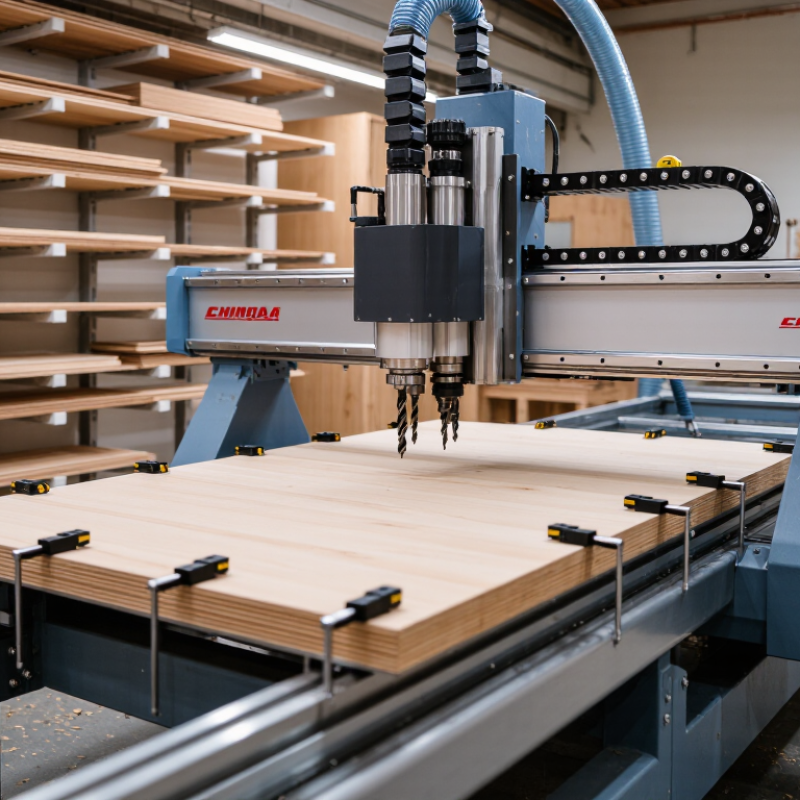
A China CNC multifunctional side hole drill is a computer-controlled machine made in China for drilling horizontal holes in panels, boards, and selected solid materials. Unlike a basic vertical drill, it can position the workpiece and drill from several side directions. This makes it useful for cabinet joints, dowel holes, connector holes, and other concealed fittings.
The machine normally combines a CNC controller, servo-driven positioning system, drilling spindle, and workholding table. Some models include automatic tool changing or multiple drilling heads. These features can reduce manual marking and improve repeatability.
However, actual accuracy depends on spindle quality, calibration, material stability, and operator experience. A machine may look advanced but still produce poor holes when the fixture is weak. That detail is often overlooked.
Tips:
Confirm the working dimensions, drilling diameter range, spindle speed, and control software before buying. Ask for sample tests using your actual board thickness and fittings. Check how the machine handles dust, emergency stops, maintenance access, and operator training. Inspect several finished holes, not just one. Small deviations may appear after long production runs. I would also compare service response and spare-part availability, because these practical details can matter more than a long feature list. Proper tooling remains essential. Even a precise CNC machine cannot correct a blunt drill bit or badly secured material.

A CNC multifunctional side hole drill converts a digital drawing into controlled cutting movements. The operator loads the panel, secures it against reference stops, and selects the required drilling program. Sensors check the panel position before machining begins. This step matters because even a small alignment error can shift an entire row of holes.
The machine controller coordinates the X, Y, and Z axes with the side-drilling spindle. A servo motor moves the workpiece or drilling head to the programmed location. The spindle then reaches its set speed and feeds the bit horizontally into the panel.
Tool depth, feed rate, and rotation speed depend on the material, thickness, and hole diameter. Hard boards need different settings than softwood panels. Cutting too quickly can leave burns or chipped edges.
Some models use multiple spindles, automatic tool changing, and separate drilling units for several directions. Vacuum extraction removes chips around the hole, improving visibility and reducing surface scratches.
In practical workshop operation, calibration deserves regular attention. Dust can affect sensors, while worn bits may produce oval holes. The machine may still complete its cycle, but the joints can become loose. Operators should inspect sample holes, verify dimensions with a gauge, and adjust the program when results drift. Perfect automation is not guaranteed. Human checking still has value.
The best China CNC multifunctional side hole drill begins with controlled accuracy. It should hold tight tolerances across repeated panels, not only during a factory demonstration. A rigid frame reduces vibration around the drill head. Accuracy matters most.
A practical machine needs flexible processing options. Adjustable drilling angles, multiple spindle configurations, and automatic tool changes improve production efficiency. It should handle different board thicknesses without complicated setup. Clear software is equally important, because operators must edit hole positions quickly and safely. A reliable control system should display errors in plain language. Noise reveals problems. Excessive vibration may indicate poor alignment, worn bearings, or an unsuitable feed rate.
Dust extraction, guarding, and emergency controls deserve careful inspection before purchase. These details protect workers and preserve machine performance. Durable linear guides and accessible lubrication points can reduce maintenance delays. However, more functions do not always create a better drill. They may increase training time and create more failure points. I would compare test results, service response, spare-part availability, and actual energy use. A slightly slower cycle may be wiser if it produces cleaner holes and fewer rejected panels. The best choice should fit the workshop’s materials, floor space, operator skills, and daily workload. Small details count.
The best multifunctional side hole drill balances precision, spindle stability, flexibility, automation, productivity, and safe chip evacuation. The chart uses a neutral 0–100 engineering selection score based on practical CNC drilling requirements, rather than data from any specific company or brand.
When buyers compare China-made CNC multifunctional side hole drills, performance begins with repeatability, not catalog speed. In workshop trials, stable drilling depends on spindle runout, linear guides, clamping pressure, and software calibration. A machine cutting clean 12-millimeter panels should maintain hole positions across repeated batches. That sounds basic. Yet small alignment errors become visible during cabinet assembly. Many models offer side drilling, dowel drilling, and horizontal boring in one setup. Their practical advantage is reduced repositioning and fewer manual measurements.
Value is more complicated than a lower purchase price. Some China-made models provide strong servo motors, accessible controls, and effective dust protection at competitive costs. However, included tooling, installation, training, and spare parts can vary considerably. Ask for test samples using your actual board thickness and hole pattern. Request measured tolerances, cycle times, and electrical specifications. A fast demonstration may hide slower loading or frequent calibration. That matters daily. Maintenance access also affects real value. Technicians should inspect belts, sensors, clamps, and dust channels without dismantling half the machine.
From practical evaluation experience, the best choice depends on production volume and operator skill. A compact model may suit a growing workshop, while a heavier frame supports continuous industrial use. Safety interlocks, guarding, emergency stops, and compliant electrical design deserve equal attention. Do not treat certification paperwork as proof of cutting accuracy. Independent acceptance testing is wiser. Software translation and remote support may complicate troubleshooting. Clear manuals and responsive technical communication can save more money than a minor discount. Compare total operating cost over three years, not only the invoice. Some buyers still choose the cheapest option. That decision may be reasonable, but only after verifying its limits.
Choosing the right CNC side hole drill starts with the panel, not the brochure. Measure your common board thickness, hole diameter, drilling depth, and edge distance. A multifunctional model should handle dowel holes, connector holes, and angled operations without frequent manual adjustment. Check spindle speed, tool compatibility, table stability, and dust extraction. Small details matter.
Grand View Research reported that the global CNC machine market reached about USD 86.8 billion in 2023, with continued growth expected through 2030. This expansion reflects stronger demand for automated, repeatable machining. However, market growth does not guarantee a suitable machine. Ask for test results using your own laminated boards. Check hole position accuracy, edge chipping, cycle time, and noise during repeated runs. A smooth first sample can mislead.
The machine’s control system should store common drilling patterns and recover easily after interruptions. Review servo accuracy, lubrication access, safety guarding, and local technical support. The International Federation of Robotics recorded 541,302 industrial robot installations worldwide in 2023, showing how quickly factories are adopting automation. Yet automation still needs skilled setup. I would also calculate payback using real daily output, labor cost, tool wear, and rejected panels. Do not trust ideal capacity figures alone. That mistake is easy.
Fill out the form below and our team will get back to you ASAP.
Snake Tray® is Green and Proudly Powered by the Sun! Snake Tray is committed to designing and manufacturing products that have many green benefits. Our products are made of recycled goods, minimize material waste, are energy efficient, use less non-renewable resources and nest together read more…
Snake Tray® 291 Skip Lane, Bay Shore NY 11706 | PHONE: 631-674-0004 | FAX: 631-674-0010 | www.bakoselectric.com | LEGAL | MADE IN USA
© 2025 SnakeTray. All rights reserved
Fill out the form below to download your document.