What Is the Best Carton Stitching Machine for Your Business?
Choosing a Carton Stitching Machine is not just a question of speed. The right model should suit your carton sizes, daily output, and available floor space. A small packing room may need a compact semi-automatic machine, while a busy production line may benefit from automatic feeding and stitching. Faster is not always better.
Start with the boxes you actually handle. Measure their length, width, and board thickness, then check the machine’s working range. Consider whether your cartons use single or double walls, and how often operators change sizes. A machine that handles your most common box reliably can be more useful than one with impressive specifications you rarely need. Ask suppliers for a demonstration using your own cartons, if possible. Watch how the machine feeds, aligns, and closes each box. Small details matter.
Stitching wire, adjustment time, guarding, and routine maintenance also affect the real cost of ownership. Ask how quickly operators can replace a wire spool and clear a jam. Request clear service information and verify that replacement parts are available. These points are easy to overlook.
There is no universal best machine. A mismatch between machine capacity and actual workload can create wasted space, extra labor, or delays. Even a careful comparison has limits: production needs may change, and quoted output may not match everyday conditions. The following guide explores the features, machine types, and practical questions that can help you choose with confidence.
What a Carton Stitching Machine Does
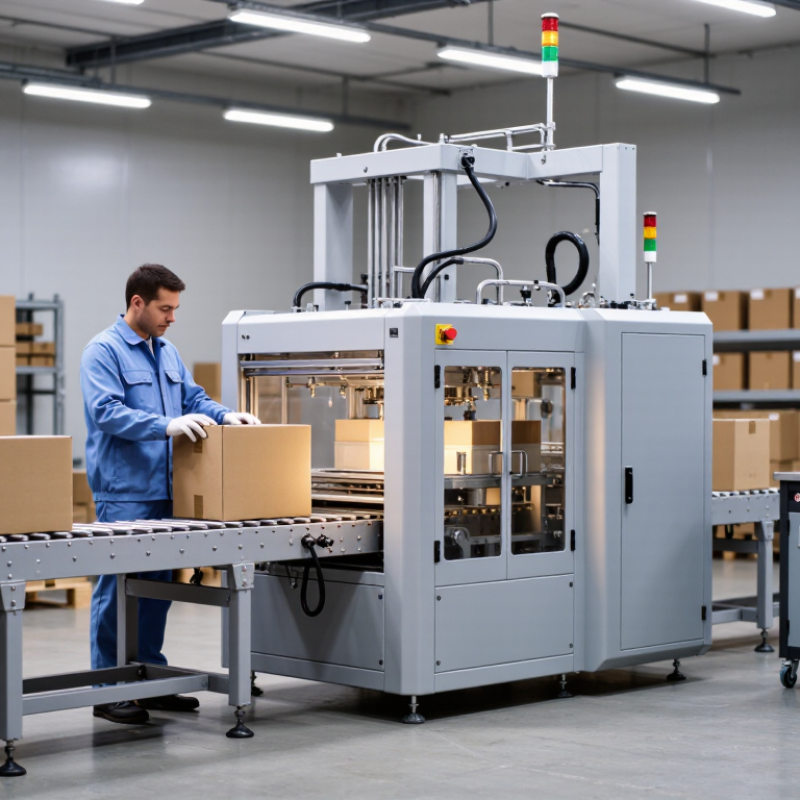
A carton stitching machine closes corrugated boxes by driving metal wire staples through overlapping flaps. The operator places a folded carton beneath the stitching head, then activates the machine with a foot pedal or hand control. A wire-forming mechanism shapes each staple, while the driver pushes it through the board and clinches its ends underneath. The result is a firm closure for cartons that may be too large, heavy, or awkward for tape alone.
Settings matter. Staple length, leg shape, and spacing should suit the carton’s thickness and load. On a production floor, an operator might check a sample box, inspect the clinched ends, and adjust the feed before running a batch. Too much force can crush the corrugated layers; too little can leave loose flaps. Small details count. Keep hands clear of the stitch head, and follow the machine’s operating instructions during setup and maintenance. A stitched seam is not automatically stronger in every situation: board quality, box design, and handling all affect performance. It is tempting to judge a machine by speed alone, but that can miss the real issue. A steady, correctly formed stitch often matters more than a fast cycle.
How Carton Stitching Machines Work
A carton stitching machine closes a corrugated box by driving a short length of wire through its overlapped flaps. Inside the head, wire feeds from a coil, is cut and formed into a staple, then pushed through the board. A clincher beneath the carton bends the staple legs inward. The result is a firm mechanical seam. Small details matter.
On a semi-automatic machine, an operator aligns the carton under the stitching head and activates the cycle with a foot pedal or control. Automatic systems can guide cartons along a conveyor, but they still need correctly set guides and stitch spacing. Operators usually test a sample before production. A crooked staple, crushed flap, or loose seam can signal poor alignment, unsuitable wire, or incorrect pressure. Real cartons vary, so a setting that works for one board grade may not work for another.
The American Forest & Paper Association reported a 93.6% U.S. corrugated-box recycling rate in 2022. This makes sound closure relevant to packaging handling, though stitching alone does not determine recyclability. For a business choosing a machine, check carton thickness, required output, and access for routine wire changes. A practical trial with your own cartons is worth the time; specifications rarely capture every crease or uneven edge.
Types of Carton Stitching Machines and Their Applications
What Is the Best Carton Stitching Machine for Your Business?
Types of Carton Stitching Machines and Their Applications
Carton stitching machines vary by how cartons are fed and how much operator control they require. Manual models suit small batches, repairs, and changing carton sizes. The operator positions each box and activates the stitching head. This offers flexibility, though output depends on steady handling and consistent placement. A few test cartons help reveal whether the stitch lands securely without crushing the board.
Semi-automatic machines typically use a foot pedal or hand control to trigger stitching after the operator positions the carton. They can suit regular production runs where box dimensions stay fairly consistent. Check the machine’s throat depth, stitch spacing, and supported board thickness against your actual cartons. A specification sheet may not show every awkward fit.
Automatic machines feed cartons through a stitching station with less manual handling. They are often considered for higher-volume lines and repeatable box formats. Their speed only helps when carton sizes, flap alignment, and material quality are controlled. Poorly folded flaps can still cause weak or uneven closures. That detail is easy to overlook.
The right machine also depends on carton construction. Single-wall and heavier corrugated cartons may need different stitch settings and wire sizes. Ask for a trial using your own carton samples, then inspect the inside and outside of each stitch. Not glamorous, but useful. A machine that handles the smallest and largest cartons in your range may be more practical than one optimized for a single ideal size.
What Is the Best Carton Stitching Machine for Your Business?
Typical applications by machine type
This qualitative guide shows common application fit, not measured performance or market share. Manual machines are commonly suited to short runs, semi-automatic machines to flexible batch work, and automatic inline machines to repetitive, higher-volume production. Actual suitability depends on carton specifications, output requirements, and line setup.
Key Factors for Choosing a Machine for Your Business
Choosing a carton stitching machine starts with the cartons you actually run, not the highest advertised speed. Measure box length, width, board thickness, and flap overlap across typical orders. FEFCO’s 2023 European Database reports 50.2 billion square metres of corrugated board production in Europe in 2022, illustrating the scale and variety of carton demand. Your own product mix matters more than any industry average. Check whether the machine handles your smallest and largest cartons, and test stitch placement on real samples.
Then compare stitching rate with your daily workload, including changeovers and pauses for wire replenishment. Ask operators to time a change between two common carton sizes. Small delays add up. Review access to guards, controls, and routine maintenance points, and confirm that wire and replacement parts are readily available. A faster machine may not improve output if setup is awkward or jams are frequent. Request a trial using your board grades and production pattern, and record usable cartons per hour—not just the machine’s rated speed. FEFCO’s figures describe a regional market, not your factory, so treat them as context rather than a purchasing forecast. One detail is easy to overlook: operator feedback can reveal a setup problem that a short demonstration misses.
How to Compare Speed, Cost, and Maintenance Needs
A carton stitching machine should match the cartons your business actually runs, not just the fastest figure on a product sheet. Check the machine’s rated stitches per minute, then compare that number with your real packing pace. Operators still need time to position each carton, clear finished boxes, and refill wire. On a small line, a modest machine may keep up. On a peak-shipping day, it may become a bottleneck.
Compare the purchase price with the cost of wire, power, setup, and downtime. A lower-priced model can cost more over time if adjustments are frequent or compatible parts are hard to source. Ask how quickly the machine handles your carton sizes and board thicknesses. Test your own boxes if possible. A neat stitch on a sample carton is useful, but a full shift reveals more.
Maintenance should be practical for the people using the machine. Look for accessible wear points, clear adjustment instructions, and routine checks that do not require a specialist. Keep spare wire and common replacement parts near the line. Small delays add up. One detail is easy to overlook: a machine can be simple to service yet still need frequent cleaning in a dusty packing area. Build that time into the comparison, even if the estimate feels imperfect.