10 Best Aeration Processes in Wastewater Treatment Explained?
Aeration processes play a crucial role in wastewater treatment. They enhance the removal of pollutants and support the growth of beneficial microorganisms. Understanding the Aeration Process In Wastewater Treatment is vital for effective plant operation.
Different techniques have emerged over the years. Each method has its own strengths and weaknesses. For instance, some processes are energy-intensive, while others may not be suitable for all wastewater types. Evaluating these differences is essential for optimizing treatment efficiency.
Experts emphasize that not all aeration methods fit every scenario. Conditions like water composition and flow rates affect performance. Careful assessment and proper implementation can yield better results. Striving for improvement in aeration processes can lead to enhanced water quality and sustainability in the treatment sector.
Overview of Aeration in Wastewater Treatment
Aeration plays a crucial role in wastewater treatment. This process enhances the breakdown of organic matter. It introduces air into water, promoting the growth of microorganisms that consume pollutants. According to the U.S. Environmental Protection Agency, effective aeration can remove over 90% of organic materials in wastewater.
Different aeration techniques exist. These include surface aeration, diffused aeration, and subsurface aeration. Each method has its pros and cons. Surface aeration, for instance, is energy-efficient and simple. Yet, it may be less effective in deep tanks. Diffused aeration, on the other hand, provides better oxygen transfer rates. However, it requires more maintenance and monitoring.
The choice of aeration method impacts efficiency and costs. A study revealed that improper aeration can lead to significant energy waste, accounting for up to 60% of a plant's total energy consumption. Operators must regularly assess aeration systems. Small adjustments can improve performance and reduce costs. Continuous evaluation is essential for effective wastewater management.
Types of Aeration Processes: A Comprehensive Classification
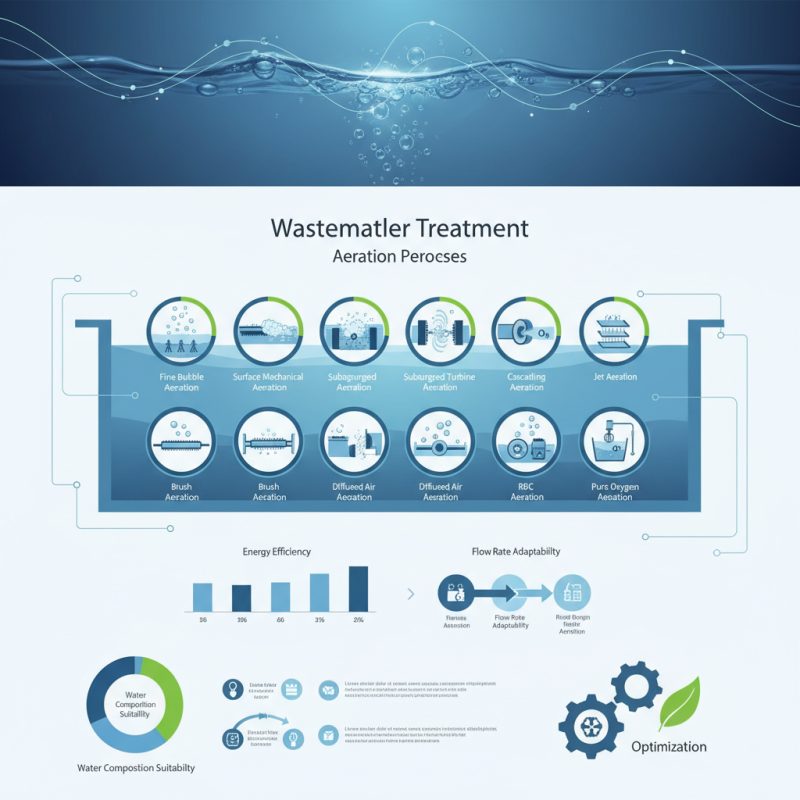
Aeration in wastewater treatment is crucial for effective microbial digestion. Various processes exist, each with distinct characteristics. Key types include surface aerators, diffused aeration, and mechanical aeration. These methods increase oxygen levels, encouraging aerobic bacteria to break down waste. According to industry reports, diffused aeration systems improve oxygen transfer efficiency significantly, often reaching levels above 90%.
Surface aerators, while popular, may struggle during periods of low flow. They can also create odors and increase energy costs. Meanwhile, mechanical aeration can be energy-intensive, raising operational expenses. Each method has benefits and drawbacks that can vary based on specific treatment goals and environmental conditions.
The choice of aeration process depends on factors like wastewater composition and treatment plant size. Regions with stricter regulations may require more advanced aeration solutions to meet discharge requirements. Studies indicate that investing in innovative aeration technologies can enhance treatment efficiency by up to 30%. Integrating multiple processes might also lead to improved performance, underscoring the complexity of wastewater management.
Key Benefits of Aeration in Wastewater Management
Aeration plays a pivotal role in wastewater management, significantly enhancing treatment processes. By introducing air into wastewater, we promote the growth of aerobic microorganisms that break down organic pollutants. This biological reaction reduces harmful substances, making the water safer for discharge or reuse. Many systems harness this beneficial process, yet each has its distinct advantages and limitations.
Effective aeration methods, like fine bubble aeration and surface aerators, vary in efficiency and cost. Fine bubble diffusers are known for their ability to enhance oxygen transfer rates. However, they can be prone to clogging. Surface aeration, while simpler to operate, might not deliver the same levels of oxygenation in deeper tanks. Optimizing aeration systems is crucial, as inconsistent performance can lead to inefficient treatment and increased environmental risks. Understanding these nuances allows operators to make informed decisions tailored to their specific treatment needs.
Step-by-Step Guide to Common Aeration Techniques
Aeration is a critical process in wastewater treatment. It helps remove impurities and harmful substances. Various techniques can achieve this goal, each with its own advantages. Understanding these methods can enhance the efficiency of wastewater treatment systems.
One common technique is mechanical aeration. This involves using pumps and mixing devices to introduce air into the water. The process helps in breaking down organic matter. Another method is fine bubble aeration, where small air bubbles are introduced. This technique ensures higher oxygen transfer rates, which benefits microbial activity. However, not all techniques are flawless. Challenges such as maintenance and energy consumption can arise, necessitating careful planning and monitoring.
Natural aeration is another interesting approach. It relies on the natural movement of water. For instance, rivers and streams naturally aerate as water flows over rocks. Although it's a low-cost method, it may not be effective in all situations. When considering aeration techniques, one must reflect on site-specific conditions. Each method has its pros and cons, requiring a tailored approach for effective wastewater management.
Factors Influencing the Efficiency of Aeration Processes
Aeration in wastewater treatment plays a crucial role in promoting the breakdown of organic materials. Multiple factors influence the efficiency of these processes. Understanding these factors can significantly enhance treatment outcomes.
One key factor is the design of the aeration system. A well-designed system ensures optimal air distribution, which improves oxygen transfer rates. Low oxygen levels can hinder microbial activity. If the aeration tank is not properly mixed, some areas may receive too little or too much oxygen. Over time, this could result in poor treatment performance.
Another essential aspect is the composition of the wastewater. Variations in nutrient content and temperature affect microbial growth. High nutrient loads can increase oxygen demand, leading to inadequate aeration. Monitoring these variations is critical for maintaining consistent treatment efficiency. Regular adjustments to the aeration rate may be necessary based on real-time data.
Tips: Always assess the size of microorganisms and their needs. Balancing aeration conditions can prevent operational issues. Consider conducting periodic audits of the aeration system. This helps identify inefficiencies that may arise over time. Don’t assume that what worked previously will work indefinitely.
10 Best Aeration Processes in Wastewater Treatment Explained
| Aeration Process | Efficiency (%) | Oxygen Transfer Rate (kg O2/h) | Energy Consumption (kWh/m³) | Maintenance Difficulty |
| Mechanical Aeration | 85 | 2.5 | 0.8 | Moderate |
| Diffused Aeration | 90 | 3.0 | 0.5 | Low |
| Surface Aerators | 80 | 2.0 | 1.2 | Moderate |
| Submerged Aerators | 88 | 3.5 | 0.7 | High |
| Jet Aeration | 82 | 4.0 | 1.0 | Moderate |
| Cascade Aeration | 78 | 1.8 | 2.0 | Low |
| Aerated Lagoons | 75 | 1.5 | 1.5 | Low |
| Biological Aerated Filters | 84 | 2.6 | 0.9 | Moderate |
| Ultrasonic Aeration | 87 | 2.2 | 0.6 | High |
| Membrane Aerated Biofilm Reactors | 89 | 3.2 | 0.4 | Moderate |