Machine Tool purchasing will become more strategic in 2026. Global buyers must compare capability, service, energy use, and total ownership cost.
Gardner Intelligence’s World Machine Tool Survey tracks production, consumption, and trade across major manufacturing economies. Its recent editions show a highly concentrated market, with China, Germany, Japan, Italy, South Korea, and the United States remaining important suppliers and consumers. The report also highlights changing demand across automotive, aerospace, medical, electronics, and general engineering sectors. Demand is not uniform.
CECIMO’s European Machine Tool Industry and Economic Data reports point to cautious investment conditions, uneven industrial output, and continuing pressure on manufacturers to improve productivity. Meanwhile, the Association for Manufacturing Technology’s U.S. Manufacturing Technology Orders report provides practical evidence of monthly purchasing movements and sector confidence. These sources support a broader view of 2026 buying decisions, rather than relying on one market forecast.
This guide examines the leading Machine Tool types for global buyers, including CNC machining centers, turning centers, grinding machines, EDM equipment, laser systems, and hybrid platforms. Each type solves a different production problem. A five-axis machining center may reduce fixture changes, while a CNC lathe can improve repeatability on high-volume shafts. The right choice still depends on material, tolerance, batch size, operator skill, and local technical support.
Data can guide the decision. It cannot replace a factory visit. Buyers should question optimistic specifications, especially when comparing cycle times, accuracy, and energy consumption. Some supplier claims remain difficult to verify across different testing standards. That is an uncomfortable gap. This article addresses it by combining market evidence with practical purchasing considerations, helping readers build a more defensible 2026 equipment strategy.
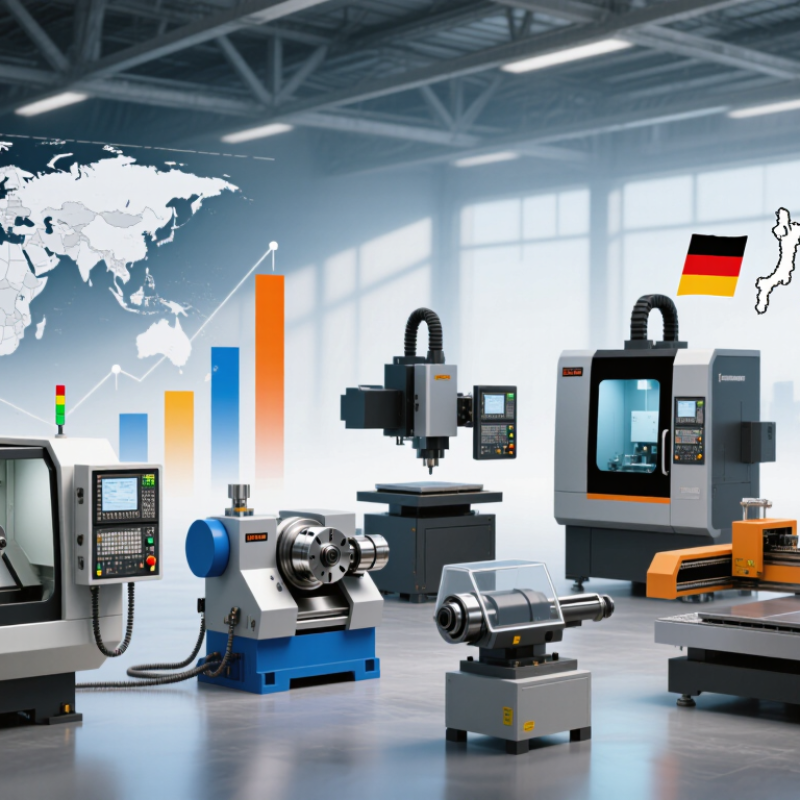
2026 Top Machine Tool Types for Global Buyers
What Defines a Modern Machine Tool in 2026
A modern machine tool is no longer judged by cutting speed alone. Buyers now examine accuracy, uptime, energy use, software access, and operator safety. A five-axis machining center may produce complex parts, but its value depends on stable performance across long production runs. In practical evaluations, repeatability matters more than an impressive maximum speed. Small thermal changes can still affect tight tolerances.
Connected control systems are becoming standard. Sensors can track vibration, spindle load, temperature, and tool wear during operation. This data helps maintenance teams identify problems before a damaged tool stops production. Remote monitoring also supports factories with limited technical staff. However, not every digital feature creates value. Some interfaces remain difficult to configure. Operators may need better training than suppliers expect.
Flexible machine tools are gaining attention from global buyers. Modular fixtures, automatic tool changers, and quick program adjustments support mixed production. Hybrid equipment can combine additive and subtractive processes, reducing handling between operations. Energy-efficient motors and intelligent standby modes can lower operating costs. Yet energy claims should be checked against actual workloads, materials, and maintenance records. A machine that looks advanced may still waste power in daily use. Reliable documentation, accessible spare parts, clear safety functions, and compatible data formats often define the better long-term investment.

2026 Top Machine Tool Types for Global Buyers
The main machine tool types used in global manufacturing serve different production needs. CNC turning centers rotate a workpiece while cutting shafts, bushings, and threaded parts. CNC machining centers use rotating tools for milling, drilling, tapping, and multi-face production. These machines suit automotive, aerospace, energy, and general engineering work.
Grinding machines remove small amounts of material and create tight finishes on hardened components. Gear machines produce accurate teeth for transmissions and industrial drives. Electrical discharge machines shape difficult conductive materials through controlled electrical sparks. Sheet-metal buyers often choose laser cutters, press brakes, and stamping machines for enclosures, brackets, and structural parts.
According to Gardner Intelligence’s 2024 World Machine Tool Survey, global machine tool consumption stayed above US$80 billion in 2023. That scale reflects continued demand for cutting, forming, and finishing equipment. The report also shows strong differences between national markets, so one global ranking can mislead buyers. AMT’s 2024 U.S. Manufacturing Technology Orders report recorded roughly US$4.6 billion in new orders, highlighting cautious investment conditions. The practical lesson is simple: select the process before selecting the machine. Cutting speed is not everything. A high-speed center may waste money in low-volume work, while an older-style lathe may still deliver dependable results. Buyers should compare accuracy, spindle power, automation readiness, service access, energy use, and operator skill requirements. Some factories overbuy automation. That mistake deserves more reflection.
| Machine Tool Type | Primary Manufacturing Process | Typical Workpieces | Common Materials | Typical Configuration | Indicative Capability | Main Global Applications | Key Buyer Considerations in 2026 |
|---|---|---|---|---|---|---|---|
| CNC Turning Centers | Turning, boring, threading, grooving and parting | Shafts, bushings, flanges, pins and cylindrical components | Steel, stainless steel, aluminum, brass, titanium and engineering plastics | 2-axis or live-tool configurations; automatic bar feeding is common | Typical positioning accuracy: approximately ±0.005–0.020 mm, depending on machine size and specification | Automotive, industrial equipment, fluid systems, energy and general engineering | Spindle speed, bar capacity, chip control, tool monitoring, energy use and unattended operation |
| Vertical Machining Centers | Milling, drilling, tapping, pocketing and contouring | Plates, housings, brackets, molds, fixtures and prismatic parts | Aluminum, steel, cast iron, stainless steel, copper alloys and composites | 3-axis or 4-axis; pallet changers and robotic loading are widely available | Typical positioning accuracy: approximately ±0.005–0.020 mm | General machining, aerospace components, medical parts, electronics and mold production | Work envelope, spindle taper, tool capacity, rapid-traverse speed, coolant management and automation readiness |
| Horizontal Machining Centers | Multi-face milling, drilling, boring and high-volume palletized machining | Engine blocks, transmission cases, valve bodies and complex housings | Cast iron, steel, aluminum and non-ferrous alloys | 4-axis or 5-axis with automatic pallet pools and tool management | High chip evacuation and repeatable multi-sided machining; accuracy commonly within the low-hundredths of a millimeter | Automotive, construction equipment, power systems and high-volume industrial manufacturing | Pallet capacity, spindle torque, automation scalability, floor-space efficiency and line integration |
| 5-Axis Machining Centers | Simultaneous or indexed multi-axis milling and complex-surface machining | Impellers, turbine parts, orthopedic implants, molds and structural components | Titanium, nickel alloys, aluminum, hardened steel and composites | Trunnion-table or swivel-head designs with rotary axes | Fewer setups and improved access to complex geometry; volumetric accuracy depends strongly on calibration and thermal control | Aerospace, medical, energy, mold and die, and advanced engineering | Post-processor quality, collision avoidance, rotary-axis accuracy, probing and operator skill requirements |
| CNC Swiss-Type Lathes | Precision turning with guide-bushing support and simultaneous tooling | Small-diameter shafts, pins, connectors, screws and medical components | Stainless steel, titanium, cobalt alloys, brass and engineering plastics | Sliding-headstock, multi-tool and bar-fed configurations | High repeatability for small parts; production capability is strongly affected by bar quality and tooling | Medical devices, electronics, automotive components and precision hardware | Bar diameter range, tool capacity, swarf control, high-pressure coolant and cycle-time optimization |
| CNC Grinding Machines | Surface, cylindrical, centerless, internal and profile grinding | Bearings, gears, shafts, seals, dies and precision surfaces | Hardened steel, carbide, ceramics, glass and selected superalloys | CNC wheel control, automatic dressing and in-process gauging | Typical finishing capability can reach micron-level dimensional control under stable thermal conditions | Automotive, bearing production, aerospace, tooling and precision machinery | Wheel technology, thermal stability, coolant filtration, dressing strategy, gauging and surface-finish requirements |
| Gear Hobbing and Gear Shaping Machines | Gear cutting, hobbing, shaping, skiving and finishing | Spur gears, helical gears, splines and transmission components | Alloy steel, case-hardened steel, stainless steel and selected powder-metal parts | Dedicated CNC gear-production cells with workpiece handling | Capability is specified by gear diameter, module, tooth accuracy and surface-finish class | Automotive, wind power, industrial drives, robotics and aerospace systems | Gear quality standard, cycle time, tool life, inspection integration, noise performance and process stability |
| Wire EDM Machines | Electrical-discharge cutting of electrically conductive materials | Punches, dies, inserts, precision slots and intricate profiles | Tool steel, carbide, hardened steel, copper and conductive alloys | Multi-axis wire control with submerged or dielectric-fluid cutting | Fine-feature machining with very small kerfs; final accuracy depends on flushing, wire condition and thermal control | Tool and die, aerospace, medical, electronics and precision mold production | Surface finish, taper capability, automatic threading, dielectric filtration and unattended machining |
| Sinker EDM Machines | Electrical-discharge cavity and detail machining using shaped electrodes | Mold cavities, ribs, blind slots, sharp internal details and small holes | Hardened tool steel, carbide and other electrically conductive materials | CNC electrode control with dielectric circulation and automatic electrode changing | Suitable for hard materials and complex cavities that are difficult to cut conventionally | Injection molds, die casting, aerospace components and precision tooling | Electrode consumption, flushing performance, cavity surface finish, automation and fire-safety systems |
| CNC Press Brakes and Sheet-Metal Forming Machines | Bending, forming, punching, shearing and sheet-metal fabrication | Enclosures, cabinets, brackets, panels, frames and structural sheet parts | Mild steel, stainless steel, aluminum and galvanized sheet | Servo-electric or hydraulic systems with CNC back gauges and angle control | Capacity is defined by bending length, pressing force, sheet thickness and angle repeatability | Electrical enclosures, construction, HVAC, transportation and contract fabrication | Energy consumption, automatic tool setup, collision avoidance, material handling and flexible batch production |
| CNC Laser Cutting Machines | Thermal cutting, profiling, marking and micro-perforation | Flat sheets, tubes, profiles, panels and precision blanks | Carbon steel, stainless steel, aluminum, copper and brass | Fiber-laser flatbed, tube-cutting or combined systems with automatic nesting | High-speed non-contact cutting; maximum thickness depends on laser power, material and edge-quality requirements | Fabrication, automotive, construction, electrical equipment and job-shop manufacturing | Laser power, cutting speed, assist-gas consumption, nesting software, fume extraction and automation |
Note: Capability ranges are indicative industry values rather than guaranteed specifications. Actual performance varies with machine design, workpiece size, tooling, programming, material, thermal conditions and process control.
CNC turning centers produce shafts, bushings, and threaded parts with repeatable diameters. They suit high-volume work where cycle time matters. CNC machining centers handle milling, drilling, tapping, and pocketing in one setup. This reduces manual repositioning and limits alignment errors. Grand View Research’s 2024 CNC Machine Market report identifies automation and multi-axis machining as major growth drivers. That trend matches factory needs for shorter setups and stable output.
Grinding machines support finishing tasks after heat treatment or rough machining. They deliver tight tolerances on bearing seats, seals, and precision guides. Electrical discharge machines cut hardened materials and intricate cavities without direct cutting force. They are valuable for molds, dies, and narrow internal features. Laser cutting machines process sheet and plate quickly, especially for prototypes and varied batches. The 2024 World Machine Tool Survey by Gardner Intelligence highlights continuing demand for flexible production equipment across major manufacturing regions.
Additive machines can build complex metal forms, but they are not a universal replacement for cutting tools. Surface finish, material cost, and post-processing still require careful review. In practice, a cheaper machine may lose value through long setup time. I have seen specifications look impressive, yet operator training was overlooked. Buyers should compare spindle power, work envelope, accuracy, maintenance access, and software compatibility against actual production tasks. No machine fits every job.
In 2026, global buyers are comparing more than machine type. CNC lathes suit rotational parts, while machining centers handle prismatic components. Wire EDM serves hardened profiles but usually trades speed for exceptional detail. The useful comparison starts with the work envelope. Measure maximum diameter, travel, table size, and permitted workpiece weight. A drawing may fit on paper yet fail after fixtures and tools are installed. Leave practical clearance.
Spindle speed alone can mislead. Check rated power, continuous torque, taper size, and the speed range where cutting remains stable. A high-speed spindle may perform poorly during heavy steel removal. For milling, inspect axis acceleration, positioning accuracy, repeatability, and thermal compensation. Review these figures with their test conditions, rather than copying a sales sheet. A realistic trial cut reveals chatter, burr formation, surface finish, and chip evacuation.
Short trials matter.
Control compatibility affects daily reliability. Confirm file formats, remote diagnostics, probing support, and data security before purchase. Also compare coolant capacity, filtration, tool magazine size, energy demand, and maintenance access. A narrow service door can turn a simple repair into lost production.
Automation requires more than a robot interface; check loading space, pallet accuracy, guarding, and recovery after an interrupted cycle. Published tolerances can change with heat, foundation movement, and operator practice. That uncomfortable detail deserves measurement during acceptance testing. Ask for several sample parts, not one perfect piece.
Choosing the right machine tool type starts with the part, not the catalog. Define material, dimensions, tolerance, surface finish, and annual volume. A 5-axis machining center suits complex aerospace-style parts. A turning center fits round shafts and repeatable diameters. Sheet-metal work may require laser cutting, bending, or punching instead.
Production evidence matters. The International Federation of Robotics reported 541,302 industrial robots installed worldwide in 2023. This growth affects machine selection. Buyers should check robot interfaces, pallet systems, guarding, and software compatibility. For high-mix production, flexible automation can reduce idle time. For stable, large batches, dedicated equipment may deliver better unit economics. Measure cycle time with real material, not supplier estimates alone.
Service capability is equally important. Review spindle life, local technicians, spare-parts access, training, and remote diagnostics. Ask for energy data under realistic operating loads. A smaller machine may consume less power but lose productivity through frequent setups. Total cost should include tooling, maintenance, installation, downtime, and operator training. The difficult part is admitting that the cheapest quotation may be the riskiest choice. No selection formula is perfect. Leave room for trial cutting, independent inspection, and a written acceptance test based on ISO 230-2 positioning accuracy principles.
Fill out the form below and our team will get back to you ASAP.
Snake Tray® is Green and Proudly Powered by the Sun! Snake Tray is committed to designing and manufacturing products that have many green benefits. Our products are made of recycled goods, minimize material waste, are energy efficient, use less non-renewable resources and nest together read more…
Snake Tray® 291 Skip Lane, Bay Shore NY 11706 | PHONE: 631-674-0004 | FAX: 631-674-0010 | www.bakoselectric.com | LEGAL | MADE IN USA
© 2025 SnakeTray. All rights reserved
Fill out the form below to download your document.