Choosing the right CCO plate supplier requires more than comparing catalogue prices. Buyers need evidence of stable chemistry, accurate thickness, surface uniformity, and dependable delivery. These details become visible on the factory floor: calibrated gauges, sealed packaging, clean edges, and traceable batch labels.
Recent analysis from Grand View Research, Mordor Intelligence, and S&P Global Commodity Insights shows continued demand for copper-based industrial materials. The reports also highlight pressure from energy costs, raw-material volatility, and stricter quality expectations. These pressures affect every CCO plate quotation. A low price can hide inconsistent tolerances, limited technical support, or weak production visibility.
The market is not perfectly transparent. Supplier rankings can mislead.
For global buyers, this guide evaluates the 2026 CCO plate supplier landscape through practical criteria. These include manufacturing capacity, alloy and coating control, inspection systems, export experience, lead times, documentation, and after-sales response. Product samples matter. So do independent test results and recent customer references.
W. Edwards Deming, a leading authority on industrial quality, stated, “Quality comes not from inspection, but from the improvement of the production process.” That principle remains highly relevant to CCO plate purchasing. Final inspection cannot repair unstable rolling, poor bonding, or careless handling.
This overview therefore treats supplier selection as a risk-management decision, not a popularity contest. It also recognizes an uncomfortable limitation: public data rarely reveals every supplier’s real performance. Buyers should verify claims directly, request current certificates, and test material before signing large contracts.
CCO plate means Chromium Carbide Overlay plate, a steel base reinforced with hard chromium carbide deposits. The overlay resists abrasion, impact, and sliding wear. It is not ordinary carbon steel with extra thickness. Its surface contains hard particles within a metal matrix, while the base provides structural support.
In practical use, CCO plate appears in mining chutes, cement transfer points, steel plants, recycling equipment, and bulk material conveyors. Imagine crushed stone striking a chute every few seconds. Standard plate may develop grooves quickly. CCO plate can slow this damage, especially when abrasive particles dominate the workload. However, it is not suitable for every condition. Severe repeated impact may require a tougher, less brittle wear solution.
Buyers should check overlay thickness, hardness range, base-plate grade, and flatness. Welding procedures also matter. Excessive heat can create distortion or unwanted cracking. Some surface cracks are normal in overlay plates, but their size and distribution require technical review. This detail is often overlooked.
Cutting and installation need planning. Plasma cutting may affect the heat-affected zone, while bolt fixing can reduce welding risks. A reliable supplier should provide test reports, dimensional data, and clear production tolerances. Buyers should also explain the material size, operating temperature, impact level, and expected service life. Without these details, even a high-quality CCO plate may perform poorly. The selection process is rarely perfect. Field feedback should revise future specifications.

For 2026 CCO plate purchasing, specifications deserve more attention than supplier rankings. Chromium carbide overlay plates normally combine a mild-steel backing with a metallurgically bonded wear layer. Buyers should verify backing grade, overlay thickness, carbon content, chromium content, hardness, and dimensional tolerance. Typical overlays contain about 20–35% chromium and 4–6% carbon. Hardness often ranges from 55 to 65 HRC, but hardness alone cannot predict service life.
ASTM G65 offers useful abrasion data. Procedure A applies a 130 N load for 6,000 wheel revolutions. Lower volume loss indicates stronger abrasion resistance. However, ASTM G65 does not set one universal pass-or-fail limit for every CCO application. EN 14700 helps define hardfacing classifications, while ISO 9001 supports controlled production and traceability. Ask for mill certificates, chemical analysis, hardness mapping, ultrasonic inspection, and actual abrasion results. A polished certificate is not enough. Plate flatness, weld quality, and crack patterns also affect installation. Some stress-relief cracks are normal in CCO layers, yet excessive cracking signals poor control.
Tips: Match the test method with the material being handled. Fine silica, impact rock, and hot clinker create different wear mechanisms. Request samples from the same production batch. Check thickness at several points, not only the plate edge. One practical weakness remains: many quotations list “high hardness” without reporting wear loss. That wording needs challenge.
Evaluating CCO plate suppliers requires more than comparing quotations. Define CCO clearly, including copper purity, substrate grade, thickness tolerance, surface finish, and bonding method. Some suppliers use different terms for similar products. That can create costly misunderstandings. Request mill certificates, batch numbers, dimensional reports, and independent test results. For electronic applications, compare specifications with relevant IPC and IEC requirements. A reliable supplier should explain deviations, not hide them.
Market conditions also deserve attention. The USGS Mineral Commodity Summaries 2025 estimated global copper mine production at about 22 million metric tons in 2024. This scale does not guarantee stable availability or consistent quality. Ask suppliers how they manage raw-material changes, inspection frequency, rejected batches, and production capacity. Review at least three recent customer references, preferably from comparable industries. Audit packaging, moisture control, storage conditions, and traceability records. A low price may reflect thinner coating or weaker inspection. I have seen purchasing teams overlook this detail, then pay more for rework.
Tips:
Send the same technical drawing to every supplier. Require a first-article sample before volume orders. Test conductivity, adhesion, flatness, and thermal performance independently. Check whether the supplier can provide replacement material quickly. Do not rely only on certificates; verify the testing laboratory and report dates. Procurement decisions sometimes feel objective, but incomplete specifications can quietly distort every comparison.
2026 Top CCO Plate Suppliers for Global Buyers
Leading CCO Plate Suppliers and Their Manufacturing Strengths
CCO terminology varies across regional markets. It commonly describes copper-clad composite plates, but specifications are not always identical. Global buyers should confirm copper grade, core material, thickness tolerance, bonding method, and intended application. The International Copper Study Group reported global refined copper usage above 26 million tonnes in 2023. Supply pressure is real. Consistent material quality therefore matters more than a low quoted price.
Leading CCO plate suppliers usually combine continuous casting, hot rolling, precision shearing, and controlled cladding. Strong factories monitor interface bonding through ultrasonic inspection and metallographic sampling. They also provide conductivity, peel-strength, flatness, and dimensional reports for each production lot. The U.S. Geological Survey estimated global copper mine production at roughly 22 million tonnes in 2024. This figure highlights why responsible sourcing and stable procurement planning deserve attention.
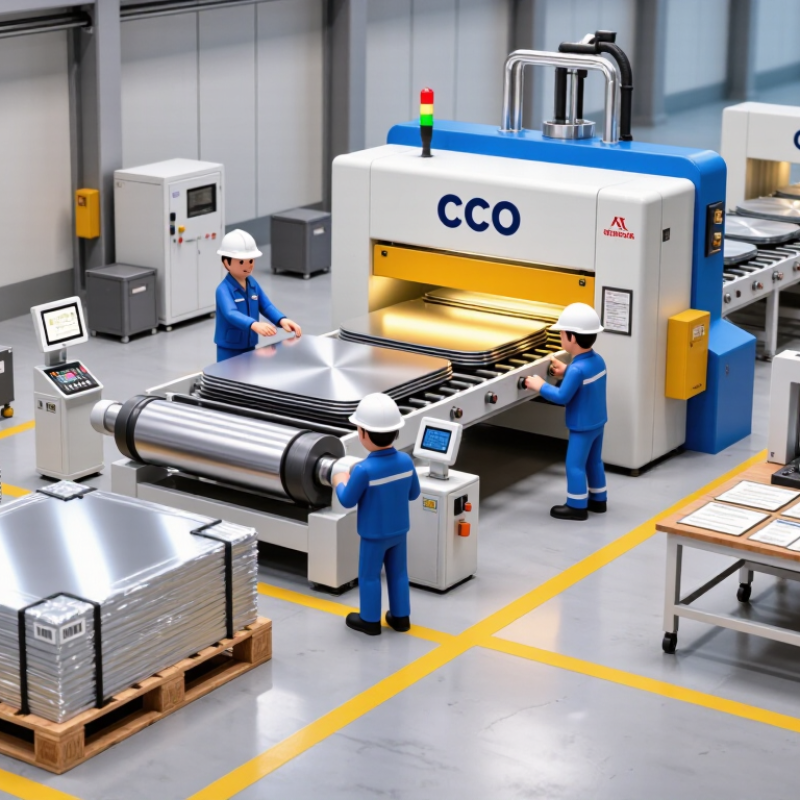
Manufacturing strength should be visible on the shop floor. Look for calibrated rolling mills, clean storage areas, sealed packaging, and traceable heat numbers. A supplier that shares process limits can support better engineering decisions. However, certificates alone can mislead. Buyers should test trial plates under actual bending, drilling, thermal cycling, or welding conditions. The weak point is often not the copper layer, but inconsistent bonding near the plate edge. That detail is easy to overlook.
| Supplier Profile | Primary Manufacturing Region | Overlay Production Method | Typical Base Plate | Typical Overlay Chemistry | Typical Hardness | Common Plate Thickness Range | Typical Manufacturing Strength | Quality and Inspection Capability | Common Application Fit | Buyer Evaluation Focus |
|---|---|---|---|---|---|---|---|---|---|---|
| Profile 01 High-Volume Asian Manufacturer | East Asia | Multi-head submerged arc welding with chromium carbide flux-cored wire; automated plate straightening and cutting | Carbon steel or low-alloy structural steel, commonly equivalent to mild-steel grades | Approximately 20–35% chromium and 3–5% carbon, depending on the overlay formulation | Typically 55–65 HRC on the deposited layer | Base plate plus overlay commonly 6–30 mm total; custom configurations available | High throughput, repeatable flat-plate production, CNC profiling, and competitive custom-cut parts | Visual inspection, dimensional checks, hardness testing, macro-etch examination, and sample chemical analysis | Mining chutes, hoppers, conveyors, transfer points, and general bulk-material handling | Check overlay uniformity, crack pattern, flatness, cut-edge quality, and batch traceability |
| Profile 02 Export-Oriented Fabricator | South Asia | Submerged arc welding and open-arc hardfacing; workshop fabrication of liners and formed components | Structural carbon steel, abrasion-resistant backing plate, or customer-specified low-alloy steel | Chromium-carbide-rich deposits generally selected for mineral and impact-abrasion service | Commonly 55–63 HRC, subject to welding procedure and test location | Approximately 5–25 mm total thickness for standard liner products | Flexible fabrication, low-to-medium batch production, and rapid adaptation to drawings or templates | Welding procedure qualification, hardness mapping, dimensional inspection, and fabrication documentation | Cement plants, aggregate processing, steel handling, and replacement wear liners | Review welding qualifications, heat-input control, distortion limits, and spare-part repeatability |
| Profile 03 Premium Engineered-Liner Producer | Western and Central Europe | Controlled submerged arc or precision open-arc deposition with engineered welding procedures | Certified carbon or low-alloy plate selected for weldability and service temperature | Formulated chromium-carbide deposits with controlled dilution and application-specific alloy design | Usually 57–65 HRC, with hardness consistency prioritized over maximum nominal hardness | Commonly 6–25 mm total thickness; engineered multilayer designs may be offered | Strong process control, tight dimensional tolerances, complex formed liners, and application engineering | Hardness mapping, macrostructure review, dimensional reports, welding procedure records, and material certificates | High-duty mining, cement, power generation, recycling, and continuous-process equipment | Confirm service-life data, test methodology, repair procedure, and conformity with the purchase specification |
| Profile 04 North American Wear-Parts Specialist | North America | Automated hardfacing, open-arc repair welding, CNC cutting, bending, and field-service fabrication | Carbon steel, abrasion-resistant structural backing, or equipment-specific base material | Chromium-carbide overlay optimized for high-stress sliding abrasion and moderate impact | Typically 55–62 HRC, with wear performance evaluated together with toughness | Approximately 6–32 mm total thickness, including heavy-duty custom sections | Strong aftermarket support, reverse engineering, short-run fabrication, and repair/rebuild services | Dimensional inspection, hardness testing, weld repair records, and application-based performance review | Quarries, coal handling, recycling, earthmoving, and replacement parts for processing equipment | Evaluate total installed cost, field repair support, delivery of custom profiles, and compatibility with existing equipment |
| Profile 05 Integrated Steel-Service Producer | East Asia | Overlay welding integrated with steel-service-center operations, CNC cutting, drilling, and profiling | Commercial carbon steel, structural plate, or abrasion-resistant backing plate | Standard chromium-carbide overlay grades with optional alloy adjustments for temperature or impact conditions | Commonly 56–64 HRC | Approximately 5–30 mm total thickness, depending on plate size and deposition schedule | Strong material availability, large-format processing, nesting optimization, and export packaging | Mill certificates, plate identification, hardness checks, visual inspection, and dimensional control | Large hoppers, truck beds, chutes, screens, feeders, and bulk-material transfer systems | Confirm backing-plate grade, minimum overlay thickness, allowable surface cracks, and packing for ocean transport |
| Profile 06 Middle Eastern Fabrication Supplier | Middle East | Open-arc and submerged arc hardfacing, with workshop fabrication for site-specific replacement parts | Carbon steel or locally sourced structural plate selected for weldability | Standard chromium-carbide deposits for dry abrasive wear; alternative alloys may be specified for elevated temperature | Generally 55–63 HRC | Approximately 6–25 mm total thickness | Regional stockholding, fast project response, field measurement, and equipment-liner fabrication | Hardness verification, visual inspection, dimensional checks, and project-specific inspection plans | Cement, gypsum, aggregate, desalination-support industries, and material-transfer equipment | Verify heat resistance, welding repair limits, local inventory, and technical support availability |
| Profile 07 Latin American Mining-Focused Producer | Latin America | Hardfacing deposition combined with custom cutting, forming, and refurbishment of mining components | Carbon steel or abrasion-resistant backing plate selected for mine-site fabrication requirements | Chromium-carbide-rich overlay for sliding abrasion; impact-resistant options may use different deposit chemistry | Typically 55–62 HRC | Approximately 6–30 mm total thickness | Mining application knowledge, localized service, repair capability, and custom liner replacement | Hardness testing, visual inspection, dimensional checks, welding records, and field-performance feedback | Iron ore, copper, gold, aggregate, and mineral-concentrator equipment | Match the deposit to the actual wear mechanism and confirm whether impact toughness is required in addition to abrasion resistance |
| Profile 08 Specialty Small-Batch Manufacturer | Australia and Oceania | Manual and automated hardfacing, precision cutting, forming, and repair-oriented fabrication | Certified structural steel or abrasion-resistant backing plate | Application-selected chromium-carbide overlay, sometimes combined with complementary wear-resistant materials | Commonly 55–65 HRC | Approximately 5–25 mm total thickness | Small-batch customization, mine-site response, complex profiles, and replacement of obsolete components | Hardness checks, dimensional verification, weld inspection, and customer-specific documentation | Mining, quarrying, bulk handling, agricultural processing, and remote-site maintenance | Assess local service capacity, repairability, transport cost, and availability of replacement templates |
International buyers should evaluate CCO plate suppliers through verified production evidence, not attractive quotations alone. Request recent mill test certificates, overlay chemistry, hardness results, substrate details, and dimensional records. A reliable supplier should explain how cracks, flatness, and surface variation are controlled. These details matter when plates face impact, abrasion, and high material flow.
Pricing depends on alloy content, overlay thickness, plate size, cutting accuracy, and order volume. Freight also changes the real cost. Ask for both factory pricing and landed-cost estimates, including packaging, insurance, duties, and port charges. Compare quotations under the same Incoterm.
Otherwise, the cheapest offer may only look cheap. It is a common mistake.
Delivery planning needs practical communication. Confirm production capacity, sample approval time, inspection dates, and shipping schedules in writing. For urgent projects, keep a reasonable buffer because vessel changes and customs delays can affect arrival. Strong suppliers usually provide photos before loading, moisture-resistant packaging, and traceable labels. Independent inspection can reduce risk, although it adds cost and time. The process is not perfect.
Buyers should also test technical compatibility before placing a large order. Check welding requirements, bending limits, repair procedures, and expected service life with the end user. A plate that performs well in one crusher or chute may fail in another environment. Supplier experience helps, but field conditions remain decisive._欧美
Fill out the form below and our team will get back to you ASAP.
Snake Tray® is Green and Proudly Powered by the Sun! Snake Tray is committed to designing and manufacturing products that have many green benefits. Our products are made of recycled goods, minimize material waste, are energy efficient, use less non-renewable resources and nest together read more…
Snake Tray® 291 Skip Lane, Bay Shore NY 11706 | PHONE: 631-674-0004 | FAX: 631-674-0010 | www.bakoselectric.com | LEGAL | MADE IN USA
© 2025 SnakeTray. All rights reserved
Fill out the form below to download your document.