2026 Best Used Bulldozer Brands for Global Buyers
Choosing the right Used Bulldozer brand in 2026 requires more than comparing prices online. Global buyers must examine machine history, operating conditions, parts availability, and local technical support. A low purchase price can quickly become expensive when undercarriage components, hydraulic pumps, or final drives need replacement.
“Condition matters more than age when evaluating used equipment,” says Frank Raczon, a respected construction equipment journalist and industry observer. His point is practical. A ten-year-old bulldozer with documented maintenance may outperform a newer machine that worked continuously in abrasive quarry conditions.
This guide reviews leading Used Bulldozer brands for international buyers, including Caterpillar, Komatsu, John Deere, Liebherr, Shantui, and XCMG. Each brand offers different strengths. Caterpillar often provides broad parts support. Komatsu is known for operator comfort and fuel management. Shantui and XCMG may offer competitive pricing in developing markets.
Look closely.
Inspect the blade cutting edge, track links, rollers, sprockets, and hydraulic cylinders. Check cold-start behavior, engine smoke, warning lights, and oil contamination. A clean photograph proves very little. Service invoices, serial-number verification, and an independent inspection provide stronger evidence.
However, no ranking can fit every project. A forestry contractor in Canada needs different support from a road builder in Southeast Asia. Shipping distance, import procedures, regional emissions requirements, and dealer response times can change the final value.
Some listings will have incomplete records. That is uncomfortable, but important. Buyers should treat missing information as a risk, not a minor inconvenience. This article offers a practical comparison, while recognizing that machine condition and local support can matter more than brand reputation alone.
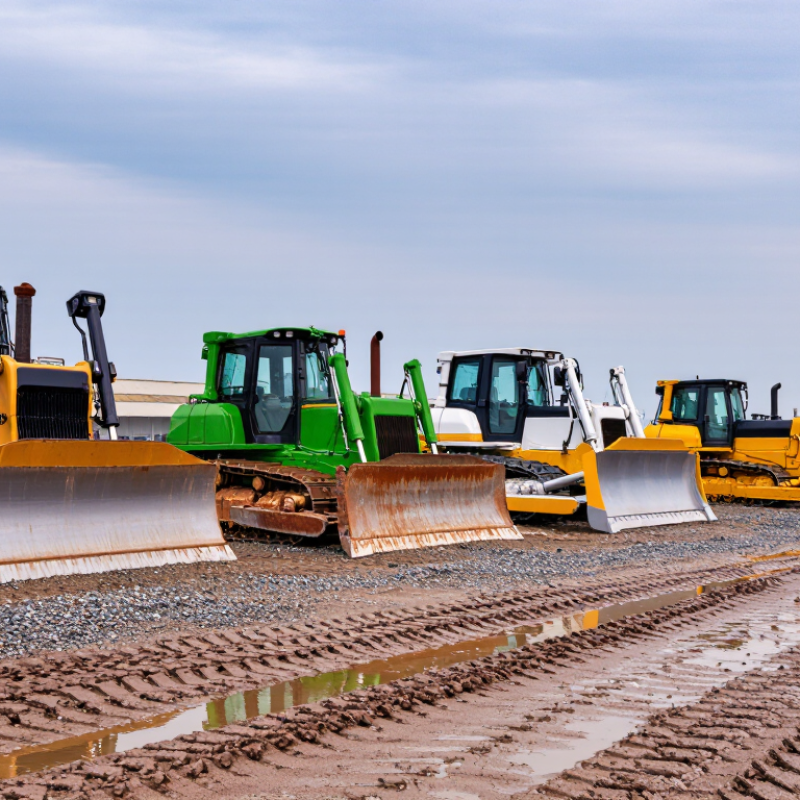
What Defines a High-Quality Used Bulldozer Brand in 2026
A high-quality used bulldozer brand in 2026 is defined by evidence, not a familiar badge. Service records, parts availability, and resale stability matter more than paint condition. The 2024 Off-Highway Research outlook identifies replacement demand and fleet aging as major construction-equipment drivers. That makes documented maintenance increasingly valuable for global buyers.
Inspect the undercarriage carefully. Measure link wear, roller damage, sprocket sharpness, and track tension. These components can represent a large share of repair costs. EquipmentWatch market reports consistently show that machine age, operating hours, and condition strongly influence used-equipment prices. However, an hour meter can be replaced. Treat it as one clue, not proof. Hydraulic drift, cold-start smoke, blade response, and transmission noise reveal more. The ISO 19014 earth-moving machinery standard also emphasizes verified safety performance, visibility, and control-system reliability.
Tips: Request oil-analysis results, inspection photographs, and the original serial-number history. Compare the seller’s claims with an independent technician’s report. Check parts lead times in your destination country, especially for hydraulic pumps and undercarriage assemblies. A machine that works well today may still create delays later. That risk is easy to underestimate.
Buyers should also examine technical support beyond the initial sale. The 2023 KPMG Global Construction Survey reported persistent cost pressure and project delays across the sector, making downtime especially expensive. Still, global survey data can hide regional differences. A bulldozer suitable for dry soil may struggle in wet clay. Match the machine’s configuration, emissions specification, and cooling package to the actual jobsite. Perfect choices are rare. Careful records reduce regret.
2026 Best Used Bulldozer Brands for Global Buyers - What Defines a High-Quality Used Bulldozer Brand in 2026
| Evaluation Dimension | High-Quality Used Bulldozer Benchmark | What Global Buyers Should Inspect | Why It Matters in 2026 | Suggested Rating Weight |
|---|---|---|---|---|
| Service Age and Operating Hours | Typically 3–10 years old with documented operating hours and maintenance history. | Compare hour-meter readings with service invoices, control-panel records, wear patterns, and import documentation. | Accurate usage records improve residual-value forecasting and reduce the risk of undisclosed heavy-duty operation. | 12% |
| Undercarriage Condition | Around 60% or more remaining wear life is preferred for demanding applications; 40%–60% requires price adjustment. | Measure track-chain pitch, link height, roller diameter, sprocket wear, bushings, idlers, track shoes, and track-frame alignment. | The undercarriage is often one of the most expensive systems to rebuild and strongly affects operating cost per hour. | 20% |
| Engine Performance | Stable cold start, smooth operation, no abnormal smoke, no significant oil or coolant leakage, and power consistent with specifications. | Conduct cold-start testing, inspect exhaust color, check coolant and oil condition, review diagnostic codes, and perform a load test. | Reliable engine performance is essential where local repair facilities, parts, or specialist technicians may be limited. | 15% |
| Transmission and Final Drives | Smooth directional changes, effective steering response, no abnormal noise, and no metal contamination in oil samples. | Test forward and reverse gears under load, inspect oil and magnetic plugs, check final-drive temperatures, and look for leaks. | Powertrain repairs can cause extended downtime and may be difficult to support in remote markets. | 15% |
| Hydraulic System | Blade and ripper functions operate smoothly, hold position, and show no excessive cylinder drift or hydraulic leakage. | Check hydraulic oil cleanliness, cylinder rods, hoses, pumps, valves, blade lift time, and attachment holding ability. | Efficient hydraulics support grading accuracy, fuel efficiency, and productivity in earthmoving applications. | 12% |
| Frame, Blade, and Ripper Structure | No critical cracks, unauthorized structural welding, severe deformation, or excessive pin-and-bushing play. | Inspect welds, blade cutting edges, tilt cylinders, push arms, equalizer bar, ripper shanks, pins, and bushings. | Structural integrity directly affects safety, resale value, and the machine’s ability to handle high-load work. | 10% |
| Emissions and Fuel Efficiency | Engine configuration complies with the destination market’s applicable emissions and import requirements. | Verify engine identification, emissions label, after-treatment condition, regeneration history, and fuel-consumption records. | Fuel prices, carbon reporting, and border regulations increasingly influence total ownership cost. | 8% |
| Operator Safety and Cab Condition | Functional rollover protection, seat belt, access steps, lighting, alarms, gauges, ventilation, and visibility features. | Check the protective structure, seat belt date and condition, windows, wipers, mirrors, emergency stops, and warning systems. | Safety compliance reduces operational risk and supports acceptance by contractors, insurers, and project owners. | 6% |
| Parts and Service Accessibility | Common service parts, technical manuals, diagnostic support, and qualified technicians are reasonably accessible in the destination region. | Confirm local supplier coverage, lead times, compatible consumables, service intervals, and availability of electronic diagnostics. | Support availability can be more important than purchase price when the machine operates far from major cities. | 7% |
| Documentation and Ownership Transparency | Clear serial-number records, ownership history, maintenance documents, inspection results, and export/import paperwork. | Match identification plates with documents, verify liens or ownership claims, review accident history, and obtain an independent inspection. | Transparent records lower fraud, customs, financing, warranty, and resale risks for cross-border buyers. | 5% |
| Total Suggested Evaluation Weight | 100% | |||
Note: The benchmarks are practical screening guidelines for used bulldozers. Final acceptance should be based on the specific machine’s manufacturer specifications, destination-country regulations, service records, and an independent pre-purchase inspection.