2026 Best Laundry Disinfectant for Global Buyers
Choosing the right Laundry Disinfectant is becoming more difficult for global buyers. Shelves now carry liquids, powders, sprays, concentrates, and plant-based formulas. Their labels can look similar. Their performance may differ sharply.
A useful buying decision begins with real laundry conditions. Consider hospital uniforms, hotel towels, children’s clothing, sportswear, and household bedding. Each fabric faces different moisture, soil, temperature, and odor challenges. Dr. Charles Gerba, a respected microbiologist known for studying household microbes, has stated, “Laundry can be a source of cross-contamination.” This warning deserves attention. A clean-looking shirt may still carry microorganisms when washing temperatures, dosing, or drying conditions are poorly controlled.
The 2026 market also requires careful product comparison. Global buyers should review active ingredients, contact time, fabric compatibility, residue, fragrance strength, packaging stability, and regional labeling requirements. A powerful formula is not automatically the best formula. It may fade dark cotton or irritate sensitive skin. No product is perfect.
Practical testing matters. Wash a white towel, a colored uniform, and a synthetic sports shirt. Check odor, softness, color change, and visible residue after repeated cycles. Read the safety data sheet. Verify supplier documentation. Confirm claims through recognized testing, rather than attractive advertising.
This guide examines leading Laundry Disinfectant options for international purchasing. It considers performance, value, safety, sustainability, and supply reliability. Some conclusions may change by water hardness or washing equipment. That limitation matters. A product successful in London may perform differently in Lagos, São Paulo, or Singapore. Careful buyers should test before placing large orders.
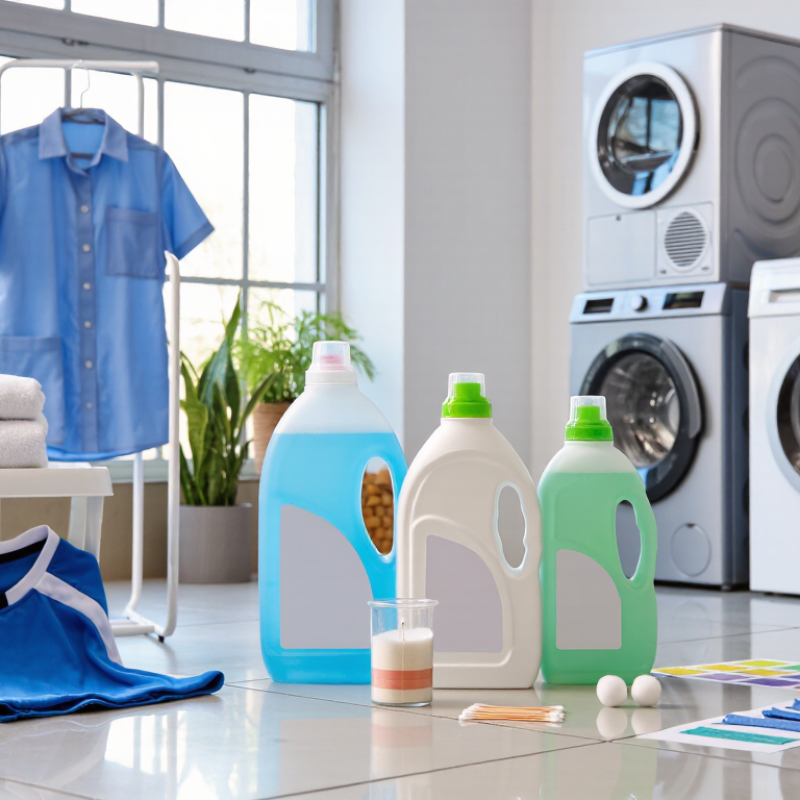
What Is Laundry Disinfectant and How Does It Work?
What Is Laundry Disinfectant and How Does It Work?
Laundry disinfectant is a product designed to reduce or destroy selected microorganisms on washable fabrics. It differs from ordinary detergent, which mainly removes soil, oils, and visible stains. Disinfectant performance depends on the active ingredient, concentration, water temperature, and contact time. A clean-looking towel may still hold microbes. Appearance proves very little.
Some formulas use oxidizing agents to damage microbial cell structures. Others use antimicrobial compounds that interfere with cell membranes. The product must remain in contact with the fabric long enough to work. A quick rinse may remove the chemical too early. Heavy soil can also weaken performance. Read the label.
In practical laundry rooms, damp towels and sportswear need careful handling. Separate heavily soiled items, follow the recommended dosage, and avoid mixing disinfectants with other cleaning chemicals. Check fabric compatibility before treating colored garments, wool, elastic fibers, or delicate finishes. Some products work during the wash cycle, while others require a separate soaking stage. Not always convenient.
Global buyers should request technical data, safety information, test methods, and storage guidance from suppliers. Claims should identify the microorganisms tested and the conditions used. One laboratory result does not guarantee identical results in every washer. Water hardness, machine design, and local temperature can change outcomes. I used to assume stronger smell meant stronger protection. That assumption was wrong. Reliable selection depends on evidence, clear instructions, and realistic laundry conditions.
| Disinfectant Type | Primary Active Ingredient | How It Works | Typical Strengths | Best-Suited Laundry Applications | Fabric and Color Compatibility | Important Limitations | Buyer Evaluation Priority |
|---|---|---|---|---|---|---|---|
| Chlorine-based bleach | Sodium hypochlorite | Oxidizes and damages essential components of bacteria, fungi and many viruses. | Broad antimicrobial activity; fast action when used according to the product label. | White cotton towels, institutional linens and heavily contaminated washable textiles. | Generally suitable for chlorine-safe white textiles. | May fade colors, weaken fibers and damage elastane, wool, silk and some finishes. Never mix with acids, ammonia or other cleaners. | Confirm textile-care symbols, available chlorine concentration, dosing system and local registration requirements. |
| Hydrogen-peroxide disinfectant | Hydrogen peroxide | Produces reactive oxygen species that oxidize microbial cell components. | Useful oxidation-based option with less persistent residue than chlorine when properly rinsed. | Colored and white washable fabrics where the label specifically permits laundry use. | Often more color-friendly than chlorine, but concentrated or repeated use can still affect dyes and fibers. | Performance depends strongly on concentration, water temperature, soil level, pH and exposure time. | Check validated efficacy data, storage stability, dosing accuracy and compatibility with detergents. |
| Peracetic-acid disinfectant | Peracetic acid, often generated from hydrogen peroxide and acetic acid | Oxidizes proteins, enzymes and cell membranes through rapid chemical oxidation. | Broad-spectrum activity and effectiveness at relatively low temperatures in validated systems. | Commercial laundries, healthcare textiles and high-throughput industrial washing processes. | Can be compatible with many textiles when correctly diluted and rinsed. | Strong oxidizer; can cause odor, corrosion or fabric damage if overdosed. Requires controlled handling and ventilation. | Prioritize automated dosing, worker-safety documentation, corrosion testing and wastewater requirements. |
| Quaternary ammonium compound | Quaternary ammonium compounds | Disrupt microbial membranes and interfere with cellular functions. | Good activity against many vegetative bacteria and enveloped viruses when the formulation is approved for laundry use. | Washable textiles requiring a lower-oxidation antimicrobial treatment, subject to label approval. | Usually less bleaching than chlorine-based products. | Generally not sporicidal; effectiveness may be reduced by heavy organic soil, anionic detergent residues and hard-water conditions. | Verify laundry-specific registration, compatibility with the detergent system and required rinse conditions. |
| Oxygen bleach | Sodium percarbonate or related oxygen-releasing compounds | Releases hydrogen peroxide in water and provides oxidation during washing. | Helps remove organic stains, odors and some microorganisms when used under validated conditions. | Routine laundering of colored or white fabrics when the product label supports antimicrobial claims. | Usually gentler on colors than chlorine, but repeated high-temperature or high-dose use may affect dyes. | Stain removal does not automatically mean disinfection. Antimicrobial performance depends on formulation, temperature, time and dose. | Look for independent efficacy data rather than relying only on “oxygen bleach” or “whitening” wording. |
| Thermal disinfection process | Heat, without a chemical active ingredient | Elevated temperature maintained for a validated period damages microbial proteins and membranes. | No chemical residue and can be integrated into commercial washing programs. | Healthcare, hospitality and industrial laundry operations using heat-tolerant textiles. | Suitable only for fabrics rated for the selected wash temperature and drying process. | High heat may shrink fabrics, fade dyes or damage elastic components. Time-temperature performance must be validated. | Measure actual wash temperature, holding time, load size, machine calibration and textile-care requirements. |
| Low-temperature laundry sanitizer | Formulation-specific chemical active, such as an oxidizer or quaternary compound | Uses a registered chemical active to reduce microorganisms when heat exposure is limited. | Can reduce energy use and protect heat-sensitive textiles when correctly validated. | Colored garments, synthetic blends and commercial loads washed below conventional high-temperature programs. | Often suitable for a wider range of fabrics, subject to the product label and textile testing. | Low-temperature performance is highly dependent on dose, contact time, water quality and soil removal. | Request test methods, organism coverage, minimum temperature, contact time and required rinse procedure. |
| Enzyme-assisted hygienic detergent | Enzymes combined with surfactants; antimicrobial status varies | Enzymes break down protein, starch and lipid soils, helping expose microorganisms to washing chemistry. | Strong soil removal and odor control; may support hygiene but is not automatically a disinfectant. | Everyday household, hospitality and institutional laundry where soil removal is the main objective. | Generally compatible with many washable fabrics when used within the care-label temperature range. | Do not treat cleaning, deodorizing or stain removal claims as proof of disinfection. | Separate “detergent,” “sanitizer” and “disinfectant” claims when comparing products across countries. |