2026 Best Rotary Desiccant Dehumidifier for Industrial Use
A rotary desiccant dehumidifier can help control moisture where ordinary cooling-based systems struggle. It removes water vapor by passing process air through a rotating desiccant wheel. This approach can be useful in cold rooms, production areas, and facilities that need consistently dry air.
The right equipment depends on more than a headline capacity. Outdoor conditions, air leakage, operating hours, and the required dew point all affect performance. A small change in airflow can alter results. Real plants are rarely as tidy as a specification sheet suggests. That is worth remembering.
This guide to the 2026 best rotary desiccant dehumidifier options examines practical selection factors for industrial use. It considers drying capacity, energy demand, wheel design, controls, maintenance access, and service support. These details matter when a unit must run through long shifts beside active production lines. Look closely at how performance figures were measured, and compare them with your actual site conditions. A lower purchase price may not mean lower operating costs. Yet estimates can miss things, too. Dust, changing production loads, and imperfect ductwork can complicate even a careful calculation.
No machine fits every plant. Start with measured humidity data, discuss process requirements with qualified suppliers, and check whether service is available locally. Good decisions begin with evidence—and sometimes the first estimate needs revisiting.
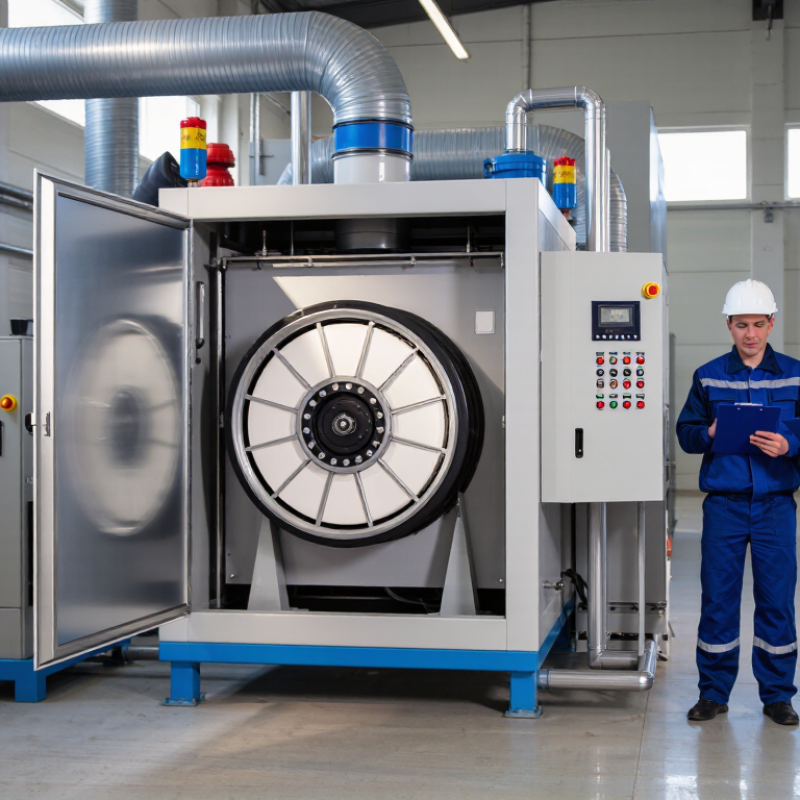
What a Rotary Desiccant Dehumidifier Is and How It Works
A rotary desiccant dehumidifier removes water vapor with a slowly turning wheel coated in moisture-attracting material. Unlike a typical refrigerant unit, it does not rely on cooling air until water condenses. It can keep drying air in cool spaces. That matters.
Inside the cabinet, the wheel passes through two air streams. Humid process air moves across one section, where the desiccant captures water vapor. The dried air returns to the room or production line. Meanwhile, a separate stream of heated reactivation air crosses another section and releases the stored moisture. That damp exhaust is discharged outside the drying circuit. The wheel keeps turning, so these steps happen continuously.
In practice, performance depends on more than the wheel itself. Airflow, inlet temperature, humidity, and the reactivation heat source all affect the outlet condition. Operators should check filters, seals, and wheel rotation; a clogged filter can quietly reduce capacity. An access panel may make inspection easier, though it is often overlooked during equipment selection. Desiccant systems can reach low dew points, but they also use energy to regenerate the wheel. Operating settings should match the process, not just the room size.
Key Performance Metrics for Industrial Moisture Control
Industrial moisture control is not a relative-humidity contest. Measure process-air dew point and humidity ratio, then log water removal in kg/h and energy use in kWh/kg removed. ASHRAE’s 2021 Handbook—Fundamentals identifies dew point and humidity ratio as key psychrometric properties; they stay interpretable when air temperature changes. That matters. The IEA’s Future of Cooling (2018) reports that space cooling uses nearly 20% of electricity in buildings worldwide. This is a reminder that moisture targets carry an energy cost, not a direct estimate for industrial dryers.
Compare measured outlet dew point with the process requirement, not a brochure’s nominal capacity.
For a rough check, 10,000 m³/h of air near 25°C, dried by 6 g of water per kg of dry air, means about 70 kg/h removed before leakage and bypass losses.
This is an illustrative calculation, not a universal rating. Measure regeneration temperature, rotor speed, pressure drop, and inlet conditions alongside it.
Otherwise, a low outlet reading may hide high regeneration demand.
Trend readings across shifts. A wet pallet or open door can move them. Check sensor calibration and place probes before and after the rotor. One common blind spot: many plants record RH but skip the energy denominator. That weakens comparisons. Specify test airflow, inlet dew point, and measurement boundaries in every acceptance log.
How to Compare Industrial Models for 2026
For 2026, compare industrial rotary desiccant dehumidifiers under the same conditions, not just by headline capacity. Check moisture removal at your actual inlet temperature, relative humidity, and target dew point. A unit rated in warm, humid air may perform differently in a cold warehouse. Ask for performance data at your operating point, including airflow and outlet dew point. These figures reveal whether a model can protect a drying room, process line, or stored materials during seasonal changes.
Look beyond purchase price. Compare heater energy, purge-air requirements, fan power, and how each model handles variable loads. A facility running around the clock may value stable controls and clear alarm records more than a small difference in rated capacity. Check rotor access, filter replacement intervals, and the space needed for service. These details matter. A neat spreadsheet can still miss duct losses or doors that stay open during busy shifts. Compare those site conditions, too. Ask suppliers to explain test assumptions and expected maintenance, then verify the figures with a qualified HVAC engineer. The best fit is not always the largest machine; sometimes it is the model that holds the required dew point without wasting energy.
Selecting a Dehumidifier for Your Facility’s Requirements
2026 Best Rotary Desiccant Dehumidifier for Industrial Use
Selecting a Dehumidifier for Your Facility’s Requirements
A rotary desiccant dehumidifier is useful when a facility needs dry air at low temperatures or during cold-weather operations. Start with the room’s required humidity or dew point, not the largest unit available. Then estimate moisture entering through doors, wet products, equipment, and outside air. Measure before sizing. A loading bay that opens often can change the demand considerably.
Match the unit’s airflow and moisture-removal capacity to the space and process. A packaging room storing moisture-sensitive materials may need steadier humidity control than a general warehouse. Consider operating temperature, available electrical supply, and how regeneration heat will be provided. Check duct routes and service clearances, too. A powerful unit placed poorly may leave damp corners behind.
Ask for performance data at conditions close to your facility’s actual operating range. Rated capacity alone can mislead when temperature or inlet humidity differs. Plan for accessible filters, rotor inspection, and routine checks of humidity sensors. Small leaks matter. One planning estimate may prove wrong once production starts, so log humidity readings and door activity during a trial period. That extra monitoring takes time, but it can reveal whether the unit is oversized, undersized, or simply fighting an unsealed opening.
Installation, Operation, and Maintenance Considerations
Choosing a rotary desiccant dehumidifier for industrial use starts with the room, not the nameplate. Measure airflow, moisture load, target dew point, and temperature range across a full production cycle. During installation, leave service clearance around the rotor housing, filters, fan, and drive components. Route process and regeneration air separately, and seal duct joints to prevent humid air bypass. Small details matter. Check that the floor supports the unit and that drains, power, and exhaust connections match the approved drawings. A commissioning log should record inlet conditions, outlet dew point, airflow, and heater settings.
During operation, trend dew point rather than relying on a single reading; door openings and shift changes can distort results. Inspect filter pressure drop and listen for unusual rotor or fan noise at regular intervals. Maintenance intervals depend on dust, oil mist, and operating hours, so use the equipment manual alongside site data. Clean or replace filters before restriction reduces airflow, and inspect seals for wear or leakage. Verify belt tension, bearings, sensors, and heater controls using the specified isolation procedures. Not glamorous, but important. If humidity drifts, check airflow and leakage before changing setpoints; the first guess is not always right. That judgment can be wrong, too.